

IEP and 504 Supports for Science and History
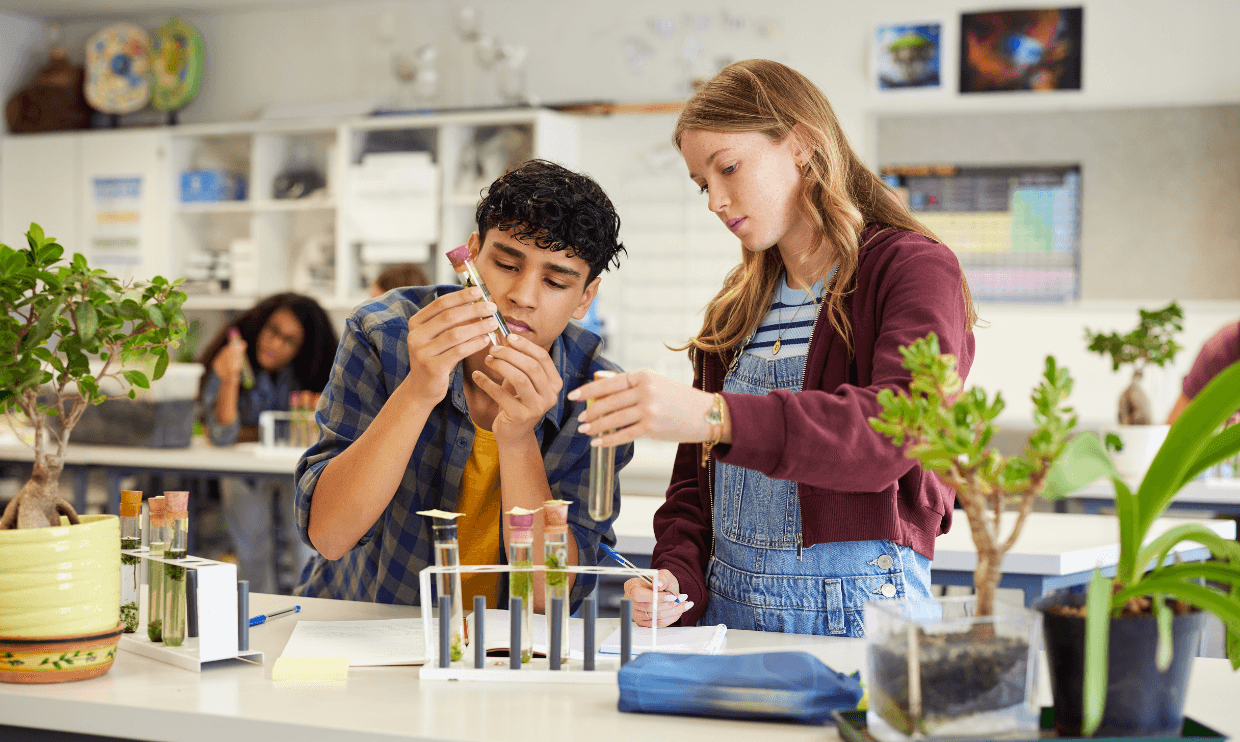
Science and history are staples in the academic curriculum, but IEPs usually focus on the “big three”: reading, writing, and math. Because most states require science and social studies for graduation, accessibility is key to a student’s success. Students with IEPs or 504 plans use accommodations to bypass disability-related barriers, while IEP goals in areas like reading, writing, and executive functioning provide targeted practice within these subjects.
As a refresher, accommodations change how the student learns without altering the fundamental expectations or grade-level standards, and modifications change what the student is learning, adjusting the depth, breadth, or target standards of the curriculum. (See our article on Accommodations and Modifications.) For those working significantly below grade level, a special education teacher can design curriculum modifications to ensure every learner can participate meaningfully.
We sat down with Lisa M. Carey, a non-attorney education advocate at Carey Advocacy, and inclusion specialist Arielle Starkman, to get their best tips and tricks for making science and history classes accessible and engaging for all learners.
History and science standards
Before deciding what supports a student needs in science or history, it helps to understand what they’re actually expected to learn. Understanding the standards can also help parents make sure their child’s IEP supports meaningful participation in the general education curriculum.
Science and NGSS
The Next Generation Science Standards are used by many states, and some states use them as the basis for their own standards (for example, the California Next Gen Science Standards were adopted in 2013). The NGSS are organized around three dimensions: Science and Engineering Practices, Disciplinary Core Ideas, and Crosscutting Concepts. These are also connected to English language arts standards, such as reading, writing, and using evidence to communicate scientific ideas. NGSS were designed to make science more engaging and “three-dimensional,” combining scientific concepts with hands-on investigation, critical thinking, and real-world problem-solving.
The California Science Test (CAST), (part of CAASPP) which measures students’ understanding of NGSS, was introduced in 2019, the first time CA students were ever tested in science. For its first few years, science scores did not appear on the state’s Dashboard while the state worked to establish the new assessment. For the past two years, scores have appeared on the Dashboard for “informational purposes” only, without the color-coding used for math and English language arts to show performance levels. However, when new science scores are released this fall, science performance will be color-coded on the Dashboard, giving families and the public a clearer picture of how schools and student groups are performing. California is continuing to collect the data needed to determine how science scores and student academic growth should factor into its broader accountability and support system, with the State Board expected to make decisions about that integration in 2029. (You can find information on CAST accessibility support here).
History and social studies
For history and social studies, the Common Core State Standards focus on reading and writing literacy skills rather than specific factual content — they call “Literacy in History/Social Studies, Science, & Technical Subjects.” As explained, “The standards below begin at grade 6; standards for K-5 reading in history/social studies, science, and technical subjects are integrated into the K-5 Reading standards.” See Common Core standards for Reading and Writing, especially evidence-based reading. You can find the state standards for grades 6-8 here, 9-10 here, and 11-12 here.
Some states establish their own content framework. For example, California has the History-Social Science Framework, adopted in 2016, which they say, “Require students not only to acquire core knowledge in history and social science, but also to develop the critical thinking skills that historians and social scientists employ to study the past and its relationship to the present.”

Reading and vocabulary supports
In history and science, students frequently face large amounts of complex text. As Starkman emphasizes, “In history and science, I would say first and foremost, visuals, visuals, visuals. In both subjects students often engage with information by reading from a textbook. It's just so knowledge heavy, and that knowledge can come in all different formats.”
To make reading content accessible, consider the following accommodations:
- Enlarging and isolating visuals: Starkman recommends enlarging images from textbooks and focusing on them directly. “When we're reading big chapters, we almost always gloss over those images. But that’s what puts those concepts in our minds and helps us make connections and relate to them.”
- Assistive technology & audiobooks: utilizing text-to-speech, screen readers, and audiobooks allows students to bypass decoding barriers and focus on comprehension.
- Primary sources & plain language: when accessing historical documents (such as the U.S. Constitution), providing a plain language summary alongside the original text helps bridge understanding.
- Vocabulary pre-teaching: pre-teaching priority vocabulary (3 to 5 key terms per unit) paired with strong visual images or AAC icons builds familiarity before reading.
- Physical text options: requesting printed photocopies of textbook chapters allows students to highlight, annotate, or enlarge fonts without damaging school property.
Parent tip: you can photocopy the textbook page or print the online copy to cut out pictures that are the same as the ones in the textbook — or you may be able to purchase an old copy online.
Parent tip: when you get your child’s vocabulary words ahead of time, try creating simple science and history picture books to introduce the words before they come up in class. Use photos of your child acting out or demonstrating each word to make the concepts more meaningful and memorable. You can print the book or save it as a PDF so your child can look through it on their iPad or other device. Using photos of your child can make vocabulary practice especially engaging.
Note-taking
Many students have accommodations that offer support for note taking during “lecture style” teacher exposition, especially in social studies or history classes. It's often more important to take notes as a way of paying attention to the information rather than to save information, which may also be available in a textbook.
- Scribe is a common accommodation, meaning that an aide will take notes on your behalf. It might be important to ask how the student will access these notes and if there is a better use of the aide’s time.
- Permission to record as an accommodation is more common in colleges but allows the student to use a transcribing app to take notes, often using AI to create a summary. This is a great tool for students to be taught how to use independently.
- Pre-prepared notes that teachers can provide students with writing difficulties.
- Fill in the blanks can help keep the student listening to the presentation and engage the student in the note-taking activity. To maintain the student’s attention to the lecture, there may be blanks for words to highlight from a word bank.
Starkman observes that many teachers make slides and put them on Google Classroom, so really everyone has access to their own copy. Some students like information printed so that they can stop and highlight things, so an accommodation might be for printed slides that are given ahead of time.
Writing & demonstrating knowledge
When assessments rely heavily on written essays, students with fine motor or written expression challenges may struggle to demonstrate their actual subject knowledge. Starkman notes that teacher assignments often rely on reading and writing, but grade-level state standards usually target content knowledge or application rather than the specific writing format.
- Alternative expressions: students can demonstrate mastery via video presentations, recorded slideshows, oral explanations, or podcast formats instead of traditional five-page essays. For example, rather than writing a five-page report about the solar system, a student might create a narrated slideshow about the planets, explaining key facts about each one.
- Speech-to-text & voice typing: dictation tools allow students to answer questions, cite evidence, and structure arguments without the physical act of writing impeding them.
- Standards-based / mastery-based grading: adding standards-based grading or “multiple means of action and expression” as explicit IEP accommodations ensures that grading evaluates target content mastery rather than arbitrary structural constraints, like the RACES essay template.**
Executive functioning and sensory challenges
While extra time is a standard accommodation, Starkman points out that “it's one of those accommodations that you often see written out, but never with directions on how to implement that.” Rather than adding passive extra time, structure implementation through executive functioning supports:
- Chunking assignments: breaking a long project into four distinct weekly parts with scheduled teacher check-ins gives clear structure and a realistic timeline.
- Visual to-do lists & checkpoints: using color-coded task lists and visual checkpoints keeps complex multi-step science or history projects manageable.
- Highest-leverage roadmap: to avoid a laundry list of unused accommodations, IEP teams should identify the highest-leveraged supports and build a clear “roadmap” detailing when and how each support will be executed by teachers and requested by the student.
- Provide visuals: show the setups for labs or other digital lessons.
- Connect new concepts: connect new ideas to familiar, everyday experiences and real-world examples.
- Provide extra time: kids can use extra time to explore hands-on materials when needed to process sensory input, follow directions, or complete a lab task.
- Provide gloves, goggles, or alternative materials: this can reduce sensory barriers during hands-on activities while still allowing the student to participate in the same learning activity.
- Allow movement or sensory breaks: build in brief breaks or opportunities for movement during lengthy lessons, labs, or other activities.
For students with accommodations who might also be taking state tests or public exams such as Advanced Placement tests, they may need accommodations for extra time written into their IEP or 504 plan in order to qualify for those accommodations during the test. For exams like the SAT/ACT, speak to your child’s school counselor about applying to the College Board for accommodations, and do so in advance with plenty of time.
Technology and UDL
Universal Design for Learning (UDL) principles emphasize providing multiple means of engagement, representation, and action or expression. Starkman notes, “I think it allows us to be more flexible too in how we do our learning.” When accommodations are built into the general curriculum and offered universally to the class rather than being isolated to an IEP, every student benefits, and neurodivergence is normalized.
Technology plays a central role in modern universal design. For instance, if a school uses Google Classroom, students can turn content into podcasts or audio experiences. “You can learn about the Revolutionary War through a talk show,” Starkman explains.
Artificial intelligence is also transforming the educational landscape. While schools are still calibrating where AI falls in the IEP space, Starkman emphasizes that preparing students to use these tools productively is essential: “You can have historian chatbots now, where you can have a little texting conversation with AI that has been provided with the textbook so it's not making up information. It's staying within the realm of the sources you gave it, and you can ask your AI questions as if you were talking to someone who was there and had a lived experience.”
Modifications
When a student works significantly below grade level or participates in an alternate assessment pathway, modifications alter the target curriculum standards. Because history and science topics repeat themes across grade levels, materials can be adapted to match foundational understanding while keeping students included alongside their peers.
- Adapting curriculum depth: for example, while a physics class studies mathematical formulas for gravity, a modified goal might focus on core concepts: a) objects fall down, not up, and b) this phenomenon is called gravity.
- Focusing on people and big ideas: in history, modifications can center on key figures, relationships, or foundational ideas like past vs. present rather than memorizing extensive timelines.
- Visual task cards and manipulatives: utilizing visual task cards (e.g., using a clothespin to select one of two visual answers), hands-on experiments, ramps, realia, and cut-and-paste matching activities allows meaningful participation without requiring complex sentence formulation.
- Engaging media: short animated videos (such as BrainPop), educational YouTube skits (like BBC Horrible Histories), and songs offer rich, accessible entry points to grade-level concepts.
Do I need IEP goals in history and science?
Just as in any other object at school, when a student needs specially designed instruction to access the curriculum, they may have IEP goals that target that instruction. Carey explains that often, IEP goals that address access to history and science are reading and writing goals. For example, goals that target comprehension, presenting ideas, or writing.
Carey also says that any accommodations and supports listed in the IEP should be available for science and history class, even for classes that may be tied to a curriculum approved by an outside organization, such as AP Classes. However, having modifications to the curriculum may impact your child’s education because they might not master concepts and skills that later become essential to participate in high school coursework.
In some states, high schools are able to use alternative achievement standards in an alternative pathway to earning a high school diploma, such as California’s Alternative Pathway to a Diploma. In this case, the IEP team will determine the alternative achievement standards that the student needs to meet in each subject so that all classes can be modified, including classes in science and social studies.
Carey notes that often in a separate classroom, the focus is on reading and writing, and students have little exposure to science or history education. Starkman agrees, saying, "We are preparing our students to be active citizens; no matter what their academic ability is, we want them to be contributing citizens and community members and their lives in our countries, so it's vital that we include all of our kids in the subject areas and topics and bring relevant current events and different things that they can contribute to.”
Advocate for access and flexibility
Empowering students to advocate for their own preferred learning strategies fosters independence. When students or parents suggest creative ways to demonstrate understanding, teachers often embrace the idea for the whole class. Starkman highlights the power of this collaborative shift:
“If you have an idea of a different way your child can demonstrate their understanding, I think it's great to have your child suggest it themselves to the teacher, advocate for themselves, or for you to share that idea if you're collaborating with the teacher. And who knows, maybe the teacher will feel so passionately about this new idea that they'll make it an option for the whole class, and I think that's the best thing when that happens. When teachers organically realize, wait, this isn't a cheat or something. This isn't like an easy way out. This is another way to demonstrate intelligence and to honor neurodivergence and multiple intelligences and all of our individual preferences.”
At the heart of this approach is a simple idea: all students should have meaningful opportunities to learn about science, history, and the world around them. Many students with extensive support needs enjoy these subjects and can engage with the same big ideas as their peers when the right supports are in place.


Unlock more with Undivided
Turn knowledge into action that benefits your child
Get Membership


Author