

Neurodiversity-Affirming Assessments 101

What is a neurodiversity-affirming assessment?
What does a neurodiversity-affirming approach look like?
Although districts tend to focus on areas of weakness, obtaining accurate areas of strength from assessments is possibly even more important. Areas of strength can show a child’s potential and help the parent argue for more ambitious goals.
In this clip, Rosas explains how a neurodiversity-affirming assessment that focuses on a child’s strengths can transform how the IEP team uses the results to write goals and accommodations into the IEP:
Why neurodiversity-affirming assessments are important
Rosas shares that most assessments — whether they happen at school or in a clinic — still use what’s called the medical model. That usually means lots of talk about “deficits” and focusing on what a child can’t do. It’s much less common to see a neurodiversity-affirming approach, but thankfully, that’s starting to change. Speech-language pathologists are often leading the way here, offering assessments and care that focus on strengths and support instead of just what’s “missing.”
In this clip, she explains why it’s important to advocate for using a neurodiversity-affirming approach with children with disabilities:
Neurodiversity-affirming assessment vs traditional assessment
You might be wondering what exactly the difference is between a traditional assessment and neurodiversity-affirming assessment. Rosas explains that the difference is the lens that it's taking.
Differences vs deficits
In a neurodiversity-affirming assessment, “Rather than saying that a child has ‘deficits’ in areas, you might see things like ‘differences’ in certain areas,” she says. “You'll see things that really highlight how the student works and learns best and how the student stays regulated. Rather than focusing what we traditionally focus on — the the behaviors that we're seeing or when students aren't doing well — a neurodiversity-affirming assessment and IEP is really going to highlight the things that the child can do well and the things that support the child when they need that extra additional support to do well.”
Asking: how can we best support kids in showing what they know?
She also explains that the neurodiversity-affirming approach doesn’t only look at behaviors, it also looks at cognitive and social-emotional skills — highlighting strengths, supporting areas of need, learning how they learn best, etc. It really comes down to asking: how can we best support kids in showing what they know? For example, standardized tests don’t always capture their abilities. A child might struggle on a test, but excel when given manipulatives, or light up when music is added to the task. Maybe they can match letters perfectly in a music video, even if a paper-and-pencil test says otherwise. That doesn’t mean they don’t know their letters — it just means their brain processes and expresses knowledge differently.
“It's really important that any standardized testing is also paired with solid observations that show when the child is being successful, and what specific things they need in order to show what they know.”
Here are some examples of what traditional assessment vs neurodiversity-affirming language in an assessment and IEP look like:
| Traditional Report Language | Neurodiversity-Affirming Report Language | Impact on IEP |
|---|---|---|
| “The child constantly argues with adults.” | “The child has strong self-advocacy skills and is self-aware enough to express their likes and dislikes.” | Goals center on building self-advocacy, not compliance. |
| “The child elopes six times per day.” | “The child meets their sensory needs by taking a break from the classroom six times a day.” | Accommodations might include scheduled sensory breaks or classroom adjustments. |
| “The child has deficits in social-emotional reciprocity.” | “The child communicates in ways that are authentic to them, and their social interactions may look different from neurotypical peers but are equally meaningful.” | Goals encourage authentic communication rather than forcing neurotypical norms. |
What’s changed?
Rather than labeling behaviors as problems, a neurodiversity-affirming assessment reframes them as strategies or differences that reveal what a child needs to thrive. Instead of focusing on deficits, it recognizes diverse communication styles, highlights self-advocacy as a strength, and points to supports — like sensory breaks or classroom adjustments — that can make the environment work better for the child.
How to request a neurodiversity-affirming assessment from the school
Rosas says, “If a family is seeking a neurodiversity-affirming assessment, I think it's really important to keep in mind that some of your providers have been practicing the way that they've been practicing for a really long time. And it doesn't mean that they're not skilled providers, just because they aren't doing neurodiversity-affirming assessments. But you can definitely start broaching it with your teams.” She has this advice:
- Write a parent letter before the IEP that talks about the neurodiversity-affirming lens your family uses with your child
- Prepare a brief (one-page or less) explanation of neurodiversity acceptance that you can share with your IEP team
- Request neurodiversity-affirming trainings for teachers, admin, and providers
- Write a neurodiversity-affirming consultant into the IEP (This might seem like a stretch, but if your child isn’t being accurately represented, then the team may need guidance.)
See our article about strength-based IEPs for more ideas and resources to help your whole IEP team see the benefits of using this approach.

How to prep for a neurodiversity-affirming assessment
You might be wondering: what does it really look like to do an assessment this way? How can you talk to the team ahead of time to see if they’ll take a neurodiversity-affirming approach? And once the assessment starts, what does that actually mean for your child in the moment?
Rosas offers this advice to prepare kids, parents, and assessors, including asking if your child can see the assessment environment ahead of time so it feels less overwhelming; letting the team know you care more about strengths and supports than just test scores; and including your child’s voice and making sure the assessment reflects your child’s perspective, not just numbers. She dives more into it in this clip:
How common is neurodiversity-affirming knowledge in schools?
The truth is, not many schools—or even providers—are familiar with the neurodiversity-affirming movement. As Rosas explains:
“Not a lot of people know what the neurodiversity-affirming movement is. So even if you just say, ‘Well, I want a neurodiversity-affirming assessment,’ the special ed director is probably going to say, ‘What are you talking about? I don't know what that means.’”
This means that often, the first step is educating the team about what it means and why it matters. Parents may need to share resources, articles, or examples to start planting the seed of this approach, Rosas says. Here’s what you can do:
- Bring what you know: if you’ve found resources (articles, podcasts, research, organizations), share them with your child’s team.
- Invite support: if you’re working with an advocate or consultant, invite them into the IEP process. They can help reframe goals, accommodations, and services to be more affirming.
- Keep the focus on your child: remember, you’re not just pushing a philosophy, you’re advocating for what feels authentic and supportive for your child.
- Request training in the IEP: if your child needs significant behavioral support and the current approach doesn’t feel right, you can request that a neurodiversity-affirming consultant be written into the IEP.
- Seek trainings and webinars: while harder to find, there are professionals who offer trainings online, at conferences, or directly to districts. Some parent groups have even brought in speakers to present to teachers or PTA.
Key takeaway: your voice matters most
Parents are often the driving force behind systemic changes in special education. Many education practices usually shift because parents pushed for it.
As Rosas tells us, “If parents come together and go to a special ed director and say, ‘We want this for our kids, that special ed director will listen to the parents, honestly, before they listen to the psychologists that are doing it. So it's really important that parents have some good language, good background around it, and are able to advocate for their kids for neurodiversity-affirming assessments and practices all around.”
Enjoying this topic? Listen to the full conversation
Join Lindsay Crain, head of content and community at Undivided, and Breea Rosas, school psychologist and founder of Neurodiversity Affirming School Psychologist, as they explore the world of neurodiversity affirming assessments. Tune in to discover if this type of assessment is suitable for your child and gain insights on advocating for it during your next individualized education plan (IEP) meeting. Find the full conversation here.
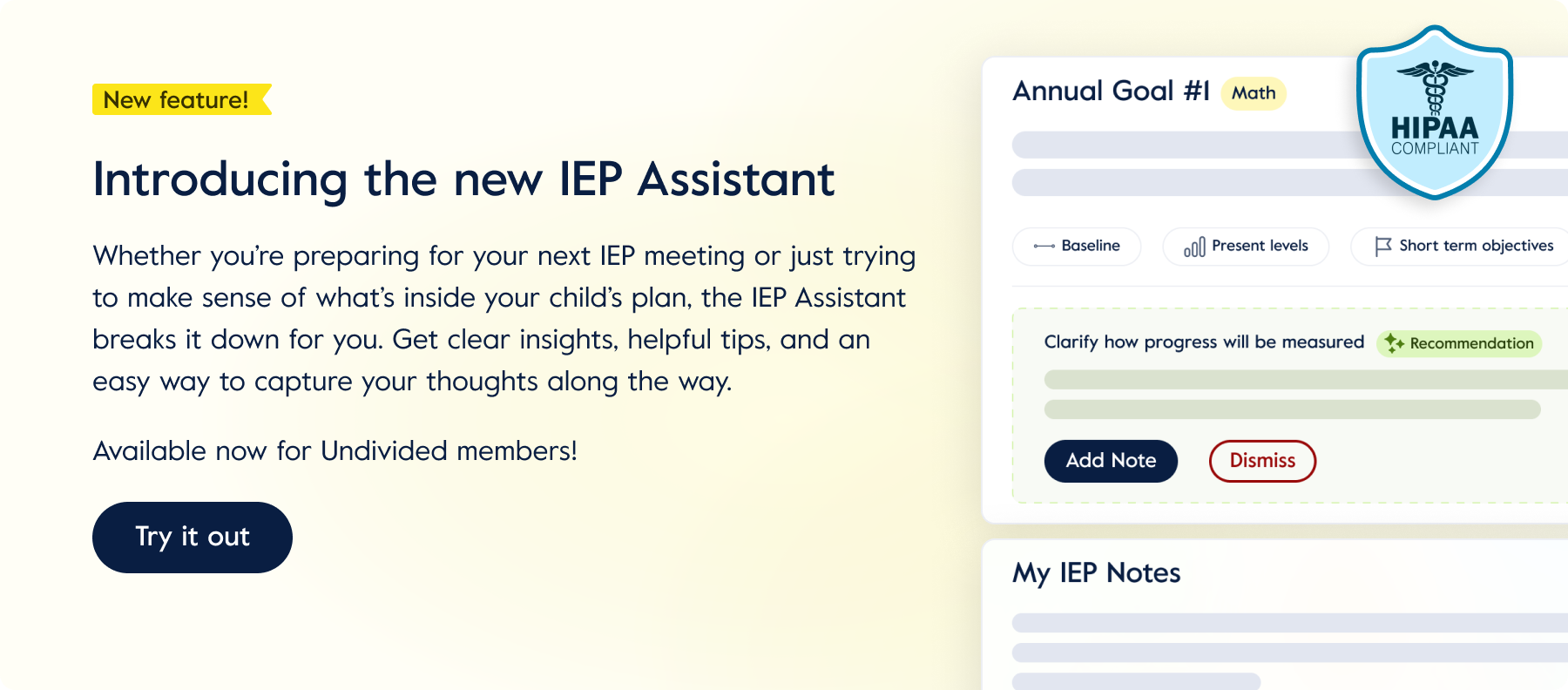
Undivided's IEP Assistant now lets you upload assessments, private evaluations, reports, and other documents to help you identify your child's areas of need and make sure the IEP addresses them. Create an account to try it out!


Unlock more with Undivided
Turn knowledge into action that benefits your child
Get Membership


Author