

We Were Never the Problem: A Letter to Mothers of Disabled Children
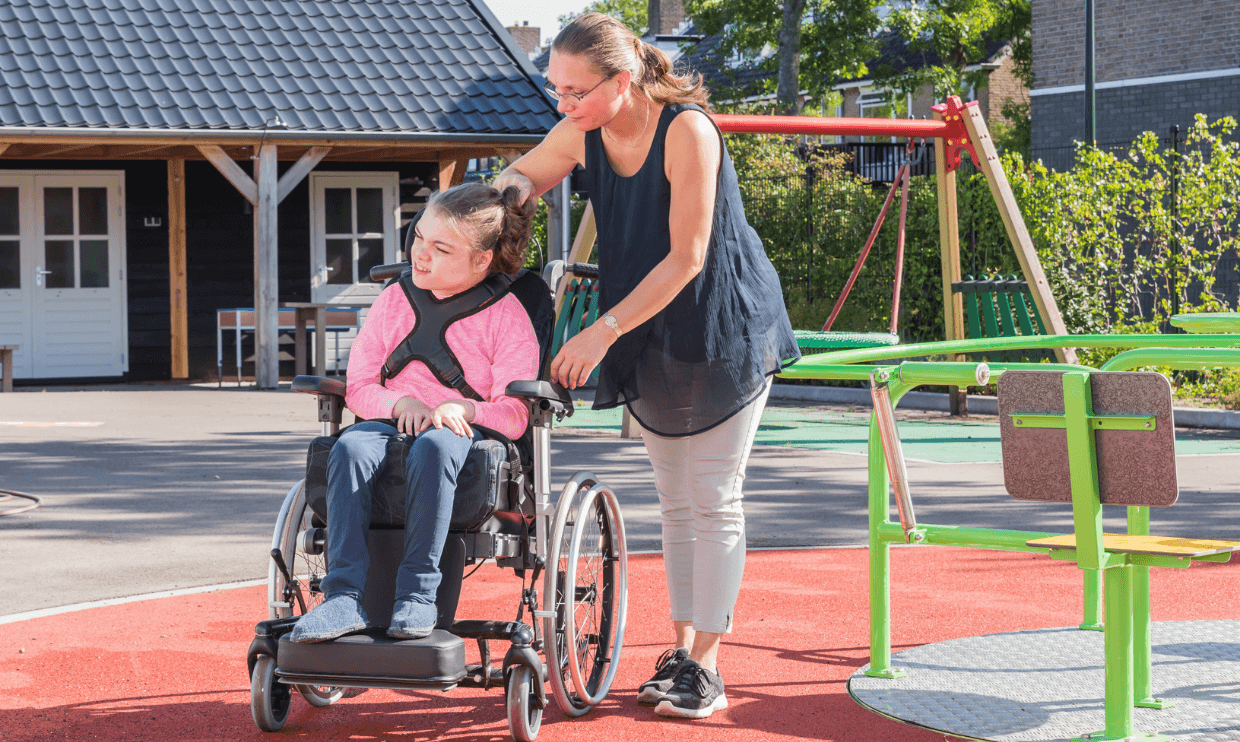
This is a letter to mothers. Not because fathers and partners don't carry this weight. They do. But because mothers make up the disproportionate majority of primary caregivers for disabled children, and because historically, the blame, dismissal, and disbelief of parents has been directed at moms with a specificity that is not accidental. They are doing the majority of caregiving work and absorbing the most fault. That is not a coincidence. It’s the point.
I came with a warning.
When a supervisor I had grown close to was leaving her role, she told me — in that particular tone people use when they have decided the truth is your problem to carry, not theirs — that I had a reputation. I asked too many questions. I held providers accountable for showing up and doing the work they were contracted to do. I expected my daughter to be treated with dignity. I refused to let systems fit her into whatever box was most convenient for them.
My supervisor meant it as a heads-up, but there was a time when it would have landed differently. Being seen as an inconvenience by the people who are supposed to be on my team could have unraveled my whole week; it does not unravel me the same way anymore. Not because it stopped being true but because I stopped being surprised by it.
I have been my daughter's mother for over 16 years. She has complex, multiple disabilities. I have learned two things with equal clarity: who my daughter is, and how institutions manage mothers who know too much and refuse to pretend otherwise. The architecture of dismissal when we have a feeling that will not quiet down. A certainty we cannot yet name. A voice in the back of our head that keeps saying something is not right here.
This is what I know, what the data confirms, and what history makes undeniable: mothers are not the problem. We have never been the problem. And the systems insisting otherwise have never needed us to be right. They have only needed us to be unsure.
The list
If you have been in this long enough, you know “the list.” It lives in your body before it lives in your words. It is sitting in an IEP meeting where everyone in the room is nodding, and you are the only one who knows something is wrong. It is the pediatrician's office where you left with a referral and no answers. It is the prior authorization that gets denied for something your child has needed for years, and the person on the phone is apologetic in the way people are when they know the system is wrong but cannot do anything about it.
Here is the list made explicit. The things we are told, directly and in subtext, by the systems designed to serve our children:
You are asking for too much. You are not asking for the right things. You are asking for too little and somehow also too much at the same time. You are entitled. Everything is fine, and you are overreacting. Your expectations are unrealistic. You are asking too many questions. You are asking the wrong questions. You are not the expert. You should stop Googling. You need to trust the professionals. Don’t rock the boat. You should be grateful for what you have and stop pushing. You don't want to upset the people who hold the power. No one is going after your kid; you're just paranoid.
What is remarkable about this list is not any single item on it; it is the comprehensiveness. If you push, you are too much. If you don't push enough, that's also your fault. If you research, you are dangerous. If you don't research, you’re not doing enough. There is no version of being a mother of a disabled child within these systems that is correct. The goalposts are not moving. There are no goalposts. The game is to make you stop playing.
And we are not a small group. Eighty percent of individuals with intellectual or developmental disabilities (IDD) live with a family caregiver. Most of us will do this until we cannot. The worry about what happens next started the day our children were born.
What the data actually shows
While we are being told we are overreacting, here is what the research says about what is actually happening to us.

Nine out of ten family caregivers of people with IDD report at least one significant employment impact from providing care. Forty-one percent have given up work entirely. Fifty-five percent are purposely underemployed. Thirty-four percent have turned down promotions. These aren’t feelings. These are numbers from the 2023 Family and Individual Needs for Disability Supports (FINDS) survey, conducted by the University of Minnesota's Institute on Community Integration in collaboration with The Arc, based on responses from 3,118 caregivers across every state.
The professional cost is only part of it. The mental health picture is equally stark.
Thirty-one percent of parents of children with IDD meet the clinical threshold for moderate depression, compared with seven percent of parents of non-disabled children. Anxiety rates follow the same pattern: thirty-one percent of IDD parents meet the clinical threshold, compared with fourteen percent of parents of non-disabled children. Ninety-five percent of studies reviewed in the research literature found a positive association between parenting a child with IDD and depression symptoms. Ninety-five percent of IDD caregivers report being stressed. Fifty-four percent describe that stress as very or extremely high, up from forty-eight percent in 2017.
We were told we were overreacting to that, too.
The average IDD family caregiver provides fifty-seven hours of support per week. More than half provide over forty hours. These are caregiving hours and do not include any professional work outside the home. The women doing the bulk of this work are more than twice as likely to live in poverty in old age as women who are not IDD caregivers. They lose wages, career trajectory, Social Security contributions, and retirement savings across decades, not months.
We are not overreacting. We are under-resourced and overtasked, and the clinical evidence agrees. Yet we're often labeled entitled simply for asking the system to help.
Where this comes from: a short and ugly history
The impulse to locate the problem in the mother is not incidental to disability services — it is foundational to them.
In the 1940s, psychiatrist Leo Kanner first identified autism and introduced the idea that emotionally cold mothers were to blame. Bruno Bettelheim, a psychoanalyst at the University of Chicago, took that idea and built a career on it. He claimed autism was caused by cold, emotionally distant mothers who had failed to bond properly with their children. Bettelheim was not a fringe figure. He was awarded, celebrated, invited to speak, and published in major outlets. His ideas became the consensus. For roughly three decades, mothers of autistic children were sent to therapy to work on their emotional warmth while their children were institutionalized. The theory was eventually discredited, its author revealed as a fraud who had fabricated his credentials and abused the children in his care. He died by suicide in 1990.
But the structure of the idea survived him: the mother's psychology, behavior, or choices as the cause of, or at least a contributor to, her child's disability. Mothers were called hysterical by one side and dangerous by the other.
Today, the list is always being updated. Federal officials now point to acetaminophen. Before that, it was food dye, screen time, ultrasounds, and antidepressants taken during pregnancy. The explanations shift — the common denominator does not. In every version of this story, there is something the mother did. Something she took or didn't take, something she fed or didn't feed, something she allowed or failed to prevent. The father makes a brief appearance in some of these theories and then exits. The mother stays. She is always the variable. She is always the answer.
I remember a provider telling us, after my daughter took her first steps at three years old, that we should stop all therapies. He told me now that she was walking, we should just “let her be a kid,” as if this was the only milestone that mattered. As if it might be the only one she would reach. I heard what he did not say: that I was stealing her childhood, that I expected too much, that we had achieved something he saw as a miracle, and I should quit while I was ahead. Did he think I didn't want that for her?
I wish my daughter could run free without the help of a physical therapist, play without the modeling of a behavior interventionist, and communicate without the instruction of a speech therapist. Play doesn’t just happen for some of our kids. Movement, communication, self-regulation, socialization — how do you define “being a kid” if these things don’t come naturally, or don’t come at all? How does she navigate a world she doesn't instinctively see or understand? I wish every little thing could organically just happen for her. I wish she didn’t have to work so hard, focus so intensely, or need so many people to help her learn to interact in a world that does its damndest to exclude her.
That doesn’t mean we haven’t had countless moments of beauty, laughter, and joy without a therapist in sight. But all he could see was a mother with hope. So he said it without saying it. Stop pushing. Stop searching. Stop hoping. You’re ruining her.
That’s what I heard. That’s what I felt. Until I realized his message was as much to her as it was to me — and there was no way I would allow her to be limited by the small mind of someone who only saw one part of her. Unfortunately, he was not an outlier.
Mother-blaming has never been fringe. It has lived in Supreme Court decisions, in federal policy, in the offices of pediatricians and psychiatrists who were considered the most credible voices of their time. Bettelheim was not an outsider; he was celebrated. And the mother who left that appointment feeling confused about her gut instincts, feeling like too much, feeling like the problem? She was not misreading the room. In fact, the room was built to make her feel that way.
The siloing problem: why we know everything and get credit for nothing
The gaslighting in the exam room and the IEP meeting is personal, but what sits underneath it is not. No one is talking to each other. The school district does not talk to the developmental pediatrician. The developmental pediatrician does not talk to the behavioral therapist. The behavioral therapist does not talk to the home health nurse. The home health nurse does not even know the IEP exists.
The only person in every room, across every system, every year, is the parent. And statistics tell us that’s primarily the mother. An estimated 7.3 million people with IDD live in this country, the majority of them at home with a family member providing support. And we are doing it largely alone, inside systems that were never designed to talk to each other.
By necessity, mothers have to become everything: case managers, medical records coordinators, special education advocates, behavioral intervention specialists, insurance navigators, crisis planners, chemists, and historians of our child's needs. We hold the through-line — we become the ones connecting all the dots not because we were trained for it but because no one else is doing it. The system is designed in silos and we are the connective tissue. Because someone has to make sure everyone is looking at the same picture, right?
A provider thanked me once for being so involved. She said it like it was unusual. But most of the time, we are not thanked for this. We are tolerated, managed, and quietly dreaded. I did not know what to do with her kindness, and I had to ask myself when I had stopped expecting it.
A general education teacher once told me that having my daughter in her class had made her a better teacher. I was not surprised that she thought my daughter was awesome. I know my daughter. What I had to sit with was that I had internalized, somewhere along the way, that I was not supposed to expect this. That my daughter's presence in most classes was a burden to be accommodated, and I was a problem for expecting more than accommodation.
That's what sustained gaslighting does. Little by little, it makes you question what you know about your child and whether you're right to keep fighting for them — until both start to feel like the problem.
“Welcome to Holland,” and other things we are not allowed to disagree with
In 1987, a writer and mother named Emily Perl Kingsley published a short essay called “Welcome to Holland.” The essay compares raising a child with a disability to planning a trip to Italy and landing in Holland instead. For some, it was the first time they felt language for what they were living. Because there is so much wonder and pride that is specific and real and ours. The kind that does not need to be explained to another parent in this community because they already know it. The pride that lives in milestones that the world does not put on a chart. The love that is not despite anything.
For others, the poem has always felt like a tidy bow on something that refuses to be tidy. Because somewhere along the way, the essay became a mandate. And the mandate became a silencer. Not because of what Kingsley wrote, but because of what others did with it.
A generation earlier, we were told to institutionalize our children. To hand them to a system and grieve what could have been. The next was told to embrace everything and ask for nothing.
If you feel the joy, you are expected to perform it. If you feel the grief, you are expected to hide it. What we actually live is complicated in ways that resist easy description. Joy and grief do not take turns for us, they show up together, in the same hour, sometimes in the same sentence. And still, the world insists on flattening it into one acceptable emotion at a time.
Here’s another list for you: we are allowed to be grateful. We are not allowed to be exhausted. We are allowed to celebrate. We are not allowed to grieve. We are allowed to advocate. We are not allowed to be angry about what we have to advocate for in the first place.
The trap is not Holland; the trap is being told there is only one right way to feel about it. I know what it is to sit in a doctor’s office, terrified, processing diagnoses I do not understand, and still placate the resident in the room who needs to see that I am “doing okay.” I sit with the doubt in real time, the part of me that wonders, “Am I overreacting?!” — even as I say the thing I came to say. It takes a minute in the car afterward before I trust myself again.
“Ordinary” work
All that gaslighting does not stay in the doctor's office. It does not stay in the IEP meeting or in our cars, where we sat crying, trying to figure out what just happened. It finds its way, as it always does, into the rooms where decisions get made.
In April 2026, federal health officials testified before Congress that Medicaid programs paying family caregivers were compensating people for tasks they “used to do as family members for free” — including “balancing the checkbook, picking up the groceries, driving somebody to a doctor's appointment.”
Balancing the checkbook. Picking up groceries.
There it is again. The same move, different century. You are not doing anything extraordinary. You are doing what families do. You are asking for something in return for what is simply called love. The implication underneath it – that we are lazy, that we are gaming a system, that what we do in a day does not constitute real work – is not a policy position. It is a very old story about mothers dressed up in budget language.
Disability advocates named it directly: “The undervaluing of [home and community-based services] HCBS demeans the very real, complex, and difficult work that caregivers, whether paid or unpaid, provide,” said Barbara Merrill, CEO of ANCOR. “For many families, a family member is not just often a preferred caregiver. They are the only reliable option.”
The only reliable option. Not by choice — by necessity. Because the workforce that was supposed to share this with us does not exist in sufficient numbers, does not stay, and does not know our children the way we do. We did not create that gap. We just live in it every day, while also being told we are not doing anything particularly remarkable.
This is not just dismissive. It’s dangerous. When the work we do gets described as ordinary, the supports that make it survivable become optional. When the supports become optional, they get cut. When they get cut, our children do not stay home or in their communities. They go somewhere else. Somewhere more expensive, more restrictive, and further from everything that makes them who they are. Some of these places are the things nightmares are made of.
It’s the same old argument, only now it’s dressed up in a budget and delivered from a podium. And the problem is not going away. Families are the primary caregivers for people with IDD across their entire lives. Nearly one in four caregivers of adults with IDD is already over age 60. Eleven percent are over 75. We are not going anywhere. That is not a comfort. That is the plan. And we mothers know what we do. The people describing it as ordinary have never had to do it.
Not “just” a mother
Knowing what we do is one thing. Believing it, on the days it matters most, is another. I learned, eventually, to stop internalizing it. Not to ignore it, but to stop letting it rewrite what I knew to be true about my daughter, about our life, and about the work I was doing every single day.
Yet they can’t let us call it work. Our caregiving gets reduced to things families “used to do for free,” as if what we’re doing is simple or incidental. At the same time, we’re hearing messaging that one in three Americans is “under-babied” and that we are in a fertility crisis and need to be “making babies.” Not raise them, sustain them, or spend fifty-seven hours a week keeping them alive, loved, and in their homes and communities instead of institutions. Make them.
This is the same culture that has told women for centuries that our bodies are a resource, our labor is invisible, and our expertise about our own children is charming at best and dangerous at worst. It is the same culture where women's pain is treated less seriously and less urgently than men's, where we are not adequately represented in clinical trials, and where we are still not paid equally for equal work.
And us? You, reading this. Me, sitting here writing this. We’re mothers of disabled children living through all of it — and then some.
What I know, after more than 16 years, is that the gaslighting does not go away. The innuendos do not stop. The systems that were built without us in mind do not automatically make room.
But know this: at some point, something shifts. It might happen on day one, or it might take twenty years, but that point does eventually come where you stop trying to prove yourself to the room and start imagining, and building, a different one. The point where you stop absorbing the blame and start naming the failure for what it is.
So if you are early in this and the room is making you feel like the problem, please know that you are not. If you are years in and exhausted in ways that do not have a name, know that that is real. If you have been told you are too much, asking for too much, expecting too much, know that that is usually the moment you are closest to the truth.
Let the doubt go, even when it is loud, even when it sounds like that authority figure, even when you have heard it so many times that it feels like your own voice now. It is not. Trust the one underneath it. That voice was never the weak one. It was the one keeping you and your child standing. We’ve always known what we know. We don’t need permission to say it.
So no, we are not “just” mothers. We are the mothers they said came with a warning. They had no idea.


Unlock more with Undivided
Turn knowledge into action that benefits your child
Get Membership


Author