

Supporting a Child with Disabilities in Foster Care
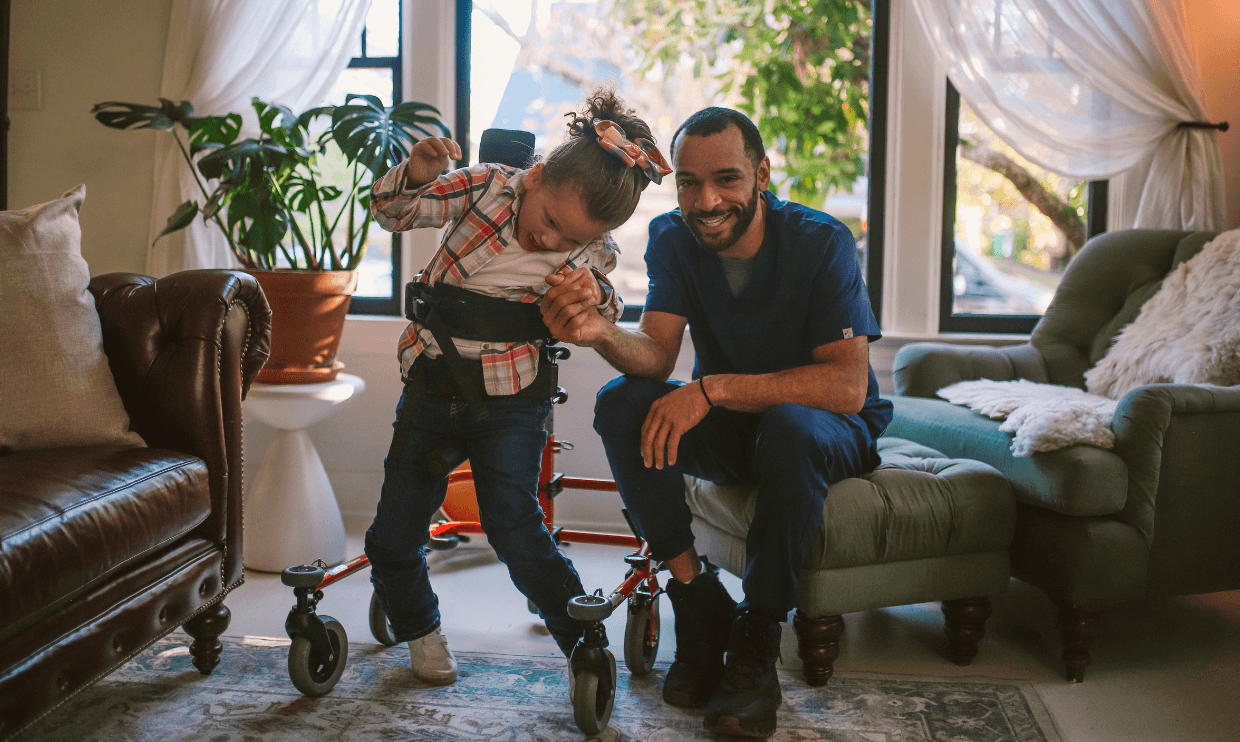
In the first part of this series, Fostering to Adopt a Child with a Disability in California, we explore the process of adopting a child with a disability from foster care, advice on accessing financial and public benefits, available supports and services after adoption, and other resources for families. As we explain in that article, a disproportionate number of children in foster care have some form of disability, and they are more likely to end up in foster care than their nondisabled peers. This can lead to a compounding of trauma from the stress of entering the foster care system alongside not having consistent supports or recognition for their disability.
Beyond the logistical and legal aspects of fostering and adoption are the day-to-day activities and challenges that all parents face: helping their child navigate school, forming a deep bond, and supporting their mental health. For children with disabilities in foster care, these spheres of life intersect in unique and sometimes opaque ways. These intersections also tend to change drastically as the child ages.
To learn more about how resource parents can make informed decisions about their child’s education, mental health, financial resources, and eventual transition to adulthood, we spoke to Judy Mandolfo, the family resource coordinator from the California Alliance of Caregivers (CAC); Janet Sherwood, attorney and co-founder of Advokids legal resource organization; Eileen Devine, licensed social worker, consultant, and creator of the Brain First parenting approach; and Shannon Iacobacci, a foster-adoptive parent, IEP consultant, and FASD specialist, and founder of Embracing the Brain.
Prenatal drug and/or alcohol exposure
Many children in foster care who enter the system as infants do so having been exposed prenatally to drugs and/or alcohol. Rates of prenatal drug exposure have also unfortunately risen in a majority of states across the country, which can translate to a higher percentage of children entering foster care having been exposed to drugs and/or alcohol before birth. Per a recent research paper in the medical journal StatPearls, the most common substances that fetuses are exposed to are alcohol, tobacco, cannabis, cocaine, and opioids.
A recent study published in the journal Alcohol: Clinical and Experimental Research indicates that around 30% of infants and children diagnosed with Fetal Alcohol Spectrum Disorder (FASD) will be placed into foster care, and around 19% of children in foster care nationwide have a FASD diagnosis. Other sources indicate that the numbers are even higher.
In a hospital setting, infants who are suspected to have prenatal drug and/or alcohol exposure may have their blood tested for substances by hospital staff; a representative, often a social worker, is required by law to document any suspicions of a diagnosis. However, if a parent does not consent to having the infant tested, the infant’s condition may not be identified until they are placed with a resource family. There are other measures to assess for FASD and drug exposure at birth, such as withdrawal symptoms (including those for neonatal abstinence syndrome) or the blood test results of the mother.
If a baby is placed with a family and their prenatal alcohol and/or drug exposure hasn’t been identified, the resource family can also flag their suspicions with the baby’s social worker. Some common symptoms of prenatal alcohol and/or drug exposure include:
- Tremors
- Poor sleeping and feeding
- Irritability
- Excessive, high-pitched crying
- Vomiting
- Hyperactivity and extreme reflexes
- Seizures
- Sweating
- Diarrhea
Some symptoms manifest from specific substances the child was exposed to. Children born with prenatal meth exposure, for example, may develop intense diaper rash and respiratory issues, while children exposed to opioids may suffer from gastrointestinal issues and show an abnormally rigid muscle tone called hypertonia. Across the board, these babies likely have lower-than-average birth weight, and may demonstrate a delay in growth and developmental milestones, including a “failure to thrive.”
In some cases, because of the stigma surrounding parents who suffer from alcohol and/or substance abuse, FASD or prenatal drug exposure isn’t correctly diagnosed until later in the child’s life. While the long-term effects of prenatal drug exposure aren’t as well documented as alcohol, they can still have lifelong impacts on children, including negative impacts on their mental health and behavior, compromising brain and motor skill development, and the development of disabilities like ADHD, emotional disabilities, and intellectual disabilities.
How will I know if my foster or adoptive child has alcohol or drug exposure?
When it comes to fostering-to-adopt a child with FASD (and any drug exposure), no two children will have the same symptoms or develop the same long-term effects. For resource families and adoptive parents, the more expansive research the better. “Number one, educate yourself on FASD, because you really need to know what may be required of you as a parent, what that may look like for your child, what that’s going to look like for you. It’s so different for every child,” says Iacobacci, “how it manifests at home, how it can manifest at school, how it can manifest in the community.”
In addition to the training resources parents receive, national organizations like the National Council for Adoption provide free webinars and courses for resource families who have a child with FASD or prenatal drug exposure. Mandolfo adds that local counties’ foster agencies also provide more in-depth training for resource families who want to foster a medically fragile child. As we discuss later in this article, seeking out resource/adoptive parents who have also fostered and raised children with similar symptoms can be a great resource of home remedies or holistic aids that may not be covered in training.
“It's important that families find what is necessary for them, not just ‘oh, we're just going to read a book,” adds Iacobacci. “They really seek the training that they need to support the children that are in their home.”
Documenting needs
Looking ahead, informing a child’s social worker of their symptoms and establishing a medical paper trail with their pediatrician not only benefits the child’s health, it gives the resource family better documentation for higher levels of services and financial assistance throughout the child’s life. Devine adds that once a child with FASD or drug exposure reaches school age, it may be harder for a resource family or adoptive family to get adequate services for their child due to either condition not being a recognized IEP category.
“It all matters in terms of what treatment is right for this child,” says Devine. “Where are their skills? What do we know about their history? How does that impact the way that they navigate the world? And does this therapy, [or] this intervention, whatever it might be, makes sense for them? It’s not one-size-fits-all.”
However, symptoms related to FASD can manifest in ways that may qualify the student for accommodations and services under what is called a FASD-informed IEP, helping the child receive needed services under an IEP with a framework that recognizes the impacts of FASD on a child’s academic and social development. In those cases, she recommends open dialogue with the child’s pediatrician and/or occupational therapist, who can provide more resources and provide documentation for the child’s school if their needs related to the effects of FASD aren’t being met.
You can learn more about FASD in our article Fetal Alcohol Spectrum Disorder (FASD) 101.
Educational needs and IEPs
The median age for children in foster care is eight years old, meaning that resource families who want to adopt a child from foster care will more than likely be matched with a child who is already in school. Students in foster care, per the Department of Education, are at higher risk than their peers for dropping out of school and less likely to complete a college degree than their peers, and a child’s disability, if it goes unsupported, can compound these risks.
Ensuring that a child is having their disability needs met at school — through an IEP, a 504 plan, or other school-based interventions — can be tricky because resource parents generally do not have educational rights that permit them to make big decisions for their child, such as signing off on services or requesting IEP assessments. However, there are still plenty of options for resource parents both before and after they adopt a child with a disability.
How can resource families help with educational support?
Before they receive full educational rights through finalized adoption or a court petition, resource parents can exercise a degree of decision-making authority under the Reasonable and Prudent Parent Standard, such as helping a child enroll in extracurricular activities or facilitating playdates with peers (provided they do not impact the child’s emotional, physical, or developmental health). They can also still advocate for the child’s needs to the appropriate team members, such as their social worker or attorney, and document the child’s needs for future interventions. Resource parents may also determine that their child’s disabilities may require more intensive caregiving that would require them to live at home indefinitely.
Current and past research supports what many sources for this article told Undivided: we need a lot more data on how children in foster care with disabilities navigate school. There is currently no consistent tracking of how many children in foster care in California and across the country have an IEP or may be eligible for one, but studies over the last twenty-five years indicate that many children in foster care may require and qualify for an IEP and related services. There is also overwhelming evidence that children in foster care both need and benefit tremendously from mental health services that address the unique intersections of disability and trauma that many children in foster care face at some point in their live
IEPs and educational rights
Multiple factors make it hard to determine exact statistics on the number of children in foster care who qualify for and require an IEP, at both a state and a national level. A report compiled in 2002 suggested that as many as 40% of children in foster care at the time were IEP-eligible, but that number could be higher due to a lack of consistent tracking and the delay in identifying many children’s disabilities when they enter foster care.
A wide range of more recent data sources and studies indicate that between 30% and 60% of children from the foster care system will require and/or benefit from an IEP. The most common diagnoses or co-occurring diagnoses with regard to the IEP for a child in foster care are autism, intellectual disability, emotional disability, and conditions related to congenital drug or alcohol exposure, such as FASD. Very often, sources say, children in foster care — regardless of disability status — also receive mental health diagnoses including depression, PTSD, and anxiety, meaning that their IEP should include provisions for mental health services.
“No matter what label we put on it in terms of a diagnosis,” says Devine, “their neurobiology has been changed in some way. The root cause might be different, but the effects are very similar. The nervous system is more fragile, and what that means is there are ways that we expect people to navigate the world at different ages, and those assumptions that we make automatically are not true for many of these kids.”
Beginning the IEP process as a resource parent
Establishing a good relationship with the child’s school is a vital part of the fostering process, but resource families should know that their rights are limited. A child with disabilities may not come into their home with an IEP in place to help them access services they need, or they may have an IEP that does not encompass all their co-occurring conditions. If a resource family suspects their child requires an IEP, they need approval from the child’s educational rights holder to make any decisions regarding the child’s education.
But resource parents can still start those conversations, even if it’s only for a student study team. Mandolfo says, “For most children in foster care, you can ask for IEPs. If you ask for an IEP in writing, they have fifteen days to respond to you and make the arrangements, and then sixty days to complete the assessment and make a determination. So if you ask for an IEP for a child, the first thing they do is they want to do an SST (student study team), and they would prefer to stop there. If you push, you might get a 504 plan; then they want to stop there. But I really encourage families with kids from [foster] care to insist on an IEP, because the IEP has records behind it, but it also has accountability, and so you can watch a child’s progress or not, and put more things in place or take things away.”
Mandolfo adds that it can be hard to advocate when you ask for an assessment, because the school’s most typical response is, “Are you the educational rights holder?” If you’re not, then they’ll respond by telling you that when they find the educational rights holder, they’ll revisit doing an assessment.
“A foster family cannot do any of those assessments without educational rights; you have to be the educational rights holder. Most families are not the educational rights holder, so they have to find the bio parent to approve those assessments, or they get a court order to remove the educational rights and give them to another person,” says Mandolfo. “It can be a relative, it can be the foster parent, it can be a Court Appointed Special Advocate (CASA), their attorney, but it cannot be the social worker, so you have to wait for that process to be done so you can ask for the IEP.”

There are, however, avenues for resource families to learn more about their child’s needs at school. “I encourage families that when the child comes into your home, if they’re school age, check with the school. You have a right to look at their records as a resource family, so that you can determine, ‘What are the needs of this child?’ That should be in the records, and you should be aware and actively pursuing help,” adds Mandolfo. “We encourage families, if your child does have an IEP, then the next question would be, ask ‘Who’s the educational rights holder?’ That should be in the school file.”
If a resource family feels that the child has immediate needs at school that are not being met, they can communicate these needs to the child’s social worker, who can then inform the court. Parents can also file a JV-290 Caregiver Information Form directly with the court, documenting the needs of the child that are not being met by the child’s current educational rights holder. They can also petition for educational rights through a JV-180 Request to Change Court Order form, though Mandolfo only suggests pursuing these avenues after communicating with the child’s social worker and educational rights holder.
Documenting school needs and support
Additionally, resource families can be involved in protecting the child in their care from unnecessary discipline that may arise from their disability or from mental health challenges related to their experience before and in foster care.
“I do think there has to be some level of disclosure in the school system about that child’s challenges. It doesn’t have to be the entire full story, but how is that child going to be accommodated and served well if [the school doesn’t] have that information, especially when much of [the challenges are] invisible,” says Devine. “If they don’t have that information, then that child can be punished for things that are really related to their trauma history, their brain working differently, their nervous system being fragile.”
Sherwood’s advice on a paper trail can also help resource families leverage their child’s needs at school. Even if the resource parent doesn’t have educational rights, they can still communicate with the school’s foster care liaison, who can help make recommendations to the people who do about the child’s accommodations and services.
“One of the things that I’ve always recommended to caregivers is if you’re going to call them and say, ‘I think this kid needs an IEP,’ and the social worker [says] no, then you document that with an email to the social worker that says, ‘This confirms our conversation today where we discussed XYZ and you told me you didn’t think it was necessary.’ A smart social worker is going to figure out that they can’t just blow this caregiver off and get away with it, which if it’s not being documented, they can,” says Sherwood. “And then the caregiver has the evidence to establish that they’ve done all the right things in terms of asking the people who have authority to do something.”
Preserving school placements for children in foster care
Changing schools is a stressful process for any student, and even more so for children with disabilities in foster care. Research from the Learning Policy Institute shows that around 34% of children in foster care can experience at least one school change in a given school year, and these are often accompanied by a change in residence.
While local agencies do their best to prioritize placements within the same county and district as the child’s preferred school, called their school of origin, there are times where the best placement may conflict with the resource family’s residence. However, this does not mean that a child in foster care is required to change schools or cannot be placed with the resource family who plans to adopt them if they do not live near the child’s school of origin.
Existing law states that a foster care agency must “allow the foster child to remain at the child’s school of origin upon the initial detention or placement, any subsequent change in placement, the termination of the court’s jurisdiction, or pending resolution of a dispute regarding school of origin placement, as provided.” Until recently, this preservation of the school of origin applied only to public schools, but the passing of California’s AB 723 in 2023 now ensures that children in foster care can maintain their school of origin even if they are currently placed in a non-public school. This includes matriculating (such as the change from middle school to high school) within the same school district.
“Children have a right to their school of origin. So in foster care, the school of origin doesn’t necessarily mean the school they’re in. It means the school they felt safest and most comfortable in in the last fifteen months. If my school is District A but the child’s most recent or most comfortable school is District C, then I’m encouraged to continue to take that child to District C,” says Mandolfo.
Can resource families receive transportation assistance to school?
Even if resource families do not live near the child’s school of origin, “it’s required that the Department of Ed and social services work together to get that child to that school.” This can include providing resource parents with a stipend for gas for the school commute, a transportation pass, or a special bus route to ensure the student can keep attending school and receiving the services related to that school.
The intersections of foster care, disability, and trauma
Many children entering foster care not only have disabilities recognized under IDEA but have also experienced trauma and subsequent mental health challenges that may compound the barriers they face.
For a child with disabilities coming from foster care, a comprehensive IEP won’t serve their needs without addressing the ways their trauma can manifest and how it can unintentionally influence their relationships with peers and teachers at school. The California DSS estimates that as many as 80% of children in foster care experience mental health challenges, and only half of them receive the services needed to work through these challenges.
Any amount of time spent in the foster care system will impact a child, and it may take years for those effects to fully manifest alongside their disability needs. As we discussed in our article about emotional disability, school personnel can often misunderstand and thus mischaracterize the behavioral and social aspects of a child’s trauma and mental health needs, leading to a delay in them receiving the appropriate services for both their disability and their mental health.
In this clip, Devine explains the unique neurobiology of children in foster care with disabilities and how it can impact their learning and relationship-building.
Just as a disability informs a child’s distinct neurobiology, so does the experience of foster care and adoption. Devine, who has worked on both sides of the adoption process as a parent and social worker, recommends that, in addition to mental health services such as ERICS or ERMHS that they can access through their IEP, families seek out an adoption-competent therapist who can address the emotional needs of both the child and parents as they navigate the adoption process.
“It’s so layered and complex, she says. “A good therapist will be able to make recommendations for medication management if that’s needed, family therapy if that’s needed, occupational therapists if that’s needed. The school piece is tricky because, again, there’s just varying levels of acknowledgement and information about what it means to be an adoptee, for a parent to say, ‘This is their history.’ Disclosure is a really tricky thing there, too. Like, how much do I disclose about my child’s history . . . so that they are given the supports they need?”
As we discussed in the section about older children, a child’s disability and mental health needs will change as they age, and what they needed when they were adopted may no longer be relevant as they matriculate and near adulthood. Keeping meticulous records, fostering communication with the child and their school IEP team, and staying informed can help resource families support their child through each new phase of mental health care.
In this clip, Iacobacci explains how open communication with a child’s school about their trauma history can help educators better identify the supports and services to serve that child.
Supporting kids’ mental health
Multiple sources say that providing mental health services for a child with disabilities in foster care or one who has been adopted has a profound effect on the child’s personal, social, and educational development. As we discuss in our article on emotional disability, trauma and mental health conditions can often obfuscate the true needs related to the child’s disability. Sherwood has noted that many children in foster care develop more intense mental health needs in adolescence that require higher levels of services — and consequently higher costs.
In this clip, Devine discusses invisible disabilities, misdiagnosis, and why resource and adoptive parents may need more support as children grow — plus how pediatricians, neuropsych exams, and school supports can help families find answers.
“There’s another level of difficulty related to kids who have been in the foster care system or adopted out of foster care. So we have serious behavioral issues, we have serious mental health issues that sort of don’t manifest until the child hits adolescence. The child was adopted when they were seven or eight,” she says, but “none of that was contemplated in the Adoption Assistance Program (AAP) rate [more on this later!] when that rate got set. What I have seen more than once is foster parents [and] adoptive parents finding out that AAP doesn’t begin to cover some of these unanticipated costs. And the counties are very resistant to upping the AAP to cover those costs, even though they are supposed to provide post-adoption support.”
Adoptive parents have every right to dispute their AAP rates as the needs of their child change, but Sherwood advises that it won’t be easy. Open communication with the child’s post-adoption welfare team as well as their previous foster case manager can strengthen the child’s case. All parents should keep any documents from the child’s health care providers, IEP team, and court records handy as well.
Mandolfo adds that adolescence is also when a child’s trauma can begin to compound with their disability, escalating mental health issues and the potential development of more intense behavioral conditions such as oppositional defiant disorder. “Nobody tells you that there’s help available, but there is. And so as a child is getting older, there are ways of helping them,” she says. “You can do wraparound services, which come in and wrap around the family, offer a mentor for the child, a parent mentor for the parent, [and] a team to come around and say, ‘Let’s work together.’ Getting to those services earlier, that would make a big difference for a lot of the families that we support and talk with as their kids are older.”
In this clip, Judy Mandolfo explains the importance of forging a strong emotional attachment between resource parents and their child.
Prioritizing attachment therapy as soon as possible, especially in older children, can help resource and adoptive families lessen a lot of grief later on. “If I controlled the world, I would say every adoptive family received six months of attachment therapy when the child moved in with them, so that they understand attachment. A lot of times, we have families that reach out and say, ‘We have a little person, and they just fit right into our family.’ And it seemed seamless and they snuggled right in, and it was wonderful, and they were close. I hear this a lot from families that, after adoption, are in a significant crisis at puberty,” says Mandolfo. “They were superficially attached, but the family didn’t realize because they hopped into their arms and they read them a book, and they did all these great things with the 18-month-old, three-year-old, etc. — but that’s not well-seated attachment.”
As with any relationship with parents and children, attachment takes time, energy, and communication. Research indicates that while a child may initially struggle with attachment due to trauma experienced before placement with their resource family, many children in foster care can and do form deeply loving and lasting relationships with their resource and adoptive families. Nothing is impossible!
In her work as a social worker and through her consulting and training business, Devine highly encourages families to seek out an adoption-competent therapist for themselves and their child as a complement to all the other services their child may receive through Medi-Cal, an IEP, and AAP. She has herself administered training through the Center for Adoption Support and Education (C.A.S.E.), which has a national directory to connect families throughout California and other states with therapists who specialize in addressing the mental and emotional stressors of foster care and adoption with both children and parents.
Tips and key takeaways
While the foster-adoption process can appear long and complicated, it isn’t without its joys, rewards, and supportive benefits. Adopting a child from foster care comes with a bevy of connections and supports that private-adoption parents do not receive, including financial assistance, access to resources, and consistent communication with a social worker and agency who can help families navigate parenting a child with complex needs that will change as the child gets older. Even if you intend to adopt from the start, the mandatory six-month fostering period allows you to establish a routine with your child and better learn their needs (and yours!) before you both transition into a lasting family with different services, responsibilities, and resources.
Mandolfo, Devine, and Iacobacci all attest that both fostering and adopting children with disabilities have changed their lives for the better, and Sherwood has dedicated her life to helping youth with disabilities in foster care. While it’s impossible to sum up their decades of experiences, some of their most enduring insights to prospective or current resources families looking to adopt a child with disabilities from foster care are:
- Prepare to keep learning: both adopting a child and raising a child with a disability present parents with a lifelong education in their child’s needs and the resources available to them, so why would a child from foster care with disabilities be any different? Going beyond the minimum trainings, engaging with fellow resource/adoptive families, and keeping an eye on emerging research and legislation helps keep both parents and children informed on how to nurture their family while addressing medical, educational, and psychological needs.
- Take notes on everything: there’s no such thing as too many notes when it comes to engaging with DSS and your local foster care agencies. All information is data that helps you help your child’s case team, and eventually the team that you’ll be part of as their adoptive parent. Noting even the smallest differences in physicality, responses, emotion, and school activity can help you anticipate your child’s needs before they potentially escalate.
- Cultivate relationships with your child’s social worker, school, and health care professionals: The foster system is no walk in the park, and many of the key civil servants and workers who keep it running are stretched thin by its demands. Making yourself available and maintaining communication with your child’s caseworker, medical providers, school personnel, and potentially their biological family helps pave a smooth path for the foster-to-adoption process.
- Connect with other parents: no one is an island. Attending conferences, finding local groups, or seeking out professionals who are informed in your situation and how to navigate it can not only help the responsibility feel lighter but also can provide you with information that many county and foster agencies won’t disclose online.
“A lot of foster families or resource parents go into this with rose-colored glasses,” says Iacobacci. “There are a lot of unknowns when you have children in foster care. It's like putting a puzzle together — sometimes there are missing pieces.” But, “if you can fill in those missing pieces and have that holistic view of your child, that’s only going to help them throughout the process. Adoption is joyous. It is wonderful.”
To learn more about the process of fostering to adopt, along with resources for families, head to the first part of this series, Fostering to Adopt a Child with a Disability in California.


Unlock more with Undivided
Turn knowledge into action that benefits your child
Get Membership


Author