

Transportation Options and How to Pay For Them
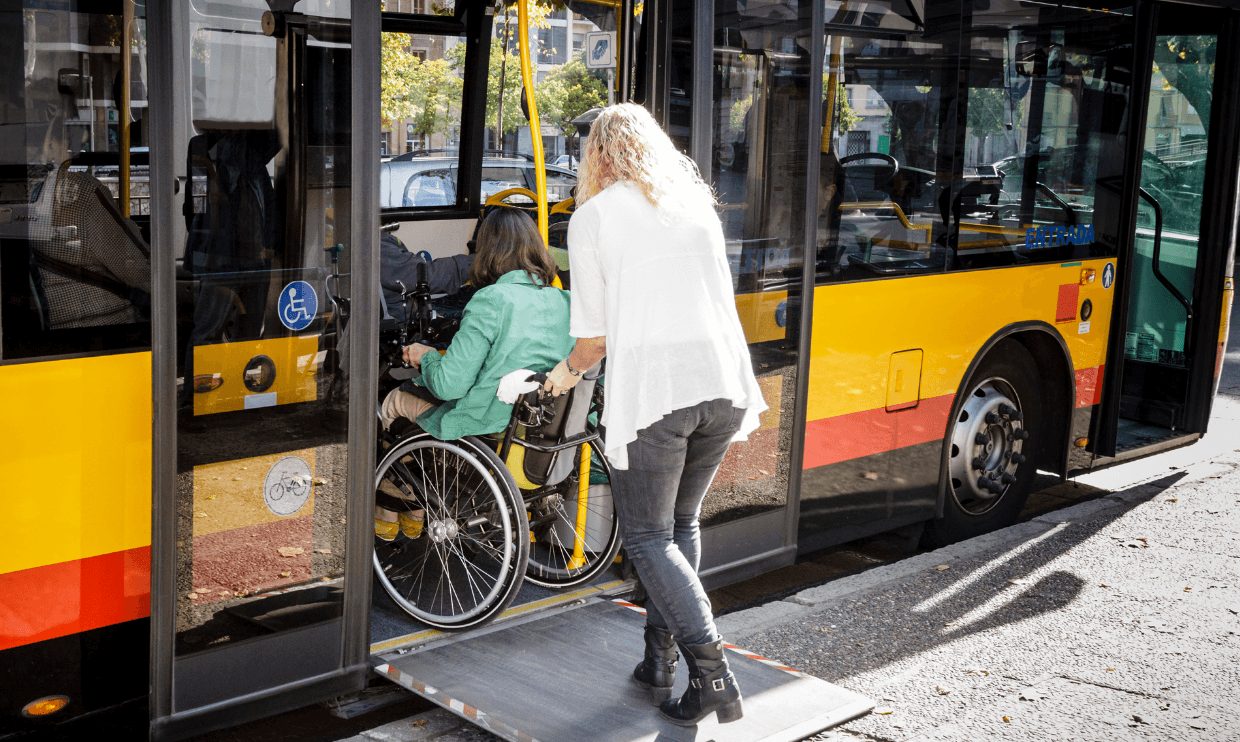
As children get older, school-provided transportation starts to cover less and less of their actual lives. The bus gets them to school, but it doesn't get them to Saturday therapy, a weekend job, a community college class, or a friend's house. And for many families, figuring out how to fill those gaps is one of the least-talked-about challenges of raising a child with a disability.
The good news is that there are real options — and real funding sources — available to families at every stage, from middle school through adulthood. Public transit, paratransit, rideshare services, private transportation companies, and family-based options all have a role to play depending on your child’s needs, your community, and what you’re able to coordinate. And California programs like Medi-Cal, Regional Center, the Self-Determination Program, and the Department of Rehabilitation can help cover the cost in ways many families don’t know about until much later than they should.
This article walks through the full landscape: your rights under the ADA, the transportation options available to teens and adults with disabilities, how to apply for and access them, and how to pay for them. For more information, we spoke to Sofia Cervantes, advocate with the State Council on Developmental Disabilities (SCDD), Los Angeles office; Scott Shepard, MA, Ed, executive director of Avenues SLS and faculty at CSU Northridge; Autumn Elliott, civil rights attorney; Nicole Morris, transition consultant; and Lisa Concoff Kronbeck, Undivided California public benefits specialist.
*One thing worth knowing up front is that most disability-specific funding programs operate on a ”generic resources first” principle — meaning you’re expected to explore public options like transit and paratransit before disability-specific funding kicks in. Knowing that early helps you work through the system in the right order.
Transportation rights under the ADA
Before diving into specific options, it helps to understand the foundation everything else is built on. Transportation and accessibility go hand in hand, especially when you’re working so hard to get your child the services they need and into various programs. Getting there shouldn’t be another barrier. Under the Americans with Disabilities Act (ADA), all public transportation must be accessible by design. That means that whether your child is riding a city bus, taking the metro, or using a paratransit service, they have federally protected rights to access that system safely and with dignity.
In practice, ADA accessibility requirements for public transportation include:
- Lifts or ramps for wheelchair users or people who require mobility devices
- Priority seating and spaces for wheelchairs or mobility devices
- Visual and audio cues for people who are blind, have low vision, or are d/Deaf or hard of hearing
- Bus stops located in areas where there are no obstructions
- Service animals allowed on all forms of public transportation
In the following video, Elliott provides examples of public accommodations and transportation requirements under the ADA.
These services are meant to make sure your child can get where they need to go safely and with dignity. These protections apply across the board — on buses, trains, metro systems, and paratransit services. If you notice something missing in your area, such as a ramp, visual signals, or audio cues at intersections, the first step is to reach out to your city or local transit agency directly. If the issue goes unresolved, you can file a complaint with the Federal Transit Administration. You can also get involved locally — joining advocacy groups, attending public meetings, or rallying your community around specific accessibility gaps can make a real difference over time.
It’s also worth knowing that the ADA extends beyond public transit to rideshare services. Private rideshare companies like Uber and Lyft are technically required to follow ADA rules and provide reasonable accommodations. In California, the TNC Access for All Act adds an additional layer of enforcement, requiring rideshare operators to increase the availability of rides for wheelchair users and reduce wait times. More on rideshare accessibility later in this article.
Public transit
Public transit becomes increasingly important as students move toward adulthood — and in many communities, it's the most flexible, affordable, and frequently available transportation option out there. City buses, light rail, subway systems, and commuter trains all fall under this category, and most are required by the ADA to accommodate riders with disabilities.
To make travel easier across California, the California Integrated Travel Project (Cal-ITP) is helping transit providers offer contactless payment, discounted fares, and reliable information about routes and real-time arrivals. Students with disabilities may ride free with school-issued passes, and older riders might qualify for discounts up to 50%. These updates make public transit more convenient, especially for those navigating multiple systems.
Metro is one example of public transit in LA County. Metro provides a system of bus, light rail, and subway lines throughout LA County. Metro fares are discounted for individuals with disabilities and children (more info below!).
Pros and cons of public transportation
Students with disabilities can apply for reduced-fare cards or ride free while in school. Public transit usually offers more flexibility, as Cervantes notes. Routes and times are generally more frequent than scheduled ride services and can be used without long advance notice. Trained staff or caregivers can often ride along during the learning phase.
The ADA requires public transit systems to accommodate wheelchair users, ensuring they can board and ride safely. In Los Angeles, if your child is taking a bus or the Metro and needs a wheelchair lift, consider contacting your local transit agency before your trip to confirm that wheelchair lifts, ramps, elevators, or other accessibility features along your route are in service. In LA, you can call the Wheelchair Lift Hotline of the Metropolitan Transportation Authority (MTA) about an hour before your ride. They can let you know if the lift on your child’s route is working.
While flexibility is a real advantage, Shepard and Cervantes are honest about the effort involved. Getting to and from stops can be tiring or physically challenging, especially for riders with mobility difficulties. There’s also a meaningful learning curve — students may need support building routines, practicing transit etiquette, and handling situations like late buses or missed transfers. For more on how to build those skills, see our article on travel training.
Applying for a disability discount pass on public transit
Most transit systems in California offer a reduced fare program for riders with disabilities, and the process for applying is fairly consistent across agencies — though the specific forms, documentation requirements, and offices vary. Both Morris and Shepard help families navigate this regularly, and their tips apply broadly regardless of which transit system you’re working with.
Start with your local transit agency’s website. Most have an online application for a reduced fare or disability discount card. Look for terms like “reduced fare,” “disability discount,” or “accessibility services” in the navigation. Most transit systems have an online form that you can fill out ahead of time. In Los Angeles, that’s the Reduced Fare TAP card application through Metro’s website.
Gather proof of disability. There are several types of documentation you can use. Shepard explains that it could be:
- A letter from the school district confirming the person has a disability
- A letter from the Regional Center
- Documentation from a doctor
- An SSI benefits letter that confirms disability and/or low income (note that a Medi-Cal card is not accepted)
Make sure the rider has a valid California ID. If the person doesn’t have a driver’s license, Shepard recommends getting a state ID by age 18. She notes that they’ll need documents such as a birth certificate, so parents might need to assist with gathering those documents.
Ask for in-person help if you need it. Many transit agencies have a walk-in office or accessibility services counter where staff can answer questions and help you submit paperwork. Shepard shares that LA Metro has a regular office where you can turn in your paperwork and get help from staff if needed. If your child is no longer in school and needs help with the application, Shepard notes that the Regional Center can sometimes send someone to your home to walk through the process.
Once approved, the rider gets a special fare card that comes with a few extra benefits:
- Discounted rides on public transit, such as Metro buses and trains
- Access to door-to-door transportation, including smaller paratransit buses
- Free rides for a support person when the rider can’t travel independently
A note for families in Los Angeles County: with the Reduced Fare TAP card for persons with disabilities in Los Angeles, riders can save up to 80% off regular Metro fares. You can also look into the Low Income (LIFE) Program for free fares if your young adult is a recipient of SSI, CalFresh, or Medi-Cal.
Paratransit services
If your child can’t drive or use public transit on their own, getting around can feel tricky, but there are still plenty of ways to help them get to where they need to go.
When traditional public transportation doesn’t fit a person’s needs, the ADA requires public transportation agencies to offer accessible options for individuals with disabilities. This is where paratransit comes in. Paratransit is a service that must be provided when someone with a disability is unable to use traditional forms of public transportation because of intellectual or physical disabilities, requires an accessible feature or vehicle that isn’t available, or is unable to reach or navigate bus stops.
Paratransit accommodations can look like the following:
- Wheelchair-accessible vehicles (small buses or vehicles with lifts or ramps)
- Secure area(s) for mobility equipment to be safely stowed
- Door-to-door or curb-to-curb pickup and drop-off services
- The ability for personal care attendants or a companion to accompany the rider at no additional cost
- Rideshares for those who need a less crowded space but can still ride in a smaller vehicle
- Alternative methods for booking transportation (phone, relay services, or online booking)
- Consistent, fixed routes at the same time as public transportation
Pros and cons of paratransit
As Cervantes points out, paratransit provides a safer option for many riders with mobility challenges, minimizing the walking required by offering closer pickups and drop-offs. Drivers receive specialized training to assist passengers with disabilities, and a caregiver or attendant can ride along if needed. Shepard notes that the cost is very affordable — often just a few dollars per trip — making it one of the most budget-friendly options available. Rides can also be scheduled on a recurring basis to fit consistent routines like college classes or work shifts.
The tradeoffs are real and worth knowing up front. Riders must typically schedule trips days in advance, and pickup windows can be wide — sometimes an hour or more — which makes tight scheduling difficult. Morris points out that since paratransit vans often serve multiple riders in a single trip, ride times can be long. It's not uncommon to leave home early in the morning for a midmorning appointment or return home late in the evening.
Drop-off location is another limitation. While paratransit is often described as door-to-door service, Cervantes notes that in practice it’s sometimes more accurately curb-to-curb — and the curb may not always be right at your destination. As she explains, “Sometimes, let’s say a person is going to a concert and a person might want door to door, but sometimes a car might not be able to go to the curb of where a concert is taking place. They might still leave them at a parking lot, and there’s a lot to walk from that location to the venue.” For riders with limited mobility, that unexpected distance — even just through a parking lot — can be a real barrier.
Driver shortages have also caused delays and unpredictability in some areas, as Shepard has observed firsthand.
Who qualifies for paratransit
Eligibility for paratransit is based on function, not diagnosis. That’s an important distinction. Your child doesn’t automatically qualify just because they have a disability — they need to demonstrate how that disability makes it difficult or impossible to use fixed-route public transit. There are three main ways someone might qualify:
- A person can’t ride a bus or train independently, even if it’s accessible.
- Their local route doesn’t have accessible vehicles or stations.
- Their disability (combined with factors such as weather, distance, or lack of sidewalks) makes it unsafe or impossible for them to get to or from the bus stop.
If you believe that you and your child can benefit from paratransit services, double-check eligibility before applying. Elliott explains the three ways a child may qualify for paratransit, how eligibility is assessed, and what to do if your child is denied or given only conditional access:
Don’t worry if your child doesn’t fit neatly into one category. Many people qualify under more than one, especially if their needs or abilities change day to day or with the seasons.
How to apply
The application process involves contacting your local public transit agency and submitting a paratransit eligibility request. The agency will then conduct an in-person evaluation to assess your child’s ability to use fixed-route transit. Here’s how to approach the process, based on guidance from Morris, Shepard, and Cervantes:
- Start with the Regional Center if your child is a client. Morris notes that families often begin the process there — staff can help figure out what kind of transportation is needed and whether paratransit is the right fit.
- Start during high school if possible. Shepard strongly recommends beginning this process while students are still working with school teams. That’s when it’s easiest to gather the documentation and ID needed for the application, with support from people who already know your child.
- Ask for help if you need it. If your child is no longer in school, Shepard notes that the Regional Center can sometimes send someone to your home to help walk through the application. It’s not just about asking for the service — sometimes it’s about asking for help completing the steps to get there.
- Understand that each program has its own process. Cervantes emphasizes that paratransit providers have different eligibility rules, procedures, and scheduling systems. Don’t assume that what works for one service will apply to another. Read the requirements carefully before applying, and check whether the application is online or requires paper forms.
- Come to the assessment prepared. Eligibility is determined by how your child’s disability affects their ability to use transit — not by their diagnosis alone. Some agencies might require an in-person interview or a travel skills assessment. During the assessment, explain your child’s specific challenges clearly and bring any mobility aids or support equipment they use on a typical trip. If your child has a condition that isn’t easy to see — such as seizures, sensory issues, or anxiety — don’t be afraid to speak up and ask whether their full range of needs is being taken into account.
Strengthen your application with real-life detail. The more concrete and specific your documentation, the stronger your application. Families can include:
- A statement from a doctor or support provider
- A short journal describing how travel affects the person
- Photos or notes about factors such as unsafe intersections or lack of curb cuts
- Notes about conditions that vary by day or season, such as fatigue, heat sensitivity, or winter ice
What to know once approved
Once your child is approved for paratransit, a few key rules apply:
- Paratransit services are required to be provided during the same time and day as other fixed-route services.
- Paratransit services are legally allowed to charge up to twice the regular fare of a fixed route.
- They cannot charge for a personal care attendant, someone who helps you with tasks either during your ride or at your destination.
- They must also allow you to have at least one companion who is traveling with you to keep you company or as a friend (your attendant does not count as a companion). The transit agency has the right to charge your companion a fare, but that fare cannot be more than double the regular service fare.
- Services have to be provided within an hour of the requested pickup time, which includes prior or after. You’ll want to learn and understand the pickup window.
What to do if your application is denied
Getting a “no” can feel discouraging, but it’s not the end of the road. In fact, many families successfully appeal after clarifying things the agency missed the first time. Here’s how to move forward:
- You can appeal, and you don’t have to rush. Everyone has at least 60 days to file an appeal. During that time, you can collect more information, respond to what the denial letter says, and request a chance to speak or write in more detail. The person reviewing your appeal must be different from the one who made the first decision.
- Fill in any gaps. If the denial says your child “appeared able to travel safely” but that’s not accurate, you can explain why. Maybe they had support with them during the assessment, or maybe the agency didn’t know about certain symptoms that only show up after longer walks or in unfamiliar places. This is your chance to tell the full story.
- File a complaint. If the assessment felt rushed, confusing, or incomplete, you can file a complaint with the FTA. You can also reach out to your local Center for Independent Living (CIL) or a Protection & Advocacy (P&A) agency in your state.
Cervantes walks us through what to expect when applying for paratransit or other transportation services:
Paratransit services in LA County
Getting around independently can be a major part of building a young person’s adult life, but traditional public transportation isn’t accessible to everyone. Fortunately, LA County has several transportation options for people with disabilities.
Access Paratransit in Los Angeles County
Many counties in California offer alternative options for people with disabilities who are unable to access public transit. If you live in Los Angeles County, Access Paratransit is the local paratransit service for riders who are unable to use Metro’s fixed-route buses and trains. It operates as a low-cost shared ride service, with eligibility based on the rider’s functional ability to use accessible public transit — not solely on their diagnosis, age, or medical condition. The process involves submitting an application and attending an in-person evaluation.
Shepard puts it plainly: “Access services is probably the best option for people that really don’t have any other way to get around because they will come right to your doorstep, whether you live in an apartment or whether you live in a house. And they will then take you right to your destination. And the only thing is you have to know when your pickup is and make sure you’re there. If you want to stay later for an activity, that’s difficult to do with Access, but that’s still going to be your best option.”
Morris adds that in San Bernardino County, young adults can qualify for Access once they obtain a disability card through the local metro system.
Dial-A-Ride Services
Many cities across LA County have their own Dial-A-Ride programs. It is a curb-to-curb shared ride service, and the participant must make an appointment for service ahead of time. These programs offer low-cost (sometimes free) van or taxi rides for short trips, such as to the grocery store, a class, or a doctor’s office. Dial-A-Ride operates seven days a week, 24 hours a day in some areas of Los Angeles County.
Cityride
If you live in the City of Los Angeles and either have a disability or are age 65 or older, Cityride is worth checking out. It offers participants reduced costs for the purchase of Cityride Dial-A-Ride services and City of Los Angeles permitted taxicab rides, as well as free DASH bus rides.
NFT program
The New Freedom Transportation (NFT) program offers free, on-demand transportation for adults with disabilities and seniors. It’s designed to fill service gaps that ADA paratransit doesn’t cover, helping riders get to medical appointments, wellness activities, and community events across LA County. Individuals with a disability aged 18-64 — temporary or permanent — are eligible. Individuals can choose between two programs:
- Volunteer Driver Mileage Reimbursement (VDMR): riders choose a volunteer driver (a family member, friend, neighbor, or caregiver) who uses their own vehicle.
- Taxicab Services Program (TSP): riders receive a preloaded swipe card with a monthly allowance for taxi rides. Trips are available 24/7, with up to four one-way rides or 40 miles per month (whichever comes first). Wheelchair-accessible vans are available, though requesting them 24 hours ahead is recommended.
Rideshare services have become an increasingly practical option for many families — filling gaps that school buses, paratransit, and fixed-route transit simply can't cover. They’re flexible, widely available, and in some cases can be funded through Regional Center or other programs. But they vary widely in terms of who they’re designed for, how much support they offer, and how reliably accessible they are for riders with disabilities.
As Morris puts it, “The biggest thing that parents need to consider is which ones are actually going to work best for their individual needs. All rideshare options have specific ways in which they benefit families.” Rather than looking for a one-size-fits-all solution, think about what suits your child’s comfort level, communication skills, and daily routine.
From caregiver-vetted drivers to teen-friendly apps with live tracking, there are a growing number of choices. Each comes with its own benefits and a few trade-offs to consider. Some families use rideshare services for college, work, or community activities. Uber and Lyft are the most widely used options, and their apps are available in most areas across California.
Services designed for children and families
For younger riders or those who need more support, there are rideshare services built specifically with children and families in mind:
HopSkipDrive
Designed specifically for children, including those who need extra support, HopSkipDrive connects families with carefully vetted caregivers who drive. It offers a service tailored for children who might need more assistance than a typical school bus ride offers.
- Pros: consistent drivers, caregiver know-how, real-time tracking, and door-to-door service that can feel far safer than a crowded bus.
- Cons: if your favorite driver calls in sick, you could be scrambling; availability varies by region.
Zum
This care service blends regular school routes with on-demand runs to therapy, sports, or a caregiver’s house.
- Pros: flexible scheduling, partnerships with some districts, and the safety tools parents expect from big-name apps.
- Cons: if the assigned driver isn’t available, families can suddenly be left without transportation, which can be especially stressful for children who rely on a consistent routine.
Services for more independent teens and young adults
For older or more independent riders, mainstream rideshare apps offer their own set of tools worth knowing about:
Uber for Teens (13–17)
Think of it as Uber with training wheels: live GPS sharing, PIN verification, and the option for teens to book their own rides.
- Pros: builds independence, provides instant status updates for guardians, and offers access nearly everywhere Uber operates.
- Cons: works best for youth who can communicate easily and handle unexpected changes, since extra support isn’t automatically provided.
A cautionary note on safety concerns for parents: while Uber for Teens includes helpful safety features, it’s worth knowing that parents and child safety experts have raised real concerns about teens using rideshare services independently — and those concerns are worth taking seriously, particularly for teens with disabilities who may be more vulnerable.
Jennifer Stein, executive director of Prevent Child Abuse America’s Georgia chapter, has flagged the risk of predatory behavior, noting that unsupervised rides can create opportunities for adults “who want to groom and nurture a relationship with the use of a very vulnerable population” — including the possibility of drivers exchanging contact information with teens and pursuing a relationship outside the ride.
Research from the C.S. Mott Children’s Hospital National Poll on Children’s Health found that parents have significant concerns about teen rideshare use. Among parents surveyed, 67% were concerned or very concerned that a driver might assault their teen — with concern higher among parents of daughters (79%) than sons (55%), and among parents of younger teens ages 14–17 (69%) compared with parents of 18-year-olds (58%), while 59% were concerned about drivers being impaired by alcohol or drugs.
Notably, parents whose teens had already used rideshare services reported somewhat lower levels of concern than those whose teens hadn’t — suggesting that experience and familiarity may reduce anxiety over time. But that doesn’t make the underlying risks disappear, especially for teens with disabilities who may have difficulty recognizing unsafe situations, asserting themselves with an adult, or communicating distress.
Before using Uber for Teens or any rideshare service with your child, it’s worth having an honest conversation about these risks, practicing safety skills together, and putting tracking tools in place. For more on building those skills, see the safety section in our article on travel training.
Uber Caregiver
When your child needs to get somewhere on their own, whether it’s a doctor’s appointment or a community outing, it can feel overwhelming. Uber Caregiver is one way to make it more manageable. This feature allows someone you trust (such as a parent, family member, or friend) to request rides on your child’s behalf, track the trip in real time, and cover the cost using a flex or personal card. It’s a simple tool that can help families feel more confident about solo rides. Discounts and Uber One benefits still apply.
Uber Assist
Available in some areas, Uber Assist pairs riders with trained drivers who can help with door-to-door service. These vehicles can accommodate folding wheelchairs, walkers, and collapsible scooters — but they don’t have ramps or lifts. It’s a good option for riders who need help getting into and out of the car but who don’t require a full wheelchair-accessible ride.
Wheelchair-accessible vehicle (WAV) rides through Uber and Lyft
Both Uber and Lyft offer wheelchair-accessible vehicles (WAV) and drivers trained to understand mobility needs. To request a WAV through Lyft, first enable Wheelchair access in your app settings. Once it’s turned on, you’ll see a Wheelchair ride option when requesting a ride. To request a WAV through Uber, open the app and enter your destination in the “Where to?” box. After confirming your pickup and destination, select WAV from the ride options at the bottom of the screen (in some cities, you’ll need a promo code). Tap Confirm WAV to request your ride. If a WAV driver is available and accepts your request, you’ll see the driver’s information, vehicle details, and estimated arrival on the map. Keep in mind that wheelchair-accessible rides aren’t available in every city and finding a WAV at peak times might take longer or be impossible.
Additional Uber features worth knowing
- Wait time fee waivers and refunds: if your child (or someone riding with them) has a disability that makes it hard to enter a car quickly, you can request a refund for wait time fees charged in the past 30 days or even set up a waiver so that those fees don’t apply in the future. This is especially helpful for kids who need extra time at pickup.
- WAV (wheelchair-accessible vehicle): in certain cities, riders can request a WAV right in the Uber app. These rides are equipped with ramps or lifts and are driven by people trained in safely securing mobility devices. While you can’t schedule a WAV ride in advance, you can request one on demand if it’s available in your area.
- Service animal protections: Uber follows federal accessibility laws, which means drivers cannot deny rides to passengers with service animals. If there’s an issue, such as a service animal being refused a ride or a problem with a cleaning fee, riders can file a report for review. The first two reported messes involving a service animal’s bodily fluids aren’t charged.
- TalkBack and communication tools: riders who are blind or have low vision can use screen readers such as TalkBack to call or message their driver. The app includes labeled buttons and accessible options to make connecting easier.
Uber also encourages families to report any issues with assistive devices, service animals, or driver behavior and takes accessibility violations seriously — up to temporary driver deactivation during investigation.
These features won’t solve every transportation challenge, but they give families more tools to piece together safe, flexible transportation options — especially when paired with caregiver support.
Pros and cons of rideshare services in general
Rideshares, as Morris emphasizes, offer a high level of flexibility. Rides can be booked on short notice, often right when they’re needed. In some cases, the Regional Center might help cover the cost, making this option more accessible. She adds, “[Rideshare services are] really great for even just typical students but geared more toward more independent kids with disabilities or teenagers with disabilities who may not need a lot of extra support. And even the one with Lyft where it has the wheelchair and all of those options, unless you have more of an intellectual disability or something like that, I think these are really good.”
Shepard notes that what really helps students take the next step with rideshares is when they start earning their own money through work. Having a paycheck gives them the flexibility to choose a rideshare when public transit isn’t ideal — like on a hot day when waiting outside is difficult. That kind of choice builds real-world independence.
Shepard also notes that rideshare services often become more relevant as students get older and start building independence. “In high school, they usually receive training and community-based instruction on how to access their local communities. And that can include taking the local public transit.”
That flexibility, however, can come with drawbacks. Morris cautions that many rideshare drivers aren’t trained to support individuals with disabilities, which could lead to safety concerns or inconsistent experiences. Riders might also feel uncertain about how to communicate specific access needs within a mainstream app environment.
Accessibility gaps and your rights
Private rideshare apps such as Uber and Lyft are technically required to follow ADA rules and provide reasonable accommodations, such as offering cars with ramps or wheelchair access. But in reality, these services aren’t always reliable, consistently available, or regulated. While rideshare companies may offer wheelchair-accessible vehicle options in some areas, service can be limited, especially outside of major cities.
To address this issue, California passed the TNC Access for All Act as a means to increase the availability of rides for wheelchair users and to decrease wait times. While the ADA already requires rideshare companies to provide accessible service, enforcement has been inconsistent — largely because most drivers are independent contractors rather than employees, which makes holding companies accountable more complicated.
The TNC Access for All Act adds a California-specific layer of enforcement, requiring rideshare operators such as Uber and Lyft to provide proper accommodations for individuals with disabilities and to actively work toward reducing wait times for accessible vehicles.
If you or your child is denied access or reasonable accommodations through a rideshare service, you have the right to file a complaint directly with the company or with the U.S. Department of Justice.

What if a service isn’t accessible to adults with disabilities?
When it comes to using services such as Uber, Cervantes explains that adults with disabilities should be able to access the same community tools that everyone else uses. If a ride service is available to the general public, it should ideally be available to people with disabilities too.
Now, not every app or feature might meet everyone’s needs right out of the box. Cervantes notes that this is where families and individuals can speak up. If a feature, such as the teen account option on a rideshare app, doesn’t quite work for your loved one, that’s a great opportunity to reach out and suggest improvements.
As Cervantes puts it, “We always push for inclusivity accessibility, so if there is an entity that perhaps has a service, a support that is not quite accessible, then that means to us it sounds like there’s room for conversation, for a person to make a suggestion and say, ‘This would be beneficial to add to your app or to your account in order to make it accessible for individuals with disabilities.’”
Real-time tracking and caregiver check-ins
When your child is traveling independently via rideshare, staying connected doesn’t have to mean hovering. Many rideshare apps designed for families — such as HopSkipDrive — already include real-time tracking and caregiver notifications as standard features. For mainstream apps, tools like Uber Caregiver provide similar visibility.
Beyond app features, Morris recommends layering on additional tools for peace of mind:
- Life360: designed with families in mind, this app helps you keep tabs on each other’s locations and check in throughout the day.
- Bark Phone: a tool that monitors location and digital activity, giving parents extra insight without them needing to hover.
- AngelSense or Jiobit: wearable GPS trackers to see real-time updates of where your child is along the route. While this won’t capture what happens inside the bus or rideshare, it helps verify your child is arriving where and when they should. Note that AirTags don’t work as well for this because they require WiFi nearby to be able to update.
Shepard mentions that beyond the apps, a lot of it comes down to the same old-school check-in habits we already use with the people we care about. Whether it’s having your child text you when they arrive or call during a transfer stop, staying connected can be simple and reassuring. But Shepard emphasizes that just as important as knowing your child’s location is ensuring that they know how to stay safe and handle tricky situations on their own.
As he puts it, “We talk about stranger awareness and stranger danger. Don’t give people your wallets, don’t get off the bus to help them with something if you don’t know them. You don’t have to comply with what they want. You should stick to your own business.”
What happens when your child arrives at the location?
Getting in the car is just one part of the experience. What happens when they step out matters just as much, especially for families counting on a smooth handoff. For students still in school or enrolled in transition programs, drop-offs are usually well coordinated. As Morris explains, that often means a familiar staff member is waiting at the curb to greet the student and help ease them into the school day.
When the destination is somewhere other than school — such as a workplace, day program, or community center — support is often arranged ahead of time. In some cases, a familiar staff member or support person meets the rider upon arrival to help guide them through the transition.
After arrival, some individuals, especially those who have developed independent living skills, might be able to manage the next steps on their own, such as walking to their destination or using a phone for directions. Others might need ongoing assistance throughout their visit. As Shepard notes, some people have staff funded through their Regional Center Individualized Program Plan (IPP) who provide on-site support at places such as jobsites, grocery stores, or doctor’s offices.
Whether it’s arriving at a classroom door, needing help at arrival, or requiring support throughout their stay, the goal is the same: making sure someone is there so the person feels supported and safe.
Family member or staff as a paid transporter
For many families, having a parent, relative, or support worker drive their child is the most practical option — at least some of the time. Morris explains that Regional Centers allow parents or family members to become vendors and receive reimbursement for providing transportation, which can be especially helpful during transitions or when other options aren’t yet in place. Learn more about Regional Center funding in the Regional Center section below.
But once driving enters the picture, some important legal, insurance, and practical questions come up that catch many families off guard. Here’s what to know before you get started.
Starting with the person’s preferences
Before working out logistics, Cervantes encourages families to pause and think about who the transportation is actually for — and what the person being transported actually wants. As she puts it: “When exploring who is going to drive a person, whether that’s going to be a staff member, a parent, [or] someone employed through an agency, it’s really important to remain person-centered. So what are the preferences and needs of the person being served? And for them to be able to contribute to the conversation of who is going to provide their transportation, they might not feel comfortable, or it might not be their preference for their parent to be the driver or for their staff member to be the driver. So one thing to consider, first and foremost, is the person’s wishes and preference.”
Cervantes also emphasizes confirming that driving is actually part of the employee’s job description before assuming a staff member can take on transportation. If an agency is sending an employee to a client’s home and that person is now being asked to drive, they should verify that it’s within their role — otherwise there may be gaps in coverage and accountability.
As Morris explains, this option offers the most flexibility and familiarity for the family. It’s also easier to coordinate around complex medical needs, specialized equipment, or unpredictable schedules. For families in transitions or in areas with limited transportation options, it can be an important bridge.
The tradeoff, Morris notes, is that it can limit the young person’s independence — particularly when a parent is the regular driver. There’s also administrative work involved: setting up vendor status through Regional Center requires paperwork and approval, and the reimbursement process has its own requirements.
Insurance coverage when someone else is driving
There’s also an insurance side to consider. If a staff person gets into an accident while driving your child, their personal auto insurance might not cover the damages. Many standard auto policies exclude coverage for business use, and transporting someone as part of a paid job often falls into that category.
Cervantes adds that it’s critical to confirm whether driving is officially part of the employee’s job. If it wasn’t originally included, there might be gaps in expectations or coverage. And if driving is part of the role, it’s important to ask whose insurance applies and whether it’s sufficient. If the employee is using their own car without the proper insurance in place, there might not be coverage for damages or injuries.
Without the right type of insurance, such as a personal policy with a business-use endorsement, your employee could be left without coverage, and you as the employer might face liability. One option some families explore is a non-owned auto policy, which can provide liability protection when staff use their own car for work. It doesn’t cover damage to the employee’s vehicle, but it can help if someone else is hurt or property is damaged.
Another option is to add people to your insurance policy and have them drive your vehicle. For those who have a specialized vehicle or whose employees don’t have vehicles that meet practical safety or accessibility requirements, this might be an option. You will want to speak with your vehicle insurance company about this option, the implications, and the coverages required.
Vehicle and driver safety
Beyond insurance, Cervantes notes a few practical safety checks that are just as important: is the vehicle in good working condition? Is it accessible for your child? Does the driver have a valid license, current insurance, and a good driving record? Whether the transportation is arranged through an agency or directly with a staff member, making sure these basics are in place can go a long way. Barker notes that a background check is always a good idea, regardless of the person’s role (although unfortunately, some background checks take a long time). It’s about peace of mind, and it’s completely reasonable to want that extra layer of reassurance.
It’s also a good idea to keep copies of all transportation and insurance documents on file. That way, if anything ever comes into question, you can show you’ve taken reasonable steps to stay in compliance.
Funding transportation: California public benefits
Getting your child where they need to go is one thing — figuring out who pays for it is another. The good news is that there are several public benefit programs in California that can help cover transportation costs, either directly or indirectly. The bad news is that each program has its own rules, eligibility criteria, and application processes, and none of them automatically coordinate with each other.
What follows is a breakdown of the main funding sources available to California families, what each one covers, and what you need to know to access them. As a general rule, most disability-specific funding programs expect families to explore generic resources first — public transit, paratransit, Medi-Cal transportation — before turning to Regional Center or other disability-specific funding. Knowing that order of operations up front will save you time and frustration.

Medi-Cal
Medi-Cal can help cover transportation costs for medical and therapy-related trips — particularly when parents aren’t able to provide the ride themselves and the trip falls outside what the school district is responsible for. For example, Medi-Cal can pick up a child at school, take them to their therapy appointment, and then transport them from the therapy appointment home, if parents can establish that there’s not a way for the parents to do it themselves. This applies even if the therapy provider does not accept Medi-Cal.
To set this up, you need to get a referral from your child’s doctor for medical transport. Then, contact your Medi-Cal managed care plan. The managed care plan will have a transit company that they contract with, and you usually have to set up the trip a couple days in advance.
In general, an adult needs to accompany a minor child during transportation. If you are working full time and have specialized supervision, that person should be able to accompany the child to the appointment even if they cannot transport them. Policies around whether a child can ride without an adult can vary by Medi-Cal transport provider and by age. At a minimum, transit companies will likely require that a responsible adult be present both when the child is picked up and at the destination, when the child is dropped off.
What if a caregiver can’t drive?
When parents or caregivers are unable to drive, Medi-Cal can fund non-medical or non-emergency medical transportation to and from medical appointments, regardless of whether Medi-Cal is paying for the appointment itself. That means you can access Medi-Cal transportation even for appointments with providers who don’t accept Medi-Cal. An adult will need to accompany the child.
Two types of transport are available depending on your child’s needs:
- Non-medical transport is provided in a regular vehicle and is used for standard medical appointments.
- Non-emergency medical transport is used when the child must ride in a wheelchair or on a gurney.
A primary care provider’s referral is generally required, and transportation typically needs to be booked in advance.
IHSS
IHSS is most commonly associated with daily personal care, but it can also play a role in supporting transportation when specific needs arise. To understand how, it helps to know up front that Medi-Cal and IHSS cover different pieces of the same trip — and neither covers everything on its own.
For minors, IHSS may authorize provider time to accompany a child to and from disability-related medical or therapy appointments and to wait during the appointment, but only under specific circumstances. To qualify, the following criteria must be met:
- The child has a disability-related need that goes beyond what’s expected for a typically developing child of the same age.
- The appointment is for a service related to the child’s disability, such as speech therapy, occupational therapy (OT), physical therapy (PT), or a medical specialist.
- The child requires an authorized IHSS service on the way to, during, or on the way home from the appointment.
In practice, this means the trip qualifies because your child needs one of their already approved IHSS services while traveling to, during, or returning from the appointment.
For example, if your minor child requires help with transfers, feeding, G-tube care, protective supervision to prevent elopement, or another authorized IHSS task while traveling or at the appointment, that’s what makes accompaniment eligible for payment. It’s not enough that your child is simply going to an appointment — there must be an active IHSS-covered need during the trip or appointment. Parents are generally expected to take their children to medical appointments, so IHSS only pays for accompaniment when these additional disability-related care needs are present. An adult who requires accompaniment to a medical appointment can get IHSS hours for this service on its own.
If the provider is required to remain at the appointment to perform an authorized IHSS task, wait time may also be authorized. Because IHSS hours are assessed annually, recurring appointments, such as ongoing therapies (which are predictable ahead of time), are often included in the yearly assessment. If your child has regularly scheduled appointments, be sure to share that information during your assessment so those hours can be considered.
IHSS does not cover transportation costs themselves, such as mileage, gas, transit fares, or rideshare fees. An adult who requires accompaniment to a medical appointment can receive IHSS accompaniment hours without these additional requirements for minors.
Something to note: according to Concoff Kronbeck, some IHSS caseworkers incorrectly tell families that accompaniment isn’t available for minors. This is not accurate. All County Letter 17-42 makes clear that accompaniment may be authorized for minor children when the eligibility criteria described above are met. If you’re told your child isn’t eligible but you believe they qualify, you can reference this letter when speaking with your IHSS worker.
One more clarification worth knowing: IHSS does not require your provider to use their own car to transport your child. If you have a third-party provider, they are not obligated to drive — they can accompany your child in whatever transportation has been arranged separately.
Regional Center and Self-Determination Program (SDP)
Regional Center can support transportation in a variety of ways, but there are two things to understand up front: first, transportation support must be written into your child’s IPP and tied to a specific goal — it won’t be approved if it isn’t; and second, Regional Center funding is typically a last resort, meaning you’re expected to exhaust generic resources such as public transit, paratransit, school district obligations, and Medi-Cal transportation before RC steps in. That means your first step is always to talk with your service coordinator.
As Cervantes explains: “If generic services are not available or there’s a waiting list or they’re just not accessible for the person based on their needs, then that’s when an IPP meeting can be held and those needs can be discussed, goals can be written, and then that person or family can request the transportation support from Regional Center.”
Cervantes stresses the importance of making sure transportation needs and goals are clearly spelled out in the IPP. She explains, “One of the most important things is what does the IPP say, what is in their plan as far as what are their needs? What are their goals that are related to the transportation service being requested? Oftentimes, families or individuals will request support or a service — in this case, transportation. But if there hasn’t been enough conversation of the need or there isn’t a goal related to transportation, then this is where they might see some of that support being denied by Regional Center. So when requesting transportation supports from Regional Center, it’s important to identify the need and create goals that go into the IPP.”
Cervantes also encourages families to think about what’s already available to the wider community. Even if a commonly used app or transportation service isn’t fully accessible to your child, it may be worth reaching out to the company directly. Bringing up those gaps can be an opportunity to advocate for changes that make the service more inclusive for people with disabilities — and it’s a step that doesn’t require going through Regional Center at all.
Cervantes explains how Regional Center works when it comes to transportation:
What Regional Center can fund
Depending on your Regional Center and your child’s IPP, transportation support might include “support to pay for generic resources as needed, providing a service to help an individual learn how to navigate public transportation, or reimbursement to parent or loved one or someone else for providing transportation services,” Cervantes explains. For example:
- Vouchers for recurring medical or therapy trips when parents or a family member are providing the transportation
- Accessible taxi or rideshare services such as Uber — often through vouchers or third-party providers — but only after all other options have been ruled out.
- Accessible taxi or van services for specific situations such as rare medical trips or late-night events
- Monthly bus passes or paratransit vouchers when public transit is a viable option but cost is a barrier
- Taxi vouchers and bus tokens for short, time-sensitive trips — families can receive up to four taxi vouchers and ten bus tokens per month on a first-come, first-served basis
- Transportation to day programs through contracted providers — and occasionally for other trips if there’s room in the schedule
- Vendor status for a parent or relative who drives their loved one to work, medical appointments, or other activities
Transportation vouchers
If a parent, family member, or support worker is providing transportation for your child, you may wonder whether Regional Center can help cover the cost.
If you’re in Participant-Directed Services (PDS), California regulations allow Regional Centers to issue Transportation – Family Member vouchers (Service Code 425) to reimburse a parent, a family member, or an adult consumer who provides — or arranges — transportation to services authorized in the individual’s IPP. Note that this service code doesn’t apply to the Self-Determination Program (SDP). This entails the following:
- For minor children, reimbursement generally covers only transportation costs that exceed what a family would normally spend transporting a child without disabilities, unless the family demonstrates financial need that justifies additional funding.
- Transportation must also be identified as a needed service in the child’s IPP, and Regional Center is generally the payer of last resort.
If transportation is being provided by a paid support worker rather than a family member, a separate issue comes into play: employee mileage reimbursement. Under California labor law, employers generally must reimburse employees who use their personal vehicles for work-related duties. This requirement is separate from whether Regional Center agrees to fund those costs.
Also note that most respite agencies that Regional Centers contract with will not let respite providers drive a child. If your child receives personal assistance hours from Regional Center (which is much more common for clients over 18 years old), their PA could potentially drive them to an appointment. It depends on the Regional Center as well as the payroll agency, as some contracted agencies do not allow employees to transport clients even if the Regional Center would allow it.
Transportation support from Regional Center also often goes hand in hand with a bigger goal: helping your child or young adult move through the world more independently. That’s where services through the IPP, such as travel training, can really come into play. Read more in our article Helping Kids and Young Adults Build Travel Independence.
Self-Determination Program (SDP)
If your child has a Self-Determination Program spending plan, transportation can be included as a line item — giving families more flexibility and control over how transportation support is structured and funded. Your financial management service (FMS) could then purchase vouchers for your child to spend on transportation. As Cervantes explains, transportation isn’t a new service created by the Self-Determination Program. What’s different is the flexibility participants have in arranging and paying for transportation: how they get their transportation and how it is arranged with the FMS is different in SDP compared to regular Regional Center. Depending on the circumstances, an SDP participant may use their individual budget for transportation supports, including rideshare services, paying someone to provide transportation, non-medical transportation, or transportation that supports community integration. Their FMS helps manage the payments. All transportation costs must be listed in the SDP spending plan.
Barker notes that families in the Self-Determination Program may run into an unresolved conflict between California labor law requirements and Regional Center policies, especially with FMSes that SDP participants are required to use: “Under California labor law, my understanding is we need to pay for mileage reimbursement for anybody that drives our children. What is happening is there’s a particular financial management service that is abiding by that, and they’re asking: is your employee going to drive your participant to different activities? Yes. Then you need to add a line for mileage reimbursement. Then that gets sent to the Regional Center, and Regional Centers are saying, ‘We do not give mileage reimbursement for people driving minors.’ So your financial management service is telling you to add mileage, but then the Regional Center is saying you cannot add mileage. How do we do this? I don’t know. So that’s one of the issues that we’re encountering.“
Department of Rehabilitation (DOR)
The California Department of Rehabilitation (DOR) is another resource that can offer transportation-related services for people with disabilities as long as it’s part of their Individualized Plan for Employment (IPE). Since you don’t need to be a Regional Center client or have Medi-Cal to qualify for DOR services, this resource is often misunderstood or underutilized.
Some examples of how people use DOR for transportation include:
- For expenses related to getting to school or a job, such as tolls, parking, or fuel
- For cost of transportation, such as fees for public transportation
- To purchase and/or pay repair costs for a vehicle
DOR will look for the most cost-effective option that meets the needs of the access to the placement. If repairing a vehicle is that option and it’s part of the IPE in terms of how your child will access their job placement, that can be approved. However, if there is a public transportation option that is more cost-effective and deemed a better option based on routes, DOR may not approve the repairs.
Remember, DOR services are meant to be temporary, tapering off as the person meets their IPE goals for independent employment. So, if you are a Regional Center client using DOR for transportation-related expenses, ensure that this is mentioned in your IPP so you can ultimately make sure to transition those expenses.
Key takeaway: secure transportation in 3 steps
- Start with generic and public resources first (such as school transportation, public transit, paratransit, or Medi-Cal transportation).
- Document where those options don’t meet your child’s needs — whether due to safety, accessibility, reliability, or scheduling barriers.
- Bring those real-world gaps into an IPP (Regional Center), IEP, IHSS plan, or DOR IPE to request additional supports, such as mileage reimbursement, rideshare vouchers, or specialized transportation services.
Most California systems (especially Regional Center and DOR) do follow a “generic resources first” approach, and funding decisions are typically tied to clearly documented need and goal alignment — so the more specific the barrier, the stronger the request.


Unlock more with Undivided
Turn knowledge into action that benefits your child
Get Membership


Author