

Behavior Goals in the IEP
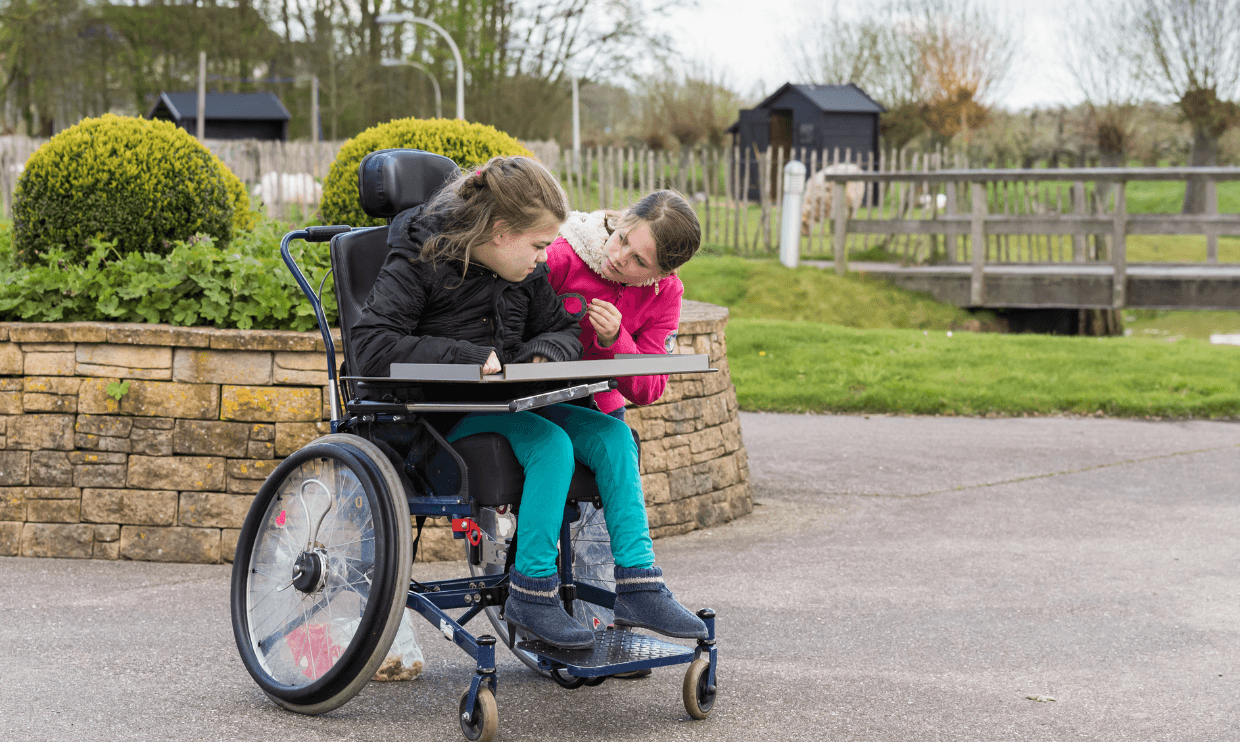
IEP goals are one of the most important parts of a student’s IEP in helping the school team understand where the student is currently at and what they’re working toward. Behavior goals can absolutely be added to a child’s IEP, but school staff and parents need to carefully consider how these goals are written to make sure they’re meaningful for the child’s growth and not just about getting more compliance in the classroom. To get some insight and example goals, we asked experts in special education, behavior, and psychology about their best tips for writing behavior goals in the IEP.

Should IEP goals be about reducing “bad” behaviors?
According to Dr. Sally Burton-Hoyle, professor and faculty advisor in the Department of Special Education College Supports Program at Eastern Michigan University, IEP goals should not be about reducing “unwanted” or “bad” behaviors. An IEP is based on the child’s needs, and the goals are then based on those needs — not on reducing behaviors, but perhaps replacing them with more functional behaviors. She says, “We begin with needs and proceed to write goals that will meet the needs. The accommodations address how the goals can be met and what they need for this goal to happen. Services support the individualized goals for the child.”
Education Advocate and BCBA-D Dr. Sarah Pelangka explains, “A behavior intervention plan (BIP) provides functional equivalent replacement behaviors. These are goals that service the same function as the target/challenging behavior, which is very important for parents to be aware of. Schools cannot write goals that are the desirable response (e.g., ‘Instead of eloping, Bobby will remain in his seat and do his work’). Rather, schools should write goals that serve the same function as the behavior the student is currently engaging in (e.g., ‘Bobby will request help when provided with an assignment he perceives to be difficult, as evidenced by Bobby's sighing and putting his head down’).”
Dr. Burton-Hoyle adds that sometimes schools may skip important steps. “Let's talk about their needs. And it cannot be something that the child shouldn't be doing,” she says. For example, “Instead of [focusing on reducing the] banging the head, what should that child be doing? Maybe playing with other kids? That's the positive behavioral support [approach]. Then banging his head: what does it mean? That means he's frustrated or it means he's lonely. Then the goal is around that, not reducing something.”
Factors to consider when writing behavior goals
IEP goals should be appropriately challenging and aligned with a student’s strengths, needs, and interests. This report from the Autistic Self Advocacy Network (ASAN) explains that behavioral goals should ideally involve the child and the child’s desires, preferences, and voice, but if they can’t communicate due to age or other developmental or physical barriers, goals should be created by the IEP team in a way that best allows the child to lead a self-determined life.
”If a goal must be set against a person’s wishes (e.g., teaching someone not to run into traffic so they can safely cross the street), it must be explained to them why it is so important and implemented in such a way that the person maintains as much control over the intervention as possible,” says ASAN. Behavior goals should also be strength-based and incorporate a child’s interests, “not as a way to modify their behavior, but to engage with that person and increase the chances they will find the intervention meaningful.”
As an IEP team, finding out what the child is motivated by can help with interventions and goals that fit with the child’s unique strengths. For example, if a child is interested in unicorns, building unicorns into the intervention can increase the child’s own motivation to meet their goals.
Effort, impact, and developmentally appropriate IEP goals
Dr. Scott Akins, chief of developmental behavioral pediatrics UC Davis, Department of Pediatrics and medical director at the UC Davis MIND Institute, shares that when it comes to goals, he often focuses on effort and impact. If something is low effort and high impact, it can be a priority right away. If it's high effort and high impact, you can talk strategically with your provider and plan to focus on it at a specific time.
“It's super impactful if we can get it accomplished. So first, I start with that and help families think about capacity. And then the other thing we think about is just the degree of impairment. So I don't mean this in the opposite of strengths-based, I just mean for family function and for the child — what are the toughest things right now? Let's talk through them and then try to set priorities around that. Then, the strengths-based piece comes in because each of these interventions need to be developmentally appropriate.”
He gives an example with toilet training: “If a family member said to me, ‘I just need him toilet trained, I can't take it anymore and he can't get into a certain school if we don't do it.’ But then I sit down and we talk it through, and the child can't hold their urine for a few seconds, doesn't get upset when they're wet, and can't pull their own clothes up and down yet; we're probably not ready. Those core readiness skills aren't there. So it would be developmentally inappropriate for me to spend 24 hours a day doing that for two weeks and would lead to more frustration for the family. And it would feel like a failure.”
Dr. Akins wants parents to think about aligning what's developmentally appropriate with the child’s strengths and biggest challenges, then “trying to chip away with the things that are most impairing function [because] it's just so hard not to be frustrated as a caregiver at times, and not to be overwhelmed. But when we start to have successes and some of those things that are most frustrating for us get better, it just frees up all this mental space to then maybe take on something a little harder but more high impact.”
What about non-compliance in the IEP?
When schools write IEPs, goals around behavior may be compliance-based, such as reducing a certain behavior that is deemed challenging or problematic. For many kids with developmental disabilities, IEP goals can actually promote masking their traits and behaviors in an attempt to “normalize” or “reduce” their behavior, which may be inherent to who they are, how they process sensory stimuli, and how they communicate (for example, goals for more eye contact, tone policing for appropriate responses, constantly initiating conversations, etc.). Certain goals can set up children for manipulation, exploitation, and bullying. Many of these goals have the word “appropriate” in them — as in “appropriately respond” or “appropriately acknowledge” — and may be expected even when a child is being teased or bullied.
While most parents would agree that working on reducing behaviors that may be harmful or dangerous is important, goals need to focus on more than just reducing a behavior.
Dr. Ross Greene, clinical psychologist and the author of The Explosive Child, Lost at School, Lost and Found, and Raising Human Beings, tells us, “Compliance, and our obsession with it, is at the root of a lot of big issues that are not going well. I don't think that the goals of an IEP should be translated as behavior most of the time. I think unsolved problems should be the goals of the IEP. That's what we're working on.”
IEP goals that center the unsolved problems can work toward supporting a child in building skills and interests that allow them to grow beyond the behaviors.
An article by Autism Spectrum News tackles how, in addition to listening to our children’s needs and desires when creating IEP goals, “we need to write better, more nuanced, and collaborative goals with respect with self-advocacy skills at the forefront.” For example, replacing references to “non-compliance” in IEP goals with skills to focus on in therapy instead. Creating strengths-based goals instead of decreasing non-compliance can look like increasing skills such as communication, negotiation, compromise, “no” responses, and problem-solving.
Neurodiversity-affirming behavior goals
Neurodiversity-affirming goals often start with a neurodiversity-affirming assessment. Breea Rosas, school psychologist and founder of Neurodiversity Affirming School Psychologist, tells us, “The difference between a traditional school-based evaluation and a neurodiversity-affirming evaluation for an IEP is really the lens that it's taking. So rather than saying that a child has ‘deficits’ in areas, you might see things like ‘differences’ in certain areas. You'll see things that really highlight how the student works and learns best, how the student stays regulated. Rather than focusing what we traditionally focus on — the behaviors that we're seeing or when students aren't doing well — neurodiversity-affirming assessments and IEPs are going to highlight the things that the child can do well and the things that support the child when they need that extra additional support to do well.”
Instead of language such as, “The child constantly argues with adults,” you might see, “The child has unique self-advocacy skills, and is self-aware enough to know their likes and dislikes.” Or, instead of, "Child has deficits in social emotional reciprocity,” you might see, "The child has differences in how they communicate, and their social interactions might look different than someone who's neurotypical." Or, instead of, "The child elopes six times per day,” you might say, "The child is able to meet their sensory needs by taking a break from the classroom six times a day."
Rosas explains, “Those slight reframes are really important, and they tell us maybe this kid needs a break from the classroom six times a day — let's make sure that we can do that in a way that's still safe for them and meets their needs. Or, ‘Hmm, this kid is taking a break from the classroom six times a day, we need to do something to make that classroom more acceptable for them, more suitable for them.’ So I'm reframing it in a way that doesn't put it as a negative thing that the kid is doing… Those changes in wording really helps shift the lens of everyone interacting with them.”
Learn more about neurodiversity-affirming assessments in our conversation with Rosas here!
How can IEP goals around behavior be more neurodiversity-affirming, instead of trying to make a child "comply?" Dr. Pelangka tells us, “One of the biggest issues I see in school-based BIPs is deeming maladaptive behavior as a symptom of their disability. For example, a student has ADHD and the target behavior is ‘off task.’ But that is to be expected. Why would we write a plan with an expectation for the student to magically be on task? Even if the plan is written in such a way that they earn something rewarding for being on task, how do you think that student feels when they don’t meet their goal because they can’t as a direct result of their disability? That feels awful. BIPs should be written to support behaviors that are not a direct symptom of their disability. For [self-soothing behaviors], we can’t say, ‘Stop stimming,’ but IEP goals can be written to support skill deficits or giving the student strategies to help them increase more awareness to be on task more. If the student with ADHD is throwing things across the room, that can be addressed in the BIP, but not being off task.”
Similarly, Dr. David Stein, PsyD, pediatric psychologist, explains that compliance-based and “on task” behavior goals don’t always work.
Rosas explains that neurodiversity-affirming goals focus on things like regulation, self-advocacy, and what the child wants. Because of this, “The goals are going to be better, and the accommodations are going to be better because when you're a neurodiversity-affirming provider, you're going into the classroom and you're looking at what things are supporting this child right now, and what things are not working. So you can make a really solid IEP because you're not just looking at [a kid] moving around a lot, you're looking at, ‘Huh, this kid likes to stand while they're working, that's an accommodation we're going to put in their IEP. They are fiddling with things on their desk, let's get them some fidget tools — that's a great accommodation for their IEP.’”
Dr. Pelangka shares that goals shouldn’t be aimed at trying to change the person but to support them in what they actually desire for themselves. For example, it’s not necessary to establish goals for more eye contact. It can be overstimulating for their brains, it depends on the culture, and individuals can show that they are engaged in other ways (e.g., remaining in the area, facing the direction of a communicative partner, responding with related responses, etc.). “We should aim to give them the tools to have meaningful and positive social experiences,” she says.
Sample behavior goals in an IEP
Area of need: transitions between activities
Baseline: Student “flops and drops” for every non-preferred transition
Lagging skill: Regulation + difficulty with transitions or task shifting
Function: Escape/avoidance due to unpredictability or sensory demand
Goal (Self-Regulation and Flexibility):
By the next annual IEP, when given advance notice, visual cues, and sensory regulation options, the student will transition between activities or environments, using a chosen strategy as needed (e.g., deep breathing, visual schedule, transitional object, or verbal check-in) within a few minutes of the initial cue in 4 out of 5 opportunities.
Supports to note in BIP or accommodations:
- Use of a visual schedule or countdown timer
- Predictable routines and preview of upcoming transitions
- Choice of movement or sensory tool before transitioning
Adult co-regulation (verbal or visual prompting, calm voice, limited language)
Area of need: safety/eloping
Baseline: Student leaves the designated area
Lagging skill: Communication, self-advocacy, impulse control, or need for movement/safety
Function: Escape, sensory seeking, or seeking connection
Goal (Safety and Communication of Needs):
By the next annual IEP, given a consistent communication system and environmental supports, the student will communicate the need for a break, movement, or help using words, signs, or AAC before leaving the instructional area in 4 of 5 opportunities.
Supports to note in BIP or accommodations:
- Functional Communication Training (FCT) for “I need a break,” “too loud,” or “I’m done”
- Social Story on staying safe
- Clear break area or movement pass
- Consistent adult response: validate, redirect, accompany
Predictable sensory breaks and movement built into schedule
Area of need: sharing
Baseline: Student takes toys from other children
Lagging skill: Social communication, joint attention, impulse control
Function: Seeking connection or access to preferred item without communication tools
Goal (Social Communication and Shared Play):
By next annual IEP, with adult modeling and reinforcement, during structured or free-play activities, the student will independently use an appropriate communication strategy (e.g., “Can I have a turn?” “My turn?” gesture, or visual card) to request or share materials with peers in 4 out of 5 opportunities,
Supports to note in BIP or accommodations:
- Use of visual cue cards or scripts for sharing
- Social Story on sharing
- Adult modeling of social language (“Let’s trade,” “You can have it next”)
- Reinforce peer responses positively
- Explicit teaching of turn-taking and cooperative play
Area of need: task initiation and completion
Baseline: Student avoids work (refusal, distraction, off-task)
Lagging skill: Task initiation, frustration tolerance, executive function, or need for autonomy
Function: Escape from task demands or overwhelm
Goal (Task Initiation and Self-Advocacy):
By the next annual IEP, when presented with a non-preferred task, with minimal prompting, the student will identify what type of help is needed or select a support strategy (e.g., “Can you help me start?”, “I need a break,” “Can we do the first one together?”) in 4 of 5 opportunities, using visuals or sentence starters as needed.
Supports to note in BIP or accommodations:
- Provide choice of order or format (e.g., typing vs. writing)
- Use first/then boards or chunked tasks
- Offer prompting hierarchy (verbal → gestural → partial physical)
- Reinforce effort and self-advocacy, not task completion
Area of need: safety/biting
Baseline: Student bites children and adults
Lagging skill: Emotional regulation, communication of distress, or sensory modulation
Function: Communicate overwhelm, frustration, or sensory need
Goal (Emotional Regulation and Communication):
By the next annual IEP, when experiencing frustration, excitement, or sensory overload, the student will use an alternative regulation or communication strategy (e.g., chewable sensory tool, “help” card, deep breathing, adult check-in) instead of biting people, in 4 out of 5 opportunities, across settings.
Supports to note in BIP or accommodations:
- Access to sensory-safe tools (chewelry, textured toy, cold water, etc.)
- Teach emotion labeling (“I’m mad,” “too loud”) and coping strategies
- Social Story about frustration or sensory overload
- Co-regulation support from trusted adult
- Functional communication and sensory-integration plan embedded in daily routines
Additional resources


Unlock more with Undivided
Turn knowledge into action that benefits your child
Get Membership


Author