

A New Diagnosis: Now What? Disability Resources for Parents
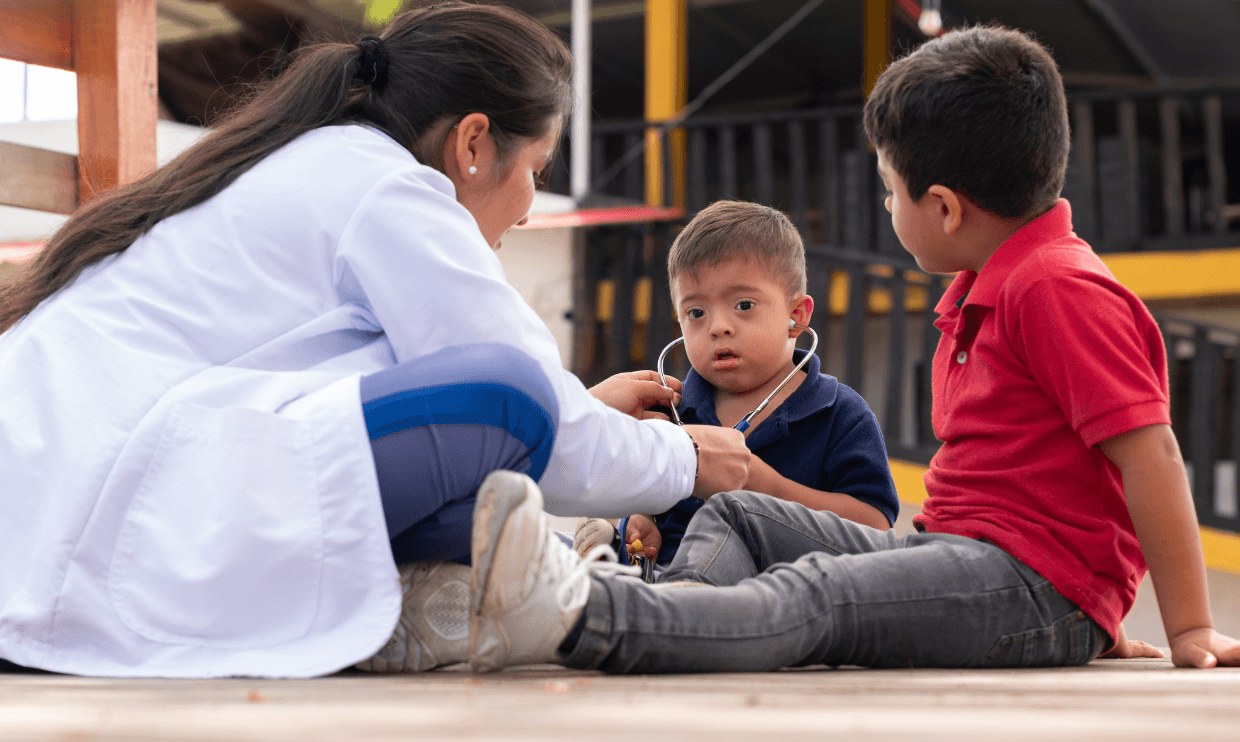
Whether your child is one week or five years old, receiving a new diagnosis of autism, cerebral palsy, or another developmental delay is a lot to process, accept, and understand. It’s important to allow yourself time to sit with the information you’ve received and all the emotions that come with it. Many of us on the Undivided team have been where you are now: trying to understand the medical terms that are supposed to describe our child, trying to figure out what to do next, trying not to fall apart under the weight of all of it. We want you to know that it is normal and appropriate to feel scared, sad, or overwhelmed. As parents who are now a few years further along in this journey, we would like to share a few pieces of advice that we hope will help you move forward.
We would also like to encourage you to lean on your support groups — your family, friends, and more — when you can, and to find other parents raising kids with disabilities. We can learn so much from each other! We hope that the Undivided community can become a source of support for you. Check out our private Facebook group just for parents, where you can ask questions and find support on this journey from other parents raising kids of all ages and with all kinds of diagnoses.
And when you’re ready, make time to explore the resources and benefits that are available to your child — from early intervention services like occupational and physical therapy to respite care.
Find therapists for your child and build a support team
Some of the most important people in your child’s life are the therapists and medical providers who will help them work toward building the emotional, social, adaptive, and physical skills they’ll need to participate in their school and community. So where should you begin? What are your first steps in this journey toward helping your child grow to be their best self?
As Kathryn Smith from Children’s Hospital Los Angeles (CHLA) says in this video, start with your child’s pediatrician or a developmental pediatrician, who can help you look at the big-picture overview of your child’s life.
As you navigate the complex journey of building a great care team and getting the right support to meet your child’s needs, see our glossary of medical specialists who commonly serve children with developmental delays and disabilities, from audiologists to neurologists to developmental psychologists. To learn more about the therapists who can help your child work toward developing gross and fine motor skills, communication skills, feeding skills, and more, read our therapy glossary.
Build my child's care team
Children age 0–3: Learn about early intervention services
If your infant or toddler has been diagnosed with developmental delays or disabilities, your doctor may have suggested that you see a developmental pediatrician or advised you to apply for early intervention services.
For years, research has shown that introducing small changes early on in a child’s life can have a big impact on their later development. Thanks to federal law, every US state has a system to provide early intervention services free of charge to children between the ages of 0–3 who have been diagnosed with, or are at risk of, developmental delays and disabilities. These services include occupational therapy, physical therapy, speech therapy, feeding therapy, nutrition support, vision and hearing services, and more. Each of these is designed to give children the tools and support they need to work toward their developmental milestones, including their physical, communication, social-emotional, and cognitive skills.
The name of the program for children under age 3 will depend on your state. For example, in California, early intervention services are provided through the Early Start program, which includes Regional Centers, Family Resource Centers, and Special Education Local Planning Areas (SELPAs). Check out our step-by-step guide to learn more about early intervention in your state.
Fund early intervention
Where to find funding and services for a new diagnosis
Medical expenses, therapy costs, and other needs such as medical supplies and adaptive equipment may be covered by your private insurance as well as by various public benefits programs. Here is an overview of the resources that could be available to your family.
Your health plan
You may be used to weighing the cost of monthly premiums and annual deductibles, but you may not have looked into what your insurance will cover when it comes to medical specialists or therapies. Many health plans put an annual cap on the number of sessions they will cover each calendar year. If your child needs more than one of these services, it’s a good idea to call your health plan and find out whether the per-year limit is combined between services or if there is a separate count for each service — for example, you might get 30 sessions each of OT, PT, and speech therapy.
Many health plans also require pre-authorization for therapy services. If you can, submit a request for pre-authorization early, and keep your child’s therapy team in the loop on any documentation they will need to submit. Learn more in this helpful article: How to Review Your Health Plan Benefits & Coverage.
Review insurance coverage
Public benefits
Every US state has a Medicaid program that provides health coverage to children under age 21 who qualify, either because of low income or because they enroll using a waiver for kids with disabilities. Whether you have a private health plan or not, Medicaid can help cover durable medical equipment, therapies, in-home nursing, dental care, and other important services if your child is eligible.
Each US state also has a department that serves children and adults with developmental disabilities such as autism, Down syndrome, and cerebral palsy. They may offer a variety of supports and services, including early intervention services, coordination of services, assessments, respite care for parents, and help identifying goals to help your child work toward independence in their community.
Other government organizations and programs may also provide funding for equipment and services in your area, such as IHSS or CCS in California. Check out our article How to Find Your State’s Public Benefits for Children with Disabilities or follow our step-by-step guide for Undivided members to explore what resources could be available to your family.
Learn about my state's public benefits
Children age 3+: Public school and IEP resources
Once your child reaches the age of 3, they may be eligible for special education services through your local school district or education agency.
In addition to education, school districts can provide therapies and equipment or devices that a student may need. If you or your doctor have concerns about your child’s development, you can ask your district for an assessment at any time. A full assessment includes evaluations with a school psychologist, special education teacher, and any additional related service providers who are relevant to the student’s needs (such as speech, occupational, behavioral, vision, and physical therapists).
Services in an IEP
An Individualized Education Program (IEP) is a personal plan developed for each student aged 3–22 with an eligible diagnosis to outline the services and supports they will need to access a free and appropriate public education (at no cost to their family). IEPs are created annually by a team that includes parents/caregivers as well as administrators, educators, and therapists from the family’s local school and district.
Does your child qualify for an IEP? What kinds of services and accommodations will best help them build on the strengths they already have and lay the groundwork for learning new ones? As you think through the kinds of support you want your child to have at school, remember that the most important part of this process is you, the parent. You know your child best, and you are a key member of your child’s IEP team!
Learn the basics by reading IEP 101:What Is an IEP?, or check out our step-by-step walkthrough for members, which includes access to Undivided's IEP Assistant.
Prepare for my child's first Individualized Education Program (IEP)
Find out as much as you can about your child’s diagnosis
There is a wealth of information available from disability-specific organizations, from other parents, and from Undivided. We’ve compiled resources where you can learn more about some of the most common diagnoses.
At Undivided, we are always learning more from the families and professionals in our community. We hope you’ll join us as we continue to build our knowledge base and work to ensure that all our kids get the resources they need.
We also invite you to learn about disability culture with us. As you envision your child’s future, keep in mind how important it will be for your child to learn to express their needs and make their own choices. We’re here to support not just you and your child but your whole family.
Whenever you need one-on-one help, you can partner with an experienced Undivided Navigator. You’ll have someone walk beside you whose entire job is to ensure that you have the support you need and get the most out of all the resources available to you. Get started here.
While having conversations with family and friends about your child is a next step in settling in, it may not be the easiest conversation. Sometimes, it may take a long time for people to understand your child’s diagnosis, and with time, people may be more open to asking questions to understand.
To keep everyone updated, you can make a Facebook page or group, create group chat, or use a Google Doc to easily relay information to family and friends (instead of updating them one by one). You can also use the website CaringBridge, where you can log and share health updates, photos, and videos with friends and family.
This doesn’t mean you have to tell everyone right away. Some families need time to process on their own before sharing, whether that’s a day, a week, or a month (or more), and that’s completely normal. What can be helpful, whether you choose to share early or wait, is to be forthcoming about the response you want to hear. For example, if you don’t want to hear the word “sorry,” write a letter you can share with people explaining, “Please don’t tell us you’re sorry.” You can even add a request, such as, “If you want to help, instead, send diapers.”
For more information on talking to family and friends after a new diagnosis, read our article Tips on Going Home from the Hospital with a New Diagnosis.


Unlock more with Undivided
Turn knowledge into action that benefits your child
Get Membership


Author