

Home Modifications (and How to Pay for It All)
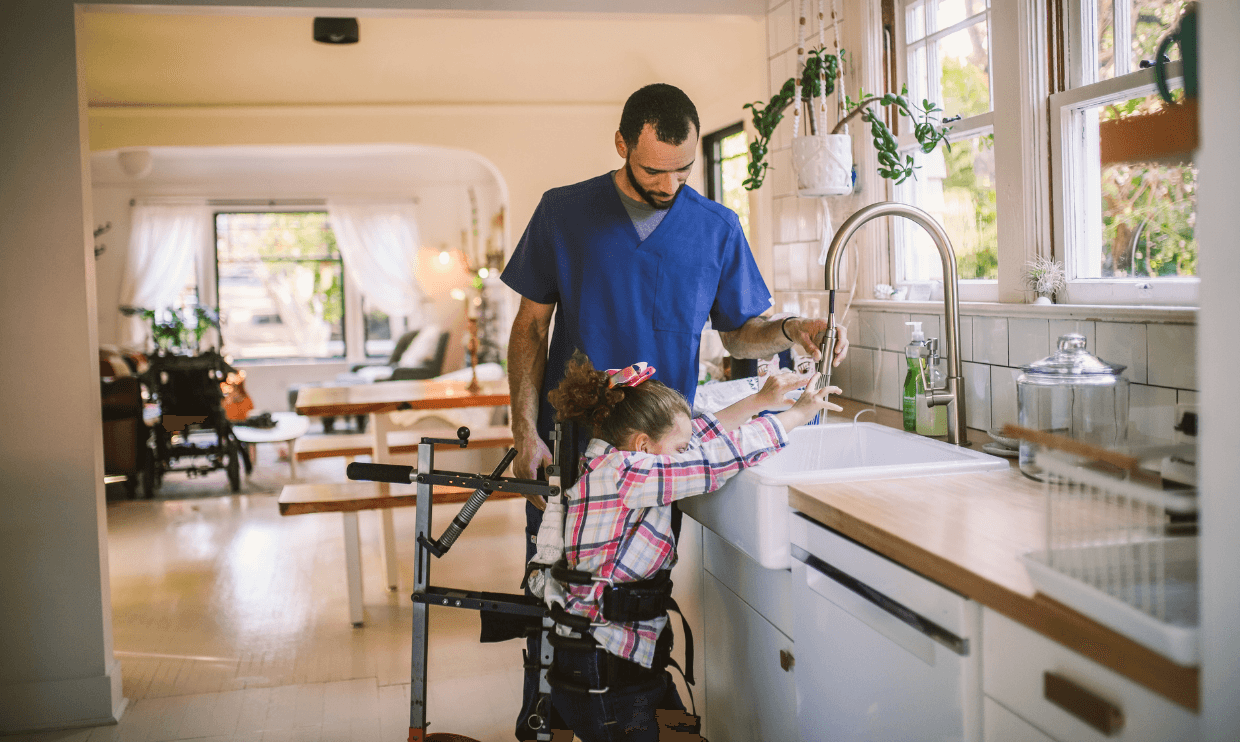
As parents or guardians raising kids with disabilities, we’re all striving to create a world that feels more inclusive and accessible, yet some of the barriers aren’t out in the world but at home. From choosing the right ramps (and where they should go) to bathroom and bedroom updates, and making the most of smart devices, these changes can make everyday life more accessible.
To better understand common home and car modifications and how to pay for them all, we spoke to Andrea Loveday-Brown, an Undivided Navigator and parent to a child with a disability; Leslie Lobel, Director of Health Plan Advocacy at Undivided; Lisa Concoff Kronbeck, Public Benefits Specialist at Undivided; and Dr. Sonja Biggs, PhD, TVI, co-founder and president at Sonja Biggs Educational Services.
First things first: home accessibility is a right, not a luxury
As the Lucile Packard Foundation for Children’s Health and the Johns Hopkins Berman Institute of Bioethics highlight in a recent webinar on home accessibility for children with disabilities: home modifications are integral to ensuring integration in the home and community. And that's not just a nice idea. It's a civil right and a human right, codified by the ADA, the Olmstead v. L.C. Supreme Court decision, and the 2006 UN Convention on the Rights of Persons with Disabilities.
They explain that accessible homes are homes that are built or modified so that people with disabilities can safely and independently do the things most of us do every day — bathing, getting dressed, moving around, preparing meals — while reducing the need for caregiver support.
Home modifications are the changes that make that possible. They can be structural, like widening doorways or installing ramps, or simpler — reorganizing a space, swapping out furniture, or adding adaptive equipment and assistive technology. Both interior and exterior spaces count.
The impact of an accessible home goes further than you might expect. For kids, it can meaningfully improve quality of life, health, self-esteem, and day-to-day independence. It opens the door to more social participation and richer family interaction. For caregivers, it reduces the physical and emotional demands of daily care. And practically speaking, it lowers the risk of injury and can reduce how often families need to rely on healthcare services.
The film "Feels Like Home," funded by a Johns Hopkins Discovery Award and led by Dr. Rebecca Seltzer and Dr. Lauren Arora Hutchinson, highlights how families of children with medical complexity adapt their home environments to meet their child and family’s needs.
Starting your home accessibility journey
When it comes to determining what accessibility equipment to add to the home, we know that it’s a uniquely personal experience that varies depending on the disability and the needs of your child, and — to be frank, the budget. While we will be sharing a list of common updates you can make to your home, we also want to acknowledge that every family’s experience is completely your own.
For Loveday-Brown, creativity came before adaptations. “I remember buying a mesh camping chair for months before we got an adaptive bath seat because it was just a quick and easy solution,” she says with a laugh. “It starts with small equipment, or things that we like to call, ‘accidentally adaptive,’ and using those until even those don’t work anymore.” Loveday-Brown’s experience highlights a blend of practicality and resourcefulness that many parents of children with disabilities know well, along with the realization that some are making accommodations without even realizing it.
As Dr. Biggs tells us, even small adjustments can help a child feel more confident in their home. Speaking to your child’s doctor, occupational therapist, or physical therapist can help you come up with small home modifications to larger ones and how to implement them. Regardless of where you are in the accommodations process, here is as good a place as any to start.
Generally, it’s recommended to start making updates based on order of priority. Do you have a hard time lifting your child out of bed? Start with a bed lift. Notice the floor is a bit of a slipping hazard? Lay down some traction strips. There’s no “right” place to begin. Feel free to jump around wherever you need to start your accessibility journey!

Make entryways safer and more accessible
Add or enhance your outdoor lighting
Most homes have outdoor wall lights, which tend to be a bit more decorative than functional. For families with a child with a disability, clear visibility of the path leading up to your home is important. That’s why a well-lit path to your entryway can make all the difference. Path or track lighting on the ground/path to the house can help to make pathways more easily visible. This can be accomplished with solar-powered lights that can be attached or staked into the given pathway. Reflective strips and stakes in the ground can also be helpful at night to see where any steps leading up to your home are too!
Additionally, it might be worth investing in some motion-sensor, smart/automatic, or voice-activated light bulbs. This way, you don’t have to run inside to turn the lights on, leaving your children unattended in the car.
Something else that can also be easily overlooked is highly visible street numbers to help our children who might have low vision. You can make street numbers more accessible and visible by getting backlit street numbers that you can see at any time of day or night.
Install outdoor railing
For mobility aid, railings and grab bars can help make the transition in and out of the house smoother. Common handrail placements include pathways leading to and from your house's entryway(s). Dual handrails are often the most popular type of railing because they provide two different heights, one for wheelchair users or younger children, the other for adults.
You can install the outdoor railings yourself and purchase the tools and materials from a home improvement store or online. Pro tip: choose a waterproof material so it does not rust!
For individuals with vision loss, there are textured railings for anti-slip and to establish where you are, or railings made with contrasting colors for higher visibility. A noteworthy mention is that there are now handrails being made with braille on them to describe direction and scenery. While it’s not available to the masses, it’s exciting to see and keep an eye on.
Check your entryway stairs
If you have steps that lead to your home, check their condition, making sure that there is traction, no cracks, wobbly steps, or any areas where feet can get caught is important for removing any hazards. Simple fixes to this can be traction or anti-slip strips, rubber mats, or textured paint, which can all help improve traction.
Ramps
For wheelchair users or people who struggle with stairs, ramps can help overcome this common obstacle. For budget-friendly and travel-friendly options, there are portable ramps you can take with you almost anywhere. The prices for portable ramps can range $125-$1,000, depending on the type of ramp you select. Make sure you keep an eye out for the amount of incline and length a ramp can run along, and any weight restrictions (certain portable ramps have restrictions).
- Angled Entry Mats can also be used to provide a smooth transition through doorways with raised thresholds. This can help to eliminate tripping hazards. The price for this ranges $50-$100, depending on the material and customization.
- National Seating and Mobility confirmed that an interior built-in ramp is not a covered item under the Durable Medical Equipment (DME) benefit on health plans. Conversely, a portable, exterior metal folding ramp that measures up to 12 feet in length is a covered DME item.
For more long-term and permanent structures, you can always opt for a built-in ramp. They are commercially available at a wide range of prices and installation efforts, from self-installed metal wheelchair ramps to professionally installed, specifically crafted ramps from organizations like Mobility Works. If you love to DIY, companies like Lowe’s and Home Depot offer instructions on how to build a mobility ramp on your own. Or, if you’d prefer a premade option, online businesses like Discount Ramps and EZ-Access sell them in a variety of sizes, durabilities, and prices.
Update your doorways/hallways
There are a lot of ways you can update your home doorways/hallways to accommodate your child with a disability. For the more fiscally intensive updates, you can renovate the doorways/hallway by widening them to accommodate wheelchairs, mobility aid users, or people with visual impairment. Though if that’s understandably not in your budget, there are also a few other things you can do to improve doorway/hallway accessibility.
- For many outdoor entryways, small “lips” or “bumps” along the bottom of the door frame can easily catch feet or mobility aids. A great fix for this is getting threshold covers, which smooth out these areas and create a safer, more seamless transition.
Another update would be purchasing wide-throw or swing-away hinges (you often see these in medical offices and buildings) that move the door completely out of the way, allowing for wider access for mobility aids like wheelchairs or walkers.
Non-slip doormats or anti-slip tape can also be helpful in making sure our children’s feet or mobility aids stay firmly planted on the ground, especially if they have shoes or tools that have gotten a bit slippery. For non-slip doormats (and rugs) make sure that you’re purchasing from rug-tape or [non-slip pads](https://www.amazon.com/CHUNZEXI-Adhesive-Furniture-Protectors-Protection/dp/B0DSPSJ9DH/ to prevent it from sliding around.
Create a predictable home layout
For children with low vision or intellectual disabilities, Biggs recommends creating a predictable environment to help your child feel safe while independently navigating the home.
- Creating a predictable environment often starts with keeping your furniture in the same spot. We know it might be nice to reorganize your house periodically, but it can get confusing for some of our kiddos with vision loss. You want to keep your home layout and pathways as consistent as possible.
- Creating a clutter-free space can help prevent any tripping hazards. Or, if they’re looking for something specific, like a blanket or scissors, having a designated spot for them in a basket or bin is a great way for them to independently grab their desired object.
Improve door accessibility
It’s easy to overlook something as simple as a door, but making them more accessible can (pun intended) open new doors for your child’s independence.
A good rule of thumb is to start by first looking at your door handles inside and outside the house. Doorknobs or thumb door handles are the most common type of handle, but can be rather difficult to maneuver and turn for our children with mobility and dexterity challenges. That’s why indoor and outdoor lever-style handles allow for easier grip and mobility. T-pull levers are another option for wheelchair or mobility aid users to help open and close doors. As well as sliding or bifold doors (similar to barn doors), make a doorway wider and easier to navigate than a hinged door.
Lastly, for a more high-tech (and pricier) option, you could invest in automatic or push-button door openers for indoor doors.
Check door viewers (peepholes) and accessibility Being able to see who’s at the door is an important part of safety, especially when we’re teaching kids about strangers and giving them more independence. That’s why it’s important to factor in the height of the door viewer. A few options can be:
- Digital peepholes that use a camera to capture the person at your door and show them on a screen or your phone.
- Video doorbells can help to see and communicate with whoever is outside via the smart display, tablet, or phone.
Bathroom accessibility and safety
Adapting a bathroom can be particularly tricky at times, especially as our children grow and require accommodations to evolve. For Loveday-Brown, updating her bathroom started when she realized that lifting her daughter out of the bathtub no longer felt safe. “It just sort of happened overnight,” she explained. “It felt like, oh, this does not feel safe anymore, and there has to be some kind of solution.”
This moment of realization that what once worked no longer does is one that many parents raising a child with a disability can often relate to. It’s also about accepting that we (as hard as we try) need support.
To get you started, we recommend starting in the order of priority! But in case you need somewhere to get started, we recommend starting with smaller updates like grab bars, touchless faucets, and bath chairs, then working your way up to larger modifications such as roll-in tubs, adjusted counter heights, and non-slip flooring. If you’ve made it this far and are starting to feel a bit overwhelmed at the amount of updates that are growing on your list, take a deep breath and do what you can, when you can!
- Grab Bars. These are generally available at local hardware stores or available for purchase online. They can be installed anywhere, but common uses are in the bathroom– both in the shower to minimize the risk of slip-and-falls and near the toilet to help with standing and sitting–in long hallways, and near any set of steps in the house. Grab bars can be installed independently or they can be placed by professionals for an average of $150 per bar.
- Accessible sinks and countertops. Per the ADA, there must be at least one sink/countertop in public bathrooms to help accommodate individuals with wheelchairs and other mobility aids. This means that there should be clearance above and below the sink to allow wheelchair users to roll into the handwashing area to wash their hands unobstructed. While we know your home isn’t a public bathroom, the ADA guidelines can be a good guide for what bathroom accessibility can look like. The cost for updating your bathroom sinks/countertops to fit these types of clearance can range from hundreds to thousands of dollars. Lowes offers instructions on how to install and update sinks and countertops yourself, but it’s recommended to seek a professional to install.
- Touchless/motion sensor faucets and soap dispensers seem small, but they can make a big difference for children with dexterity challenges. Touchless faucets can range from $77 to $1,022. Some faucets come with a touchless soap dispenser, although this can be a bit more on the pricer side with the base model typically starting at around $2,000. Now, if you’re looking for something a little more cost-effective, you can always purchase the two features separately (they just might not match). There are also battery or plug-in automatic soap dispensers that you can purchase on Amazon or Home Depot, too.
Toileting supports
Toilet supports come in all different shapes and sizes. From raised toilet seats, or grab bars to toilet seats with handle bars, toilet supports can help children gain a stronger sense of independence and safety when using the restroom. Below is a range of lower-tech to higher-tech options:
Loveday-Brown shares that she used a potty training seat for her child until they outgrew it. The smaller seat helped prevent slipping, and the handles on each side provided extra support for mobility and safety.
Toilet safety rails are another great option for children who need extra support or have outgrown their potty seat. These rails attach directly to the toilet and come in a variety of sizes and styles to meet your child’s changing needs.
- Another variation is toilet safety rails with a raised seat, which lifts the toilet higher and makes it easier for your child to sit and stand safely. You can also find raised toilet seats without safety rails. These come as easy-to-install attachments or as replacement seats, depending on what works best for your family’s setup. Alternatively, there are also toilet base raisers that will lift the toilet if you don’t want to change the seat.
- Toilet lifts are a more high-tech option for bathroom accessibility and can be especially helpful for individuals with significant mobility needs. One example is Dignity Lifts, a brand that offers motorized toilet seats designed to gently lift a person from sitting to a nearly standing position—and lower them back down safely. There are less expensive versions available like the EZ Access Tilt toilet lift.
Toileting accommodations can be one of the more sensitive areas of daily care, but the right supports can make it easier and more empowering for your child. These simple additions can help make the bathroom feel safer, cleaner, and more accessible for everyone.
- Splash guards help to keep urine contained within the toilet, reducing mess and promoting easier cleanup.
- A urine funnel is designed to assist individuals with improved aim and control while using the toilet.
- Toilet wiping alternatives are often overlooked when thinking about bathroom accessibility, but it’s an important form for self-care and independence.
- A wiping tool helps to extend reach and provide support for individuals who have difficulty with flexibility, balance, or fine motor skills that are required to effectively wipe.
- Bidets use water for cleaning instead of traditional wiping. They attach directly to the toilet and connect to the existing water line.
- Hand-held bidets is a sprayer style attachment that someone can grab and point in the area that needs wiping.
- Automatic bidets can come in many different forms, from toilet seats to toilet seat attachments. This type of bidet can also have adjustable water pressure, temperature, a heated seat, and air-drying functions. There are travel bidets as well that you can take on the road.
- A wiping tool helps to extend reach and provide support for individuals who have difficulty with flexibility, balance, or fine motor skills that are required to effectively wipe.
- Alternative toilet flushers
- Hands-free/automatic toilet flushers can be especially helpful for individuals with limited mobility, dexterity challenges, or sensory sensitivities. These devices use motion sensors to flush automatically, reducing the need for touching surfaces and, coincidentally, improving hygiene.
- A foot flusher is another alternative to the standard toilet handle. Rather than reaching for a lever, you can simply press a pedal on the floor with your foot to flush.
- Push-button flushers work just as they sound; rather than using a traditional handle, you simply press a button to flush. Many models are also eco-friendly, offering dual-flush options for liquid or solid waste that adjust the amount of water used accordingly.
Shower and bathtub supports
- Roll-in showers and bathtubs are designed for wheelchair users or people with mobility challenges that prevent them from climbing into a shower or bathtub. While these are amazing in terms of accessibility, the price tag is less than desirable, as the starting point for showers and bathtubs alike can start at around $1,000 and go up from there. That’s not including the cost of the installation fee either.
- A bathtub lift is specifically designed to help lift wheelchair users into and out of a bathtub or allow wheelchair users to navigate themselves from their wheelchair to a bath chair. These come in a variety of options. For a complete lift, picking someone up from the chair and placing them into a special chair in the tub, prices run around $3,000 and should be installed by a professional. For a bathtub chair, prices average between $300 and $500 and can be installed and operated independently.
- Grab bars placed in the shower, bathtub, near the toilet, or anywhere extra support is needed can help your child stay steady and safe while moving around the bathroom.
- Shower/bathtub gliding chairs can be a relatively inexpensive option to bathroom supports. These chairs essentially work like how they sound, where someone sits in a chair outside of the shower and it glides over the barrier and places them in the shower/bathtub. For most of these, you do have to pick your feet up, but it is a good (and less expensive) alternative.
- A shower/bath chair allows individuals to bathe safely while seated, helping to reduce the risk of any potential slips or falls. These chairs come in a variety of styles and sizes, so it’s important to choose one that best fits your child’s needs and your bathroom’s layout. There are also bathtub cushions that can help relieve any pressure points and help to keep your child more comfortable
Adjustable and accessible shower heads, often hand-held or mounted on a sliding bar, make it easier to control water flow and direction. These attachments let you bring the shower head closer for rinsing or adjust its height to meet your child’s comfort and mobility level.
Non-slip materials are an easy way to make your bathroom safer and reduce the risk of feet and hands from slipping or falling. Below are a few simple products that can help keep surfaces steady and secure:
- Non-slip flooring: While no flooring can ever truly be slip-proof, there is some flooring that is inherently less slippery just based on the material it’s made out of. The price range really depends on the type of flooring and if you are installing it yourself or pay for it to be installed. Home improvement stores like Home Depot, Lowes, and Menards have specific anti-slip flooring sections.
- Anti-slip treatments: There are a lot of anti-slip solutions out on the market that can be poured over surfaces like the bathroom tiles, showers, bathtubs, and regular heavily trodden areas.
- We’ve mentioned it before, but anti-slip strips are great for placing in areas like bathtubs or showers. For bathroom purposes, though, make sure that you’re using waterproof anti-slip strips.
Kitchen accessibility and safety
The kitchen is known for being the heart of the home — it’s where we go to connect, gather, and interact with our families daily. That’s why it’s so important to do what we can to make sure that the kitchen is safe and accessible, and therefore, welcoming to everyone in our home. Even small adjustments can go a long way in making a space that truly works for everyone.
- Stove, microwave, and oven accessibility: While we like to keep our kids away from anything they could burn themselves on, we can’t stop them from growing up (even if we wish they would) and wanting to be more independent. For children with a wheelchair or mobility aids, the layout and height of the stove, microwave, and oven can make a big difference. For instance, these appliances can be lowered to allow for easy access.
- For ovens, in particular, Lowe's recommends having an oven installed in a lower cabinet and getting an oven with a side-hinge door, so people don’t have to reach across something hot.
- There are also smart oven/stove features that you can connect your stove, oven, and microwave to, which can allow users to voice-activate the appliance and set a timer.
- Sink and faucet accessibility: Just like appliances, countertops, and sinks can also be lowered in height to allow for wheelchair access. There are many ways to make this adjustment; one option is to start by removing any cabinets beneath the sink to create enough clearance for a wheelchair to roll underneath comfortably.
- Once you’ve adjusted the height, you can look at upgrading your sink or faucet, whether that means small tweaks or larger replacements. ADA-compliant faucets can be great substitutes for traditional models, since they’re designed to be turned on and off with one hand and minimal effort. Prices for these faucets typically range from about $150 to over $1,000, depending on style and features. Some faucets are motion and/or voice-activated, which are great alternatives as well for those who need a different type of support.
- As for sinks, for wheelchair or mobility aid users, a drop-in sink is often best recommended. This design provides open space beneath the basin, making it easier for someone to roll up close and use the sink comfortably and safely.
Accessibility updates for a better sleep (for you and your child)
- Bedside or wheelchair switches: Designed to attach to a bed frame or wheelchair, these switches can be activated by subtle movements of the head, shoulders, or even the voice to turn lights on and off or activate any other smart devices in the home, such as cell phones, televisions, or kitchen appliances. Adaptive Switches are also available in all shapes, sizes, and price ranges.
- Hand, finger, and body switches are common and helpful mobility aids. One of the most popular is the joystick handswitch, which can be programmed to turn on and off TVs, lights, iPads, or any other smart device (we’ll touch more on this later). This allows people to continue to sit while toggling faraway switches.
- Motion-sensing lights can automatically turn on lights by sensing when someone enters a space. For example, when walking in a hallway, bathroom, or bedroom. This can be really helpful for children who have mobility and dexterity challenges.
- Safety beds can provide additional support depending on your child’s mobility or medical needs. For example, SafetySleeper Beds and other adaptive types of safety sleep beds offer adjustable heights, rails for fall prevention, and head elevation to assist with breathing or congestion. These beds can also make transferring in and out safer for your child and your family. There are enclosed safety beds, if your child needs a more secure bed and sleep.
Accessible mattresses
- Cooling or temperature-regulating mattresses help to keep our children with sensory needs and temperature issues regulated. Another alternative is a bed jet, which pumps cool or hot air directly into the bed when it senses the temperature you have set, drops or rises.
- Pressure-relief mattresses can assist in relieving any pressure points or sores from forming, using technology and science to help alleviate areas that cause discomfort. There are also pressure-relieving pads that can be just as effective if you’re looking for a less expensive option.
- Adjustable mattresses can raise and lower the head and legs to keep blood flow moving, and help with congestion and other health-related issues that may need more regulation.
- Low-profile mattresses are great for wheelchair users and safer transfers by having a mattress that isn’t too high or difficult for someone to reach.
Other accessibility and sensory updates
- Electric bedside lifts can help make transfers in and out of the bed easier and safer for you and your child.
- Side rails and bumpers can offer peace of mind for our children that like to be active sleepers and at risk of rolling themselves off of the best. The updates can add a form of soft protection without feeling too restrictive.
- Weighted blankets, cooling mattress pads, or noise machines/night lights are great for those seeking temperature and sensory comfort and regulation during sleep.
- Stairlifts for families living in multi-level homes can make a big difference in safety and independence. These motorized chairs travel along a rail attached to the staircase and can be operated with the push of a button and/or by remote control.
- Home elevators are another option for navigating between floors. Depending on your home’s layout and budget, there are several types to choose from — from compact, shaftless models that require minimal construction to traditional built-in elevators similar to those found in commercial buildings. Both options can reduce the strain of carrying your child or equipment between floors and help make the entire home more accessible.
Create a sensory-friendly environment
For children with sensory challenges, Dr. Biggs shares a few insightful ways to adjust your home's environment to prevent any sensory overload.
Create a quiet, safe place for your child. This can be in their room, or a corner of the house that accommodates their sensory needs. This can look like a corner of their room that has a bean bag, cozy lights, a sound machine, and maybe some fidgets to help keep them more regulated.
- Use gentle or adjustable lighting. This kind of lighting can help to keep your child from being too visually overstimulated. There are lamps that come with adjustable lighting, as well as dimmer light switches that you can have set up to lower or brighten the lighting in any designated room in your home.
- Organize to create a clutter-free home environment.
- Keep sensory stimulation to a minimum so the child doesn’t get overwhelmed by visual, auditory, tactual, or smell in the environment bombarding them from every direction.
- Provide a way for the child to communicate when they are overwhelmed.
- Noise-canceling headphones are great to use to prevent auditory triggers.
- Working with an OT can help with coming up with what is called a sensory diet for the child where recommendations are given based on the child’s needs and what to do to prevent escalation. Sometimes it is providing a favorite fidget toy or a weighted blanket or a special stuffed toy or doll that helps. Sometimes it is listening to calming music or a favorite YouTube video. It takes experimenting to learn what works for each individual child.

Improve home accessibility with smart devices
We’ve briefly touched on a few smart devices, but let’s take a deeper dive into how today’s smart technology can help to make your home safer with the tap of a button on your phone or a quick verbal command. Most smart devices can be connected to home smart systems; a few common ones are Amazon Alexa, Apple Homekit, or Google Home.
These systems allow you to control multiple devices like lighting, thermostats, appliances, sensors, speakers, doorbells, locks, and more at the click of a button on your phone or through voice activation. These systems allow for a level of flexibility that can be made to fit within the needs and life of your family.
- Visual fire and carbon monoxide alarms: alarms like First Alert or X-Sense smart alarms can connect to your phone or a home smart system that can trigger lights to display an emergency.
- Smart doorbells and intercoms that come with built-in cameras and are capable of sending out instant alerts to your phone when someone’s at the door.
- Call translation and live captioning using bigger smart home devices like Amazon Alexa or Google Home.
- Voice-controlled smart speakers/assistants like Amazon’s Echo or Google Assistant can turn on lights, air conditioning, oven, sink, and more.
- Smart home hubs can be made more accessible by making the buttons larger or voice-activated.
- TV access/control can be setup via the smart home hubs.
With today’s world, smart devices are ever-changing, so be sure to keep an eye out for updates that could help improve your child’s access inside and outside the home. Also, don’t miss out on our articles on assistive technology that can help children with hearing loss or d/Deafness, vision loss/blindness, writing, or communication challenges, and more!
How do I fund it all?
We know how quickly home accommodations can start to add up. One seemingly small change often snowballs into another, and before you know it, you’re dealing with ten different modifications that all need to be maintained and updated as your child grows. But have no fear because you don’t always have to cover the cost of everything on your own. Below, we’ve compiled a few resources that could potentially help alleviate the financial burden that often comes with these updates.
Public and private insurance
The best way to start is to reach out to your private insurance and ask what they do and don’t cover. As Loveday-Brown tells us, “Don’t be afraid to ask well before you actually need something. It’s always better to start early and get a sense of the process before you urgently need the equipment because these things can take time.”
For instance, Medicaid/Medicare can be used to cover durable medical equipment as long as it is deemed “medically necessary” by a doctor who prescribes DME. Durable medical equipment can be anything from wheelchairs and walkers to specialized mattresses, bathroom chairs, lift devices, and more.
To get your child’s DME covered, you must receive a prescription for the equipment from the doctor. That prescription is then submitted to Medicaid, where they will approve, reimburse, or deny you.
For those located in Los Angeles, California, there is a Durable Medical Equipment program where you can apply for free items covered under the DME program. For those not in Los Angeles, check whether there is a local DME program near you.
State disability resources
For eligible California families, your next step may be reaching out to your Regional Center or Self-Determination Program (SDP) service coordinator. Regional Center and SDP are typically the payers of last resort, so make sure you have exhausted all other options (and keep track of it all).
Lisa Concoff Kronbeck explains that when certain changes are needed to keep your child safely at home, Regional Center may be able to help. For example, Regional Center could help if you need modifications for your bathroom to be more accessible. You may be able to get that through your insurance (or possibly through Medi-Cal). That said, any modifications approved will be strictly functional and cost-effective. They won’t redesign your bathroom and they can’t improve your home’s value, but they may install things like grab bars or other supports to make the space usable. The goal is feasibility, not perfection.
State vocational rehabilitation organizations
The Department of Rehabilitation (DOR) in California is a state agency that provides vocational services for individuals with disabilities. One aspect of the DOR that is not widely known is that they also provide assistive technology such as wheelchairs, tactile markings on equipment, specialized wrist splints, and more. According to Disability Rights California, “The ADA does not limit the type of equipment you can ask for. Anything that helps you do your work may be a reasonable accommodation.” That being said, it never hurts to ask to get a home modification covered!
Nonprofit organizations
There are many nonprofits around the US that offer various forms of funding for accessibility. While we’ve listed a few below, be sure to check with any local nonprofits that cover home modifications!
- 100 Convalescent Aid Society loans medical equipment for free.
- The Kids Equipment Network connects people with donated medical equipment.
- Friends of Man is a donations-based nonprofit that provides medical equipment to families 300% below the federal poverty level for free.
- Rebuilding Together is a national nonprofit that works with local affiliates to help update and repair homes for people with disabilities, seniors, and families recovering from natural disasters.
Grants
Grants can help fund small home modifications or retrofit your entire house. We’ve listed just a few grants below, and be sure to reach out to your child’s care team to see if they have any other good recommendations for grant programs.
- The Parker Lee Project is a grant that covers the costs of equipment and medical treatment that your insurance may not.
- Modest Needs offers self-sufficiency grants to help families who earn just above the poverty line and are therefore ineligible for some assistance.
- First Hand Foundation provides direct grants to children with health-related needs. They have been known to cover adaptive equipment, medical treatment, assistive technology, and more.
For more information, here is chart that outlines the process of obtaining home modifications for children with medical complexity (CMC), published in the paper "Home Modifications for Children With Medical Complexity: Untapped Potential for Improving Care" in Pediatrics.

Key takeaways
At the end of the day, there are many ways to fund your home modifications. For additional insights on seeking funding, be sure to read our article on paying for it all. Regardless of your journey in seeking financing, there are two big takeaways to help get you and your family the proper funding for your home modifications:
First, ask questions! Whether it’s your child’s doctor, Regional Center coordinator, or insurance provider (public or private), reaching out to ask what your child may need as they grow — and what can be covered — is a significant first step toward exploring all of your options.
Second, keep a record of all correspondences, prescriptions, quotes, and denials with any of the programs you are seeking funding from. This will help if you need to appeal or request reimbursement later.
Creating a safe and accessible home is an ongoing journey that we know comes with its fair share of ups and downs. We hope this serves as a helpful starting point for incorporating new ways to make your home more supportive, accessible, and comfortable for your child and your family. Once you’ve explored these home accommodations, be sure to check out our car accommodations for accessibility on the go!


Unlock more with Undivided
Turn knowledge into action that benefits your child
Get Membership


Author