

What Is After-School Restraint Collapse?
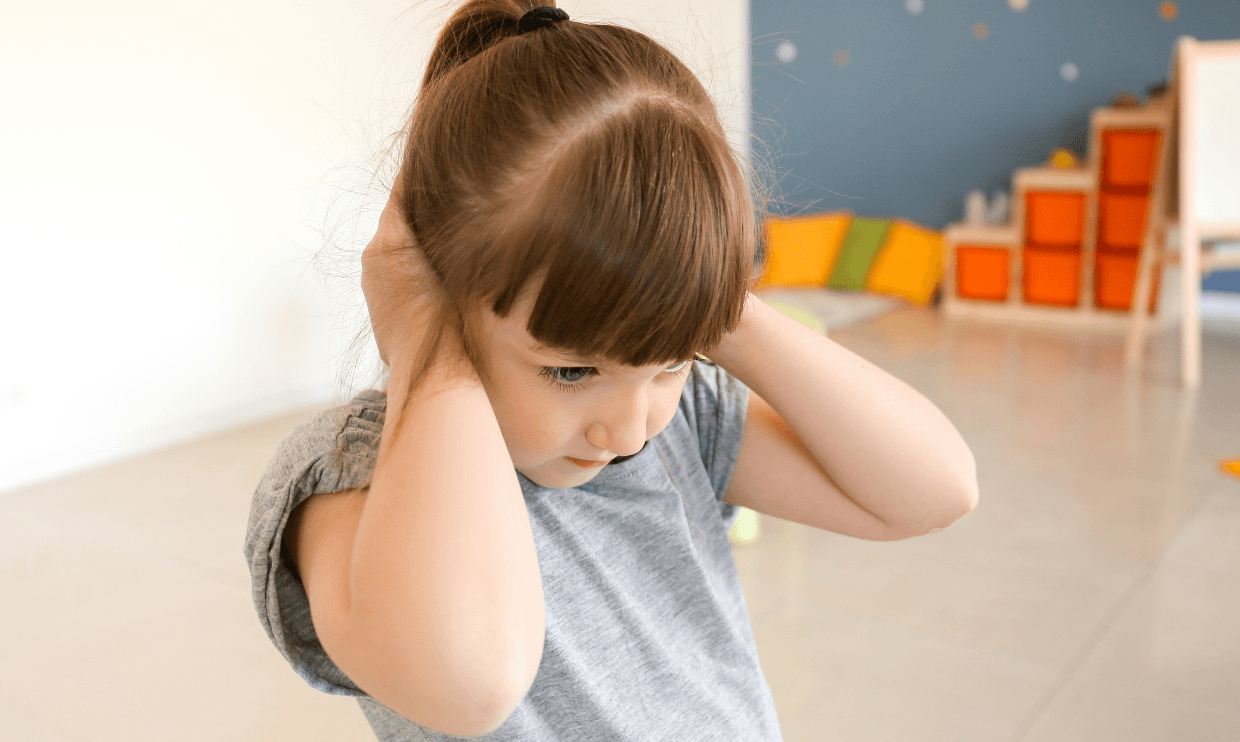
Have you ever walked out of an IEP or a parent-teacher conference like you and the school are talking about two completely different kids? Maybe at school, your child seems to be doing fine, following directions, keeping it together, and not drawing much attention. At home, it’s a different story. They come through the door overwhelmed, melting down, or completely shutting down. If that sounds familiar, you may be seeing the effects of masking, sometimes called after-school restraint collapse (ASRC).
For more information on after-school restraint collapse, we spoke to Dena Gassner, PhD, senior research scientist at the A.J. Drexel Autism Institute at Drexel University; Lauren Kenworthy, PhD, division chief of neuropsychology, director of the Center for Autism Spectrum Disorders, and pediatric neuropsychologist at Children’s National; Theresa Kidd, PhD,, clinical psychologist and clinical director of the Kidd Clinic; Devon Price, PhD, social psychologist, clinical professor at Loyola University Chicago, and author of Unmasking Autism and Unmasking for Life.
What is after-school restraint collapse?
The term after-school restraint collapse, coined by Andrea Loewen Nair, a counselor and parenting educator, is quite new — without much academic research behind it just yet. Most of the information we know is from parent accounts and clinical observations. But whether it’s called restraint collapse or even the “4 o’clock explosion,” as you may have also heard, the effects are real.
Dr. Kenworthy tells us that after-school restraint collapse is an outcome of overload, of holding it all together, aka masking, all day long. It happens when a child “seems to cope well throughout the school day but then experiences a significant emotional release — or “collapse” — once they return to a safe space, like home,” as this article by Dr. Kidd explains.
For a lot of kids, especially those who are masking, the school day is full of pressure. From the moment they wake up, the pace is fast and demanding, and once they get to school, they are juggling expectations, social situations, and small challenges on their own. That stress builds quietly throughout the day. By the time they get home, they are finally in a place where they feel safe enough to release it. That might look like a meltdown, irritability, or shutting down. Sound familiar?
While this phenomenon is often seen in autistic kids, it may be more common in autistic girls, who are often better at holding it together in public settings and may be less likely to have visible meltdowns, speak out of turn, or draw attention to themselves. Because of this, their challenges can be harder to spot at school. Many parents share that their child keeps it together all day, then comes home and releases all that built up pressure, often in what feels like an after-school explosion.
The timing matters, too. After a full day, their brain is tired, just like ours is after work. When we ask them to jump straight into homework, chores, or more demands, it can feel like too much. Kids need time to decompress and reset before they can handle anything else. It also helps to remember that kids have very little control over their day. They are told where to go, what to do, and how to behave for hours. So when they get home and are met with more demands, it can push them over the edge. And it can make us as parents feel out of control, helpless, overwhelmed, and even on the brink of having our own adult meltdowns.
What does after-school restraint collapse look like?
Restraint collapse can show up differently depending on your child’s age, but the common thread is the same: they’ve been holding it together all day, and something has to give.
- Younger kids (preschool–early elementary): big meltdowns, clinginess, screaming and kicking on the car ride home, or seeming to “fall apart” over small things. You might also see regression (like thumb-sucking) or a mix of hunger, exhaustion, and irritability.
- Elementary-age kids: more emotional ups and downs — whining, refusing simple tasks, or getting overwhelmed quickly. They may come home depleted (hungry, dehydrated).
- Tweens: it can start to look more like attitude — arguing, talking back, or frustration about school and friendships. Some kids go the opposite direction and withdraw, heading straight to their room and shutting down.
- Teens: mood swings, irritability, needing space, or disengaging from family. Hormones and bigger social pressures can intensify everything, making the end of the day especially tough.
Why does after-school restraint collapse happen?
Dr. Price explains that what we see after school is not the problem; it is the result of a long, demanding day where kids are expected to follow rules, manage their behavior, and often suppress their needs. Many school environments require constant compliance, limited autonomy, and a lot of pressure to look like they are paying attention in ways that may not come naturally. For many kids, especially those who are masking, that means holding everything in all day to avoid getting in trouble or standing out.
By the time they get home, they are finally in a place where they feel safe enough to let that pressure out. What looks like a meltdown or shutdown is often their body trying to recover, regulate, and release everything they have been holding in. Dr. Price encourages parents to reframe this moment, not as misbehavior, but as a sign that their child trusts them and needs a space where they can be themselves.
In this clip, Dr. Price breaks down why school can feel so overwhelming for kids and how after-school restraint collapse is often a response to unmet needs, lack of autonomy, and the pressure to hold it together all day.
Dr. Gassner explains that what many parents are seeing after school isn’t new — we just didn’t always have language for it. “I’ve always known about the after-school fallout. We just never had a word for it until recently. . . . and I believe that when that is happening, when the kids fall apart after they get home, it’s a definite red flag that their needs are not being met at school.”
In other words, the behavior you’re seeing at home is often a signal, not the root problem. Zooming out, Dr. Gassner points to a bigger issue with how schools are structured overall. “The whole institutional machine we call public school is not neurodiversity-affirming. It’s not designed for normal development, let alone the development of neurodivergent kiddos. . . . we need to just make it look different.”
Her message to parents is to look beneath the behavior. If your child is consistently coming home overwhelmed, it may be a sign that the demands, structure, or supports at school aren’t working, and that something in the environment needs to change.
Is after-school restraint collapse harder for kids with pathological demand avoidance (PDA)?
Dr. Kidd explains that for kids with a PDA profile, the intensity of after-school collapse can be even greater, because of how their nervous system responds to demands. What may look like a typical school day is actually a constant stream of pressure. “You can just imagine that cumulative effect when demands place a threat response on the nervous system. . . . and there’s been demand, demand, demand, demand all day at school.”
What can be surprising is that some PDAers are able to hold it together all day. “Some PDAers are able to mask all day at school, which is astounding considering the amount of demands from the moment they get up and have to get ready for school, get out the door, walk into the school environment, line up for this, get a workbook out for that, do this, do that, all day long at school. So you can just imagine that the cumulative effect when demands place a threat response on the nervous system. Schools are full of demands.”
But that doesn’t mean the stress isn’t there. It just means it’s being held in. And eventually, it comes out. A PDAer may be able to hold it together amazingly well, but then this emotion will be released in a great way once the child moves into the home environment.
Dr. Kidd also points out that even small things can feel like too much after a full day. “Choice can even feel like pressure, we may ask a PDAer to choose and there is no response, because the demand to make a choice is felt as a loss of autonomy.” After a day full of demands, even being asked what they would like for dinner can be overwhelming.
So what can we do to help?
Dr. Kidd encourages parents to rethink expectations and get clear on priorities. “Is our priority just for school attendance? If it is, that’s where their energy is going to be going.” Her advice is to step back and look at the bigger picture. School alone may be using up most of your child’s capacity. And if that’s the case, it’s okay to adjust expectations at home and even communicate those priorities to the school (For example, “We are focusing on school attendance or building safety and friendships this term, not academic achievement”), so the focus is on what truly matters for your child’s well-being.
Give your child a sense of control at home. Dr. Price shares that for kids with a PDA profile, one of the most helpful things you can do is build in moments where they feel in control, especially after a day full of demands. One suggestion is to keep it simple and even playful. “Pretend. Do a play pretend game with your kid, where they’re the lion tamer and you’re the lion. Or have some pretend play where they get to be the parent or the boss and you’re the employee.” These kinds of games give kids a chance to feel power and control in a safe, low-pressure way.
And it can be fun and bring you closer. It doesn’t have to be elaborate. Small choices can help, too. “It can be little things like letting them choose between a couple of different options for dinner, or [if that’s also too much of a demand] letting them eat the same food that they love every night for a week.” The goal is to create space where they don’t feel constantly directed or managed.
More broadly, Dr. Price encourages parents to let their child be themselves. “Let them be themselves. Let them have a little bit of that freedom and control to be their own weird, beautiful, autistic self.” That might also mean including them in decision making when it makes sense, so they feel like part of a team instead of feeling controlled all the time. Over time, these small shifts can make a big difference. When kids feel more autonomy at home, it can “help just turn down the temperature of some of the conflict and stress” they are carrying from the day.
Tips for supporting your child at home

Part of the issue is that many kids are being held to expectations that don’t match what their bodies and brains can sustain. After a full day of keeping it together, they may simply not have the capacity for more demands. Here are some tips for supporting a child who masks at school and “collapses” at home:
Adjust your expectations and add in recovery time after school
This is a biggie. Parents, you may need to adjust their expectations to care for your kids’ well-being. That could look like scaling back after-school activities, building in more downtime, and giving your child space to recover. More is not always better, especially when a child is already using so much energy just to get through the school day.
As Dr. Gassner explains, don’t plan after-school activities right after school (of course, not counting any therapies they must attend). “You can't get a kid out of school at 2:20 p.m. and have a three o'clock appointment. There has to be a window of recovery time, whether it's going to McDonald's or sitting in the car and watching videos for a while. They may have to go home and take a 20-minute nap. You have to work with a child to identify what gives them their release. Protecting those after-school hours as a recovery space, as compared to it being more of an extension of the day, I think is really important,” she says.
Focus on predictability, not just reacting in the moment
Dr. Kenworthy explains that once a child is already overwhelmed, there isn’t much you can do to stop it in that moment. When a meltdown or shutdown happens, the focus shifts to helping your child recover. That means stepping back, reducing demands, giving them space, and allowing time for their nervous system to settle. In those moments, less is more. Talking, correcting, or pushing through usually makes things harder. What helps most is a calm, safe environment where your child can decompress in whatever way feels soothing to them.
“We have to give them a safe place where they can do something that is soothing and comforting to them and give them time to recover,” she says. “But I think we can also think more proactively about, how do we prevent this?”
Reduce school demands
Dr. Price emphasizes that one of the most helpful things you can do is lower the overall demands on your child, especially if they are already stretched thin.
“For some parents, that looks like considering a different school or considering an unschooling based approach, where your child has some days where they can be more self-directed in their learning at home,” Dr. Price says. “Obviously, a lot of families don't have the resources to do that kind of thing, so it may also mean just putting less pressure on your kid. Maybe your kid doesn't need to take the hardest classes, even if you think they're really capable of that and you want them to aim for that. If you see them constantly being stressed, maybe you can advocate for them to put on less of a load or have fewer extracurriculars.” Even small adjustments can make a big difference when a child is constantly overwhelmed.
Create more time for special interests
Dr. Price also highlights how important it is to protect what actually restores your child’s energy. “Another thing that’s really, really restorative of energy for a lot of autistic kids is their special interests, so give them plenty of time to engage. Let them have a night where they stay up late reading about their favorite Pokémon, or playing Roblox. . . . whatever the thing is that really fills up their cup. And really celebrate that in them, rather than judging it or seeing it as a waste of their time because special interests really re-energize autistic people.”
Create more time for movement
Movement and sensory release matter, too. “Make sure they have lots of time to stim. If your kid comes home from school and they’re super antsy and on the verge of a meltdown, put on some of their favorite music and just jump on the couch together and get that energy out, or give them a bunch of papers to tear up, something to destroy that they’re allowed to destroy and bang against the walls, so that they can really self stimulate and get some of that energy out. And really celebrate that in them.” Dr. Gassner adds to this, telling us, “Some kids may need to go to the playground. They may need a lot of extraneous behavior and activity to regroup to be able to focus.” These kinds of outlets help kids regulate and release built-up stress from the day.
Help them take care of their bodies
Dr. Kidd points out that for some kids, holding it together all day doesn’t just affect their emotions, it affects their bodies too. “When they are holding it together at school, they might also not be drinking water, not eating properly, not toileting,” which can add up over the course of the day. As we explored in our article What is Masking? children can mask by hiding physical issues and pain, not asking for bathroom breaks, and/or not speaking up when they have a headache or migraine because they don't want to stand out. That physical strain can be part of what you’re seeing at home. “That’s probably also having an impact on their body and causing that collapse at home, or meltdowns, because their body’s not functioning the way that it needs to, and it’s not getting what it needs.”
She encourages parents to keep an eye on basic needs during the school day, like whether their child is eating, drinking enough water, and using the bathroom, since these are often missed and can add to their overwhelm.
Model self-advocacy and accommodations
Dr. Kidd emphasizes that one of the most powerful things we can do for our kids is show them how to advocate for themselves. That often starts with us doing it first. “As psychologists, we will contact the school in a very friendly way and introduce ourselves to the child’s teacher and with the child collaboratively type these emails so that they can start to see how we advocate for them in those spaces.” Over time, the goal is for kids to learn how to speak up for themselves, but they need to see what that looks like first.
Parents can model this in everyday moments, too. Dr. Kidd suggests narrating your own needs out loud in a simple, matter-of-fact way. “We might walk into a room and say, ‘Wow, it’s really bright in here. I need to turn the lights down,’ or ‘It’s noisy, I’m going to put on my noise canceling headphones for five minutes.’”
These small moments add up. When kids see you noticing your needs and making adjustments without shame, it helps them start to recognize their own. “As parents, continually modeling those accommodations, so then our young people can start to recognize what they might be needing and what might help them.”
Create a safe haven at home
Dr. Gassner emphasizes that everything starts with how we see our child. “First of all, setting the environment for the child, receiving and embracing 100% unconditional love and acceptance as the base.” She explains that when kids are struggling, the question should not be what’s wrong with them, but what has happened to them. She references this from a book by Bruce Perry: What Happened to You?: Conversations on Trauma, Resilience, and Healing.
You can also think about making home feel like a true place to decompress. That might look like keeping things quieter after school, building in predictable routines, using visual and sensory supports, and reducing how much your child has to hold in their memory. The goal is to lower the overall load so they can recover. As Dr. Gassner puts it, “Home should be the haven, the safe place.”
Is after-school restraint collapse a “home problem?”
Dr. Kidd points out that one of the biggest challenges for families is that this pattern is often misunderstood. “It’s blamed on the parenting, so it might be the parenting that's then the focus of, say, treatment,” she says, since the school says the child is “fine at school,” which can make it seem like something is wrong at home.
While it’s important to consider what’s happening in the home, she explains that “once we’ve ruled that out, because it often isn’t,” we need to look more closely at what’s happening during the school day. Here are some tips from Dr. Kidd:
Understand your child’s experience
“We are listening to the young person as much as we can to discover what they’re finding difficult,” Dr. Kidd says, because that’s the only way to get to the root of the behavior. But Dr. Kidd notes that not all kids can explain it. “They might not be able to articulate what they are finding difficult at school. If they're low in interoception and not picking up on their internal emotions/bodily cues, what you see at home may be a sudden collapse into overwhelm after holding it together all day.
Track their patterns
Dr. Kidd encourages parents to zoom out and look for patterns, not just what’s happening day to day. One helpful question to ask is whether things look different when school isn’t in the picture. Do you notice a shift on weekends or during school breaks and vacations? She explains that weekends might not show a huge change right away, especially if your child is still recovering from a full week. But over longer breaks, you would expect to see some difference if school is a major source of stress, since your child isn’t having to recover from those daily demands.
Tracking these patterns can give you important clues. It also helps to listen for anything your child shares about what feels hard at school, even if it’s small or indirect. And if your child can’t explain it themselves, a professional may be able to help uncover what’s going on, and if it might be a medical issue. The goal is to piece together what might be contributing to the overwhelm, while also ruling out other factors, like medical or physical needs that may be adding to the strain.
The bigger picture: support your child where it matters most
By now, you’ve probably noticed a pattern across what all of our experts are saying: when a child is experiencing after-school restraint collapse, it’s not just about what’s happening at home. It’s about the full day. If you’re trying all the right things at home and it still feels hard, Dr. Kidd encourages parents to zoom out. After-school collapse often starts with what your child is navigating during the school day.
That means the first step is understanding where things feel hard for your child and working with the school to put the right supports in place. This might look like built-in breaks, movement opportunities, sensory supports, or simply giving your child time to decompress before transitions. It also means looking at the bigger picture — your child’s learning profile, sensory needs, communication style, and whether the environment is asking more of them than they can realistically manage.
Then, when your child gets home, the goal shifts. Home becomes the place for recovery. That might look like offering a snack right away, keeping things low-demand, limiting questions, and giving your child space to decompress in whatever way works best for them — whether that’s screens, movement, or just being near you without expectations.
Dr. Kidd also reminds parents that your own regulation matters, too. Kids pick up on our stress, especially in those after-school moments. Staying as calm and grounded as you can helps your child feel safe enough to come back down.
In this clip, Dr. Kidd walks through how to support kids both at school and at home — from putting the right accommodations in place during the day to creating a low-pressure, calming transition after school.


Unlock more with Undivided
Turn knowledge into action that benefits your child
Get Membership


Author