

Top 35 Adaptive School Supplies for Kids with Disabilities
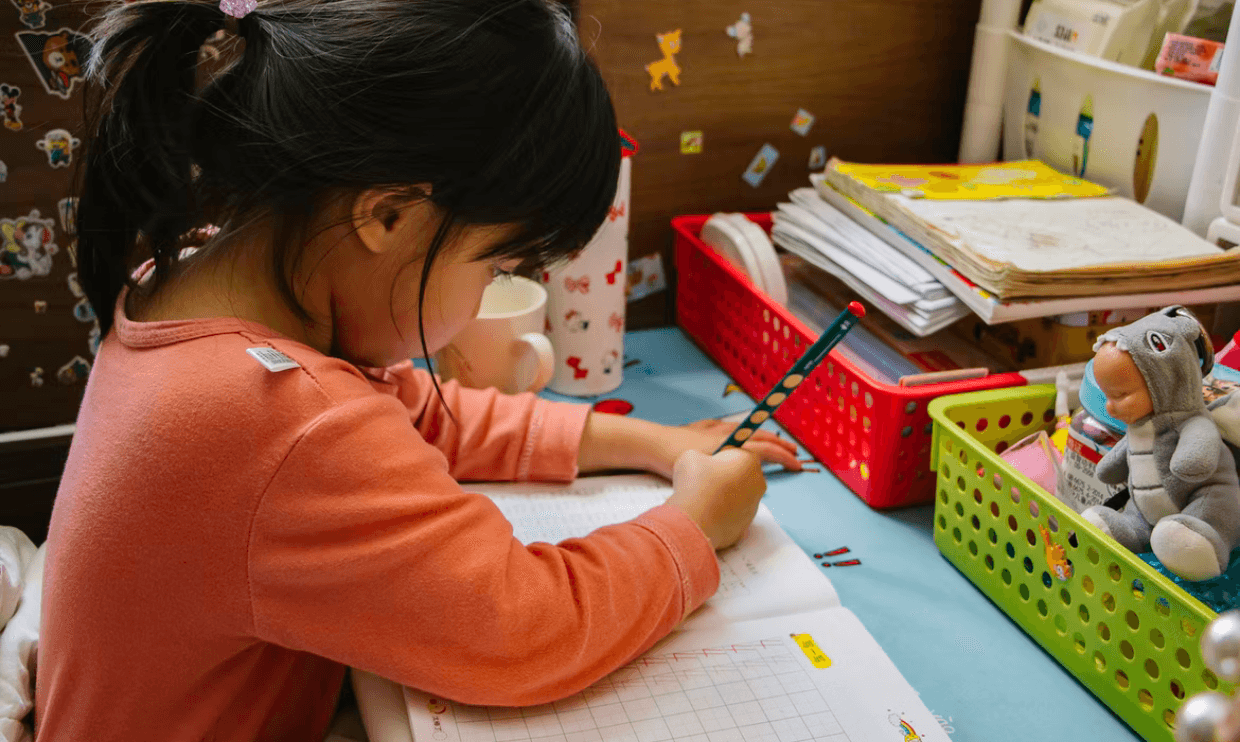
A huge variety of accommodations and adaptive tools can help students access their classroom and curriculum. In the best cases, a school’s occupational and physical therapists — as well as assistive technology specialists — work closely with a child to determine the right equipment to support their strengths and needs. Those same accommodations often come home, so parents can help reinforce strategies that are working while helping their child with homework and more.
Sometimes, finding the right tools can take a little trial and error, so we reached out to Kimberly Gardener at Therapy Place for Kids for her recommendations and also surveyed the parents of Undivided to put together this best-of list. Check out our roundup of adaptive school supplies below! (None of these are affiliate links, just ideas to talk about with your school team.)


Tools to support low vision
We've put together a helpful list of adaptive supplies to support kids with low vision and CVI at school. For more information and ideas for school accommodations, read our articles Low Vision and Blindness 101, Cerebral/Cortical Visual Impairment (CVI) 101, and Tech, Equipment, Apps, and More for Low Vision and Blindness.
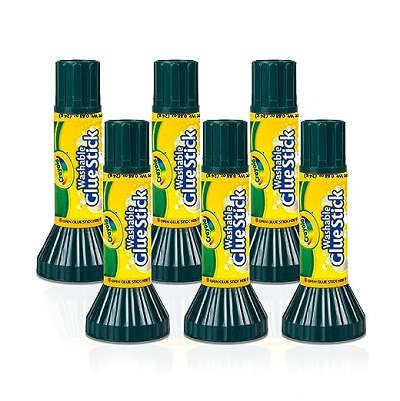
- For arts and crafts, use materials with color contrast. These Crayola glue sticks have blue glue color that dries clear. As a bonus, the wide base makes it easier to stand on a desk. Elmer's "disappearing purple" glue sticks also dry clear and come in a jumbo size for kids who need support with fine motor skills.
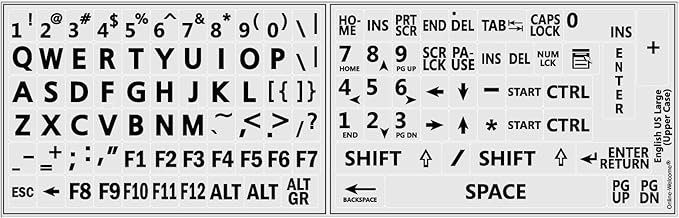
- Add high-contrast, large-print keyboard stickers to help a student with low vision as they're learning to type. These high-contrast stickers also include braille for students learning both.
- Magnification devices help students see things more clearly by enlarging text and images. Handheld magnifiers are easy to carry and simple to use on the go. Stand magnifiers sit directly on top of reading material and often come with built-in lights for added clarity. They’re hands-free, which makes them especially helpful for longer reading sessions or completing assignments. Dome magnifiers are clear domes that glide right over a flat surface to magnify text underneath. Bioptic magnification glasses help students with low vision see more clearly by magnifying text and details.

- Stands or mounts can hold digital devices or materials in the right visual field on a desk or attached to a mobility device. Choose a mount with a flexible neck like a ModularHose to easily adjust the height and angle, or go with a fixed clamp mount if you want to keep the settings consistent. The All-In-One Board can be used as an adjustable mount for an iPad in addition to being used as a dry erase and magnetic board.

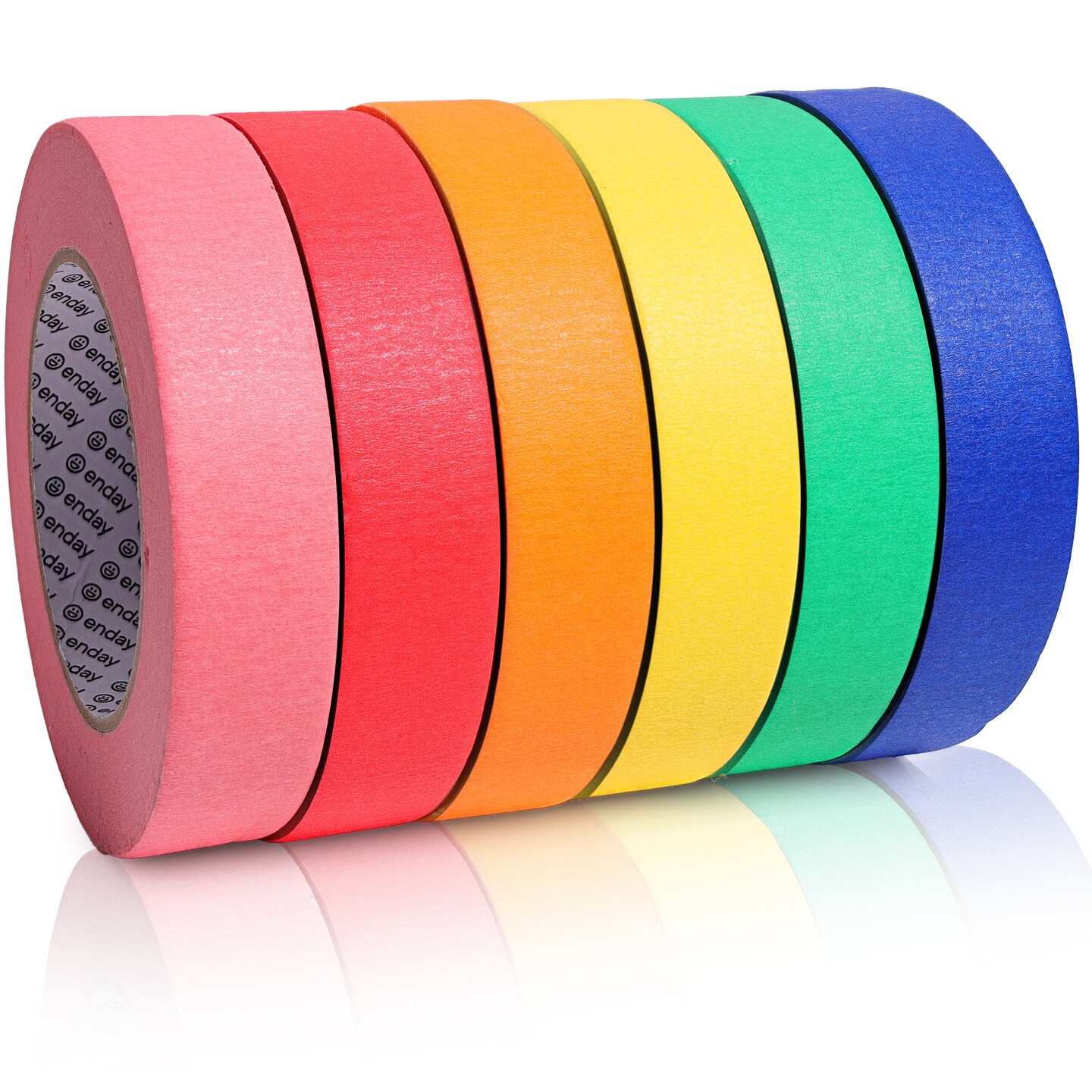
- Use brightly colored tape to add visual contrast to the learning environment, such as around the edge of the student's desk or on handrails. Gaffer tape or masking tape is easy to remove from a surface while colored duct tape is more durable.
Tools to support fine motor development
We've gathered the top adaptive tools for all things fine motor development. If your child has orthopedic impairment and you’re just starting this journey, head to our articles Orthopedic Impairment (OI) 101 and Tech, Equipment, Accommodations, and More for Orthopedic Impairment (OI).
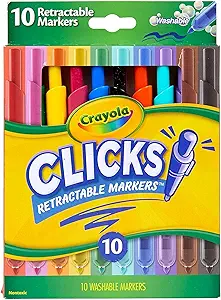
- Click-top markers make it easier to start coloring than pens with caps. You can also get dry erase markers with click tops.
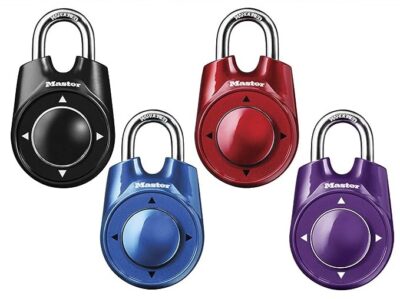
- A directional locker lock, button lock, or key-style lock may be easier to use for middle school and high school students working on fine motor skills. For a high-tech option, you could look into a smart lock or fingerprint padlock. You can also ask that using a lock be added as an occupational therapy goal in your child’s IEP.
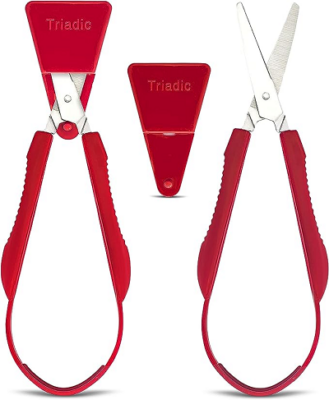
- Easy-grip scissors work well for classroom activities and occupational therapy. Both right-handed and left-handed kids can use these loop scissors, which come with a cover to support blade safety. You can also check out tabletop scissors for kids working on hand strength or who have limb differences.
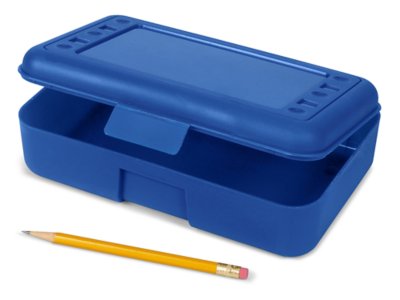
- An easy-open pencil case lets kids access writing tools without having to open a zipper pouch. A clear snap-shut case makes it easy to see what writing utensils are inside.
- Stock up on pencil grippers so that your child will have some at school and at home. These universal pencil grips work for both right-handed and left-handed writers to assist with finger placement. The Grotto grip, CLAW grip, and Crossover grip are some other styles your child might find useful.

- A weight pencil can provide proprioceptive and tactile input for kids to support their handwriting. This weighted pencil set is adaptable for traditional wooden pencils. The HandiThings Utensil Weight can be used on all kinds of pencils and markers in addition to eating utensils, and it easily comes on and off with a Velcro strip.
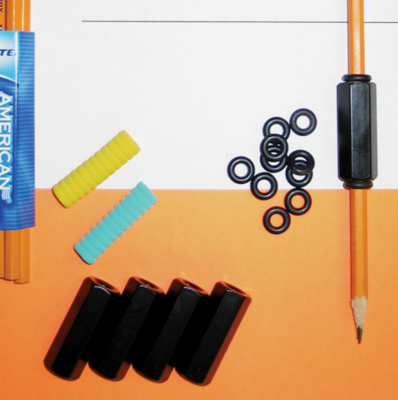
- For older kids, you may want to try a weighted mechanical pencil set. Undivided parent Jennifer says, "My son has been using this pencil and the weighted pen made by the same company for a few years now. We prefer it over using both a grip and a weight — it’s much easier for him to manipulate and hold, and no need to move a sticky grip to sharpen the pencil!"

- Notebook paper with raised lines provides both sight and touch input for writing. Undivided parent Kelly also recommends notebook paper with darkened lines as well as the sky/ground paper that a lot of OTs use. (You can also make your own sky/ground paper using blue and green highlighters!) RediSpace paper has lines for individual letters to promote proper spacing.

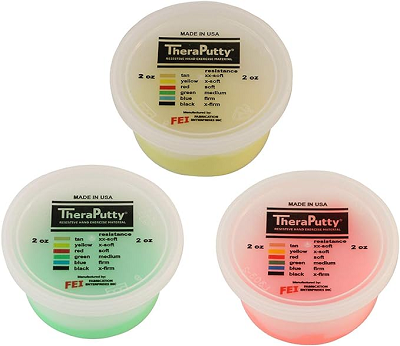
- Theraputty is useful for hand warm-ups prior to writing and is available in a variety of firmness levels for increasing strength. Sparkly Thinking Putty doubles as a sensory fidget. Pair putty with ABC 123 mats to practice letters and numbers along with fine motor skills by stretching putty into their shapes.
- The Functionalhand is a versatile assistive technology tool designed to help individuals of all ages independently grasp and hold objects, such as pencils and markers. Choose the "mini" size for young kids. Kind Mind makes a similar adaptive grip tool out of foam that's more budget-friendly.

- If needed, pack your kid's lunch or snack bag with adaptive flatware like EasieEaters Curved Utensils or Easy Grip Cutlery. Check out our article about feeding therapy for more ideas on adaptive eating utensils.
Tools for sensory input
There are a lot of tools that can help kids with sensory challenges. We've gathered our top picks, but for more information and ideas, head to our article Sensory Processing Disorder and Sensory Diets. You can also talk to your team about incorporating items like these into a sensory room if your school has one.
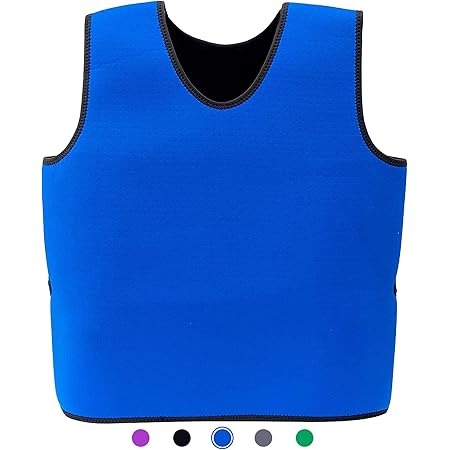
- A compression sensory vest can be worn under or over clothing to provide therapeutic pressure for students with sensory processing difficulties. This deep pressure vest comes in different sizes and colors. Sensory4u makes a weighted vest with removable weights to customize the amount of compression. You can also check out this inflatable compression vest for a customizeable option that's more lightweight.
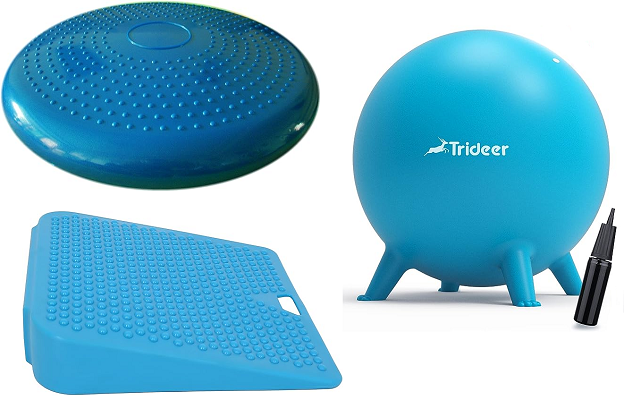
- Flexible seating in the form of a wobble cushion, yoga ball chair, or chair wedge can provide sensory input and help kids focus.
- For an additional sensory item to help with focus while seated, you could try Bouncy Bands use heavy-duty solid rubber bungee cord that can be attached to a desk or chair, allowing kids to move their legs or build strength. Here's an option for extra-wide desks.

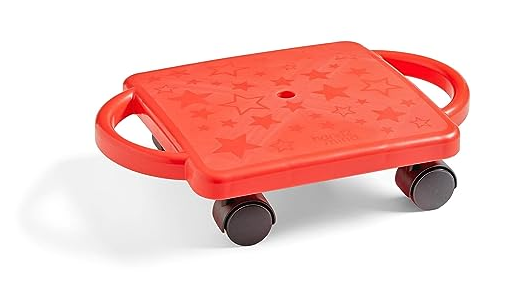
- For PE and movement breaks, a scooter board can help kids get the wiggles out. A traditional scooter board with handles is budget-friendly and can be used indoors or outdoors. This board comes with padding for a soft squish, and this tri-wheel board is more stable to prevent tipping.
- Have you heard of a body sock? It's a stretchy body wrap that can can be a great tool for deep pressure. Most are available in solid colors, but this full-body sensory sock has a fun dinosaur pattern.

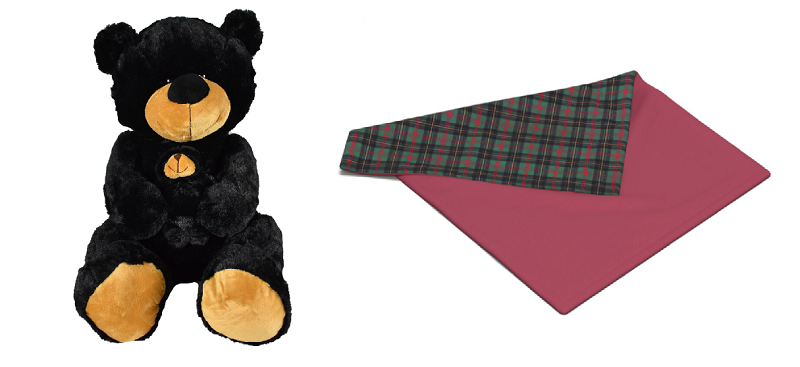
- Weighted blankets aren't the only items that can help with sensory input. You can also check out weighted lap pads, neck wraps, and stuffed animals. The brand Southpaw provides plenty of options for resistance tools, vests, weighted toys, wraps, and shawls.
- If your child enjoys vocal stims, talk to your school team about bringing in a whisper phone. Undivided parent Meg says, "The whisper phone has been a game changer for my son. His speech therapist recommended it for helping him with his ongoing verbal stims in class, he talks out loud during class and reads his books out loud, too. This allows him to still do his verbal stims but into the whisper phone — it echoes back in your ear, so you can learn to whisper your verbal stims while still being able to hear them loudly through the phone’s feedback." You can even use PVC pipe to make a DIY whisper phone. Here's another DIY style made with funnels and tubing.

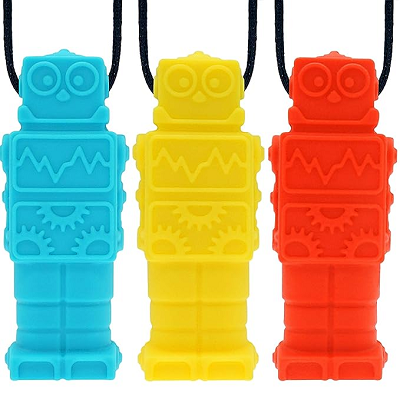
- Sensory objects like chewy necklaces and pencil tops can provide oral stimulation for kids who need it. Undivided parent Meg says she loves Chewbeads: "We have loved these, had them for years and years, and they are still holding up. They are marketed for teething, but they make a junior brand that we used because they have some cool necklace designs for all kiddos."
- Add subtle support to class time with sensory tactile bookmarks, which serve as a bookmark but also have different textured sections for different levels of tactile input. This style comes with a mini fidget, or choose a soft plush bookmark.

- Fidget pencil toppers come in a wide variety of styles, like spinning gears, buttons, and squishy. The Spike Silicone Fidget Tactile Pencil Gripper is a great sensory tool that combines a pencil grip with fidget functionality.

Tools to support executive function
Students with ADHD, autism, and other learning disabilities who experience executive functioning challenges may have difficulty navigating tasks and assignments, retaining information shared during a lesson, and effectively managing their time while completing independent work. Here are our top tools. For more information and tips, head to our article Executive Functioning 101.
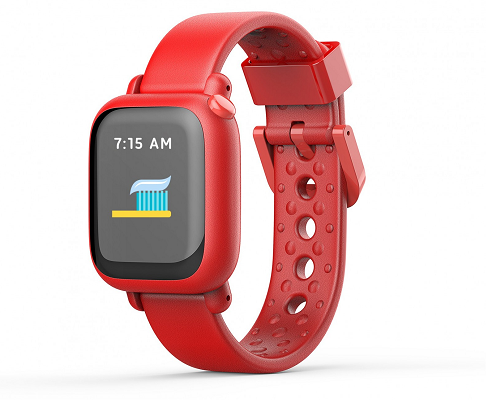
- A kid-friendly smart watch empowers kids by teaching good habits and the concept of time. You can program the visual-based Octopus Watch to add gentle vibrations when a reminder pops up. The JrTrack 5 Kids Smart Watch is another option for reminders and messages, plus GPS tracking capabilities. Undivided parent Carrie says, "I connected a Google Calendar account to it so [my son] gets reminders about his schedule, and he can see text messages we send him." The PlayZoom 4 Kids comes with games and audiobooks for mini focus breaks.
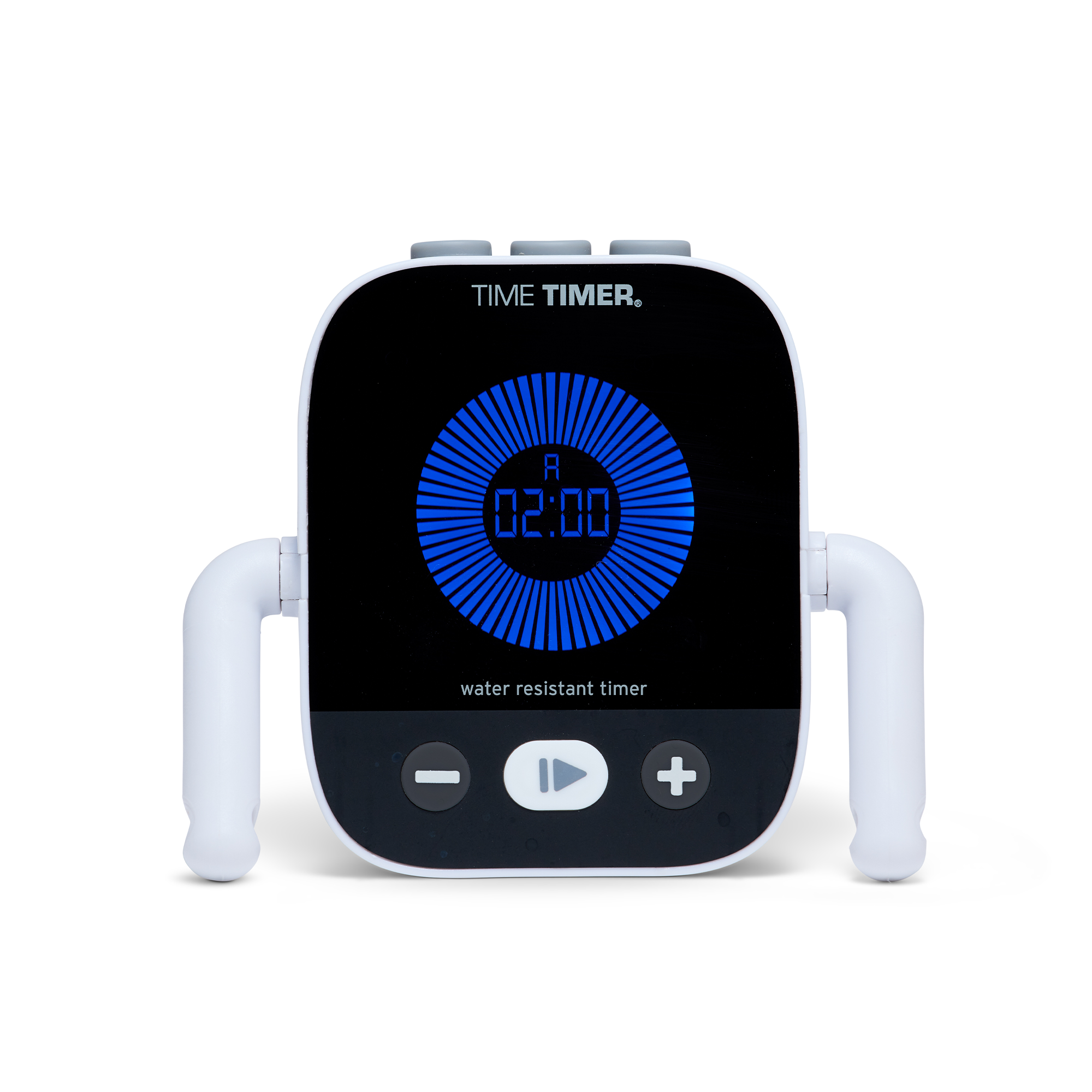
- Visual timers can support executive function and transitions by making time more concrete. The Time Timer is water-resistant for use in the bathroom or outside, and the Rainbow Timer uses colorful designs to show time passing. This visual timer uses four different color zones to count down to the end of a time period.
- Color-coding can help with executive functioning by organizing school supplies by subject. Try color-coded folders, binders, or trays.

Tools for academic support
For general academic support, here are our top picks. If you need more resources for a child with a learning disability, head to our articles Specific Learning Disabilities (SLD) 101 and Top Tech, Apps, and More for Specific Learning Disabilities.
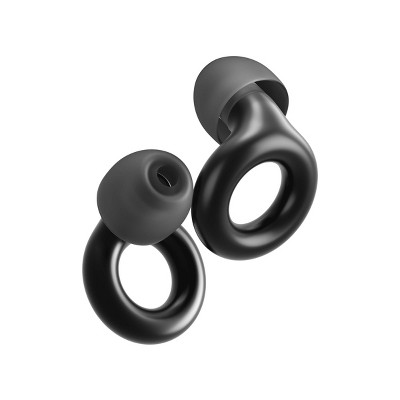
- Ear plugs can help with noise reduction at school. Undivided parent Meg says, "These are less cumbersome than the big headphones typically provided by school. My son’s OT/speech team recommended these types of earplugs used by musicians that reduce sounds but he can still hear. It's been a great win-win for him — he can feel emotionally more secure having access to earplugs he keeps in his pocket, and sounds are reduced but he can still hear teachers and friends." Undivided parent Gabi says, "My older daughter likes the Loop earplugs. They muffle the background noise for her just slightly." Parent Donna agrees: "My son has some too! It helps him focus." The Loop Switch comes with three modes to decide between how much to filter out sound.
- If your child needs help with proper word spacing in their handwriting, you can buy "spacemen" or make your own spacers out of clothespins or popsicle sticks. Another style to try is a finger spacer.

- Guided reading strips block out one sentence at a time as an aid for students with dyslexia and other specific learning disabilities. Try these colorful guided reading strips or clear and gray strips if that works better for your child. These strips] come with a finger clip for kids to follow along with tactile support.

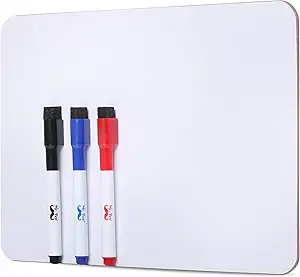
- A mini dry erase board or chalkboard has a wide variety of uses in the classroom to support academics and therapeutic services. This style comes with guide lines on one side for writing practice.
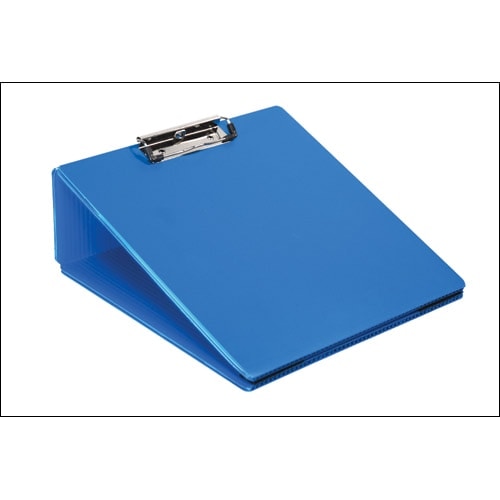
- A tilted surface or slant board can help support writing and visual tracking by promoting ergonomic posture. These collapsible slant boards store flat and come with a clip to attach paper. You can also try a dry erase slant board with handwriting lines on one side. This tilted writing board comes with a book or tablet holder.
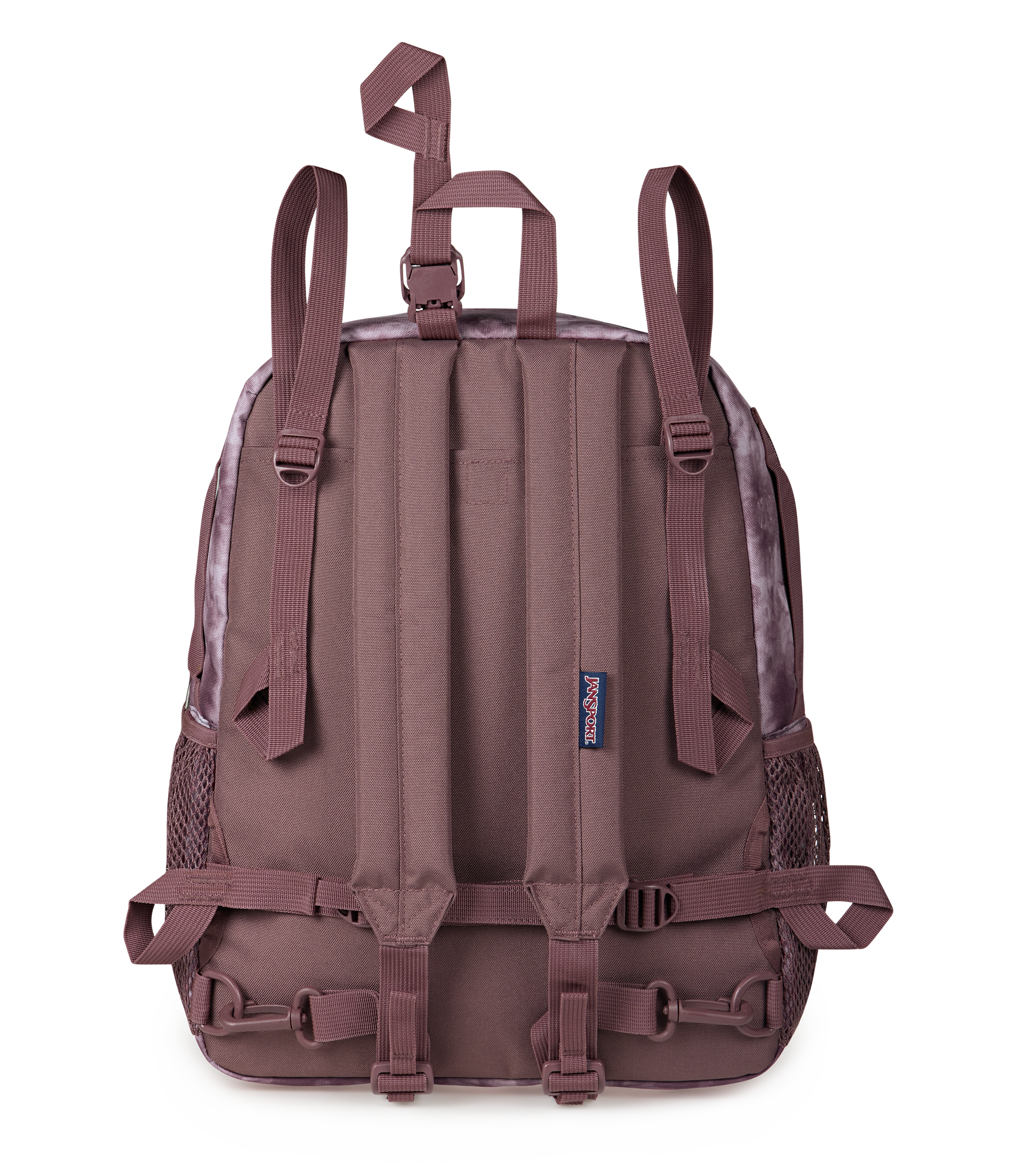
- Adaptive backpacks store all your child's supplies while incorporating features to support mobility or fine motor needs. Jansport makes adaptive backpacks that have easy-to-use buckles and zippers, organizational pockets, and loops to attach to wheelchairs or other mobility devices. Pottery Barn has adaptive backpacks and lunch boxes with thoughtful features in a wide variety of styles. For the youngest students, check out Ten Little's Recycled Backpack with easy-glide zippers made from recycled materials.
Other tips from parents
Undivided parent Leslie says, "The beginning of the year is a great time to check items used at school and in transport to school for signs of fraying or other wear-and-tear. Straps, buckles, Velcro closures, anything that has a foam insert (is a new insert needed?). Safety and comfort are primo!"
Undivided parent Lindsay says, "Don’t forget to pack an extra of everything your child might lose or need to change like a change of clothes, extra glasses cord, extra hearing aid batteries, etc.!"
Undivided parent Lisa says, "I send a wet bag with a change of clothes inside and an extra wet bag. That way if clothes get wet or dirty, they can be contained in the wet bag."
Do you have any tried-and-true adaptive tools, tricks, or insights to share? Please let us know and we’ll add them to the list.
Request an Individualized Education Program (IEP) meeting


Unlock more with Undivided
Turn knowledge into action that benefits your child
Get Membership


Author