

Back-to-School: What You Need for Week 1
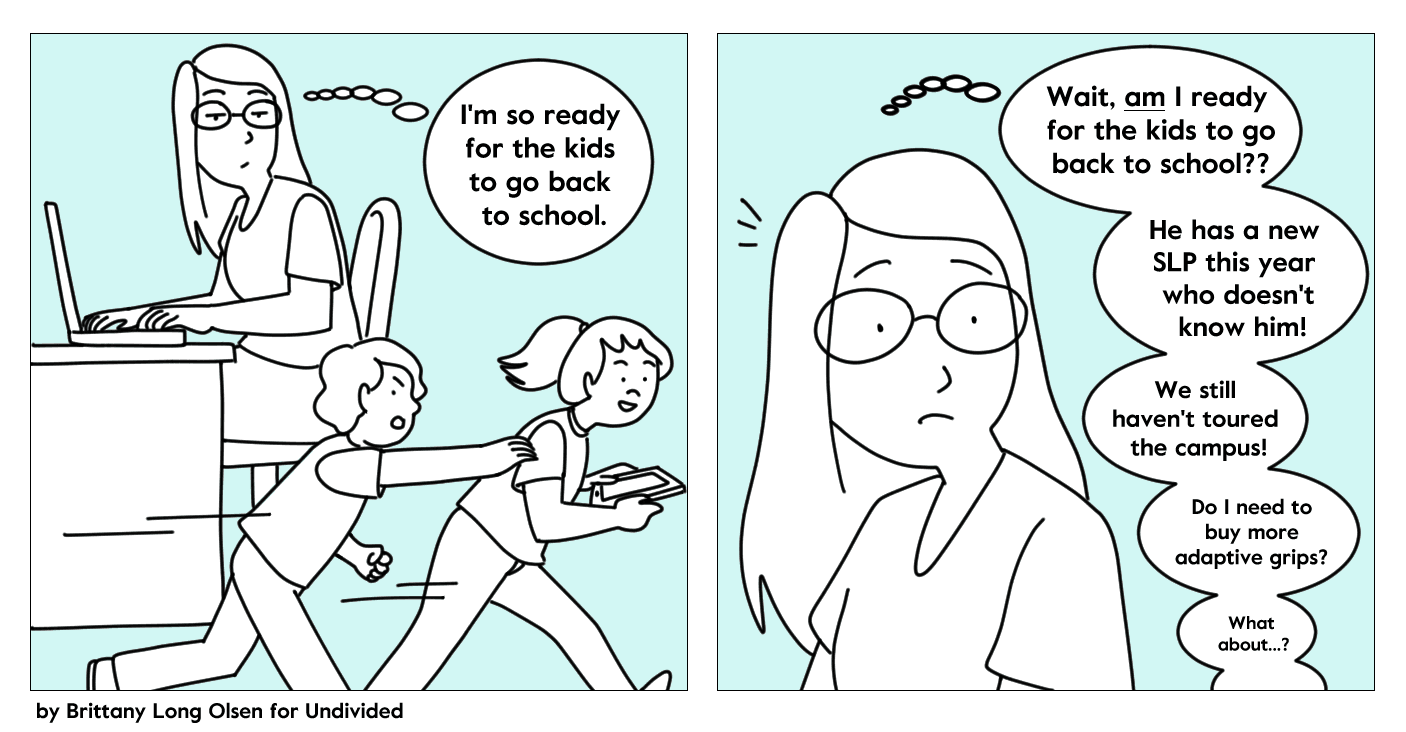

1. Create an All About Me and IEP summary

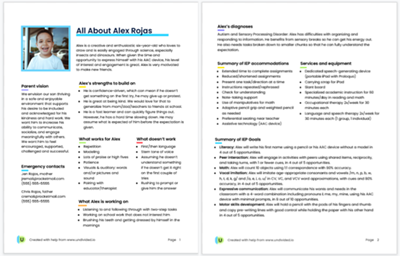
At the start of the school year, teachers are incredibly busy and may not take the time to read your child’s entire IEP right away. You can make sure they prioritize your kid’s most important support needs by creating an “All About Me” with an IEP summary. This document briefly explains your child’s strengths, where they need support, and their most important goals.
If you're an Undivided member, check out our “All About Me” template that you can customize to introduce your child to teachers and school therapists. It’s a wealth of knowledge that teachers will be able to refer to quickly! You can also use the All About Me feature in your Undivided account to automatically generate one based on the information you’ve added to your child’s profile. See how here in this video.
If your child has more than one teacher, be sure to print or email a copy of the “All About Me” to each member of their school team — aides and specialists too!
2. Meet the new teacher(s) and check in about accommodations

Your child’s “All About Me” is great for introducing your child’s most important IEP accommodations to a new teacher on the first day of class, but it’s important to ensure that your child is actually getting access to those accommodations from the start. If your child needs seating near the front of class, adaptive supplies, visual aids, sensory breaks, or other accommodations to get them back into the routine of school, check in with the teacher about making sure your child is being set up for success in their classroom.
Depending on your child’s age, check in with them about their accommodations too! Dr. Pelangka says, “I think it's really helpful as early as possible for students to be mindful and aware of what their accommodations are and what their services are, so in the event those things aren't happening, they can learn to self-advocate, and they can speak up and say, ‘Hey, I was supposed to get extra time for that test,’ or ‘I was supposed to have my notes and I didn't get to use them,’ or whatever the case may be, they can also go home and tell you, ‘Hey, I didn't get X, Y, and Z,’ and you'll be aware of that. This isn't saying that the child is responsible for requesting those accommodations if that's not how the IEP is written — it's just helping them learn those and work on starting that self-advocacy process.” You could print a list of your child’s accommodations to include in their binder or tape a couple pictures to their desk as a reminder.
For tips on communicating with the teacher, check out our article with our top 4 tips. And listen to this video with tips from Non-Attorney Special Education Advocate Lisa Carey.
3. Schedule a campus orientation tour
If your child is attending a new school this year, or if their schedule will bring them to different parts of the school, see if you can arrange a campus visit before their first day. Going through your child’s schedule and making sure they know how to get to each classroom and bathroom, the cafeteria, the nurse’s office, etc. can help calm those back-to-school jitters so they’re more comfortable with the change in environment.
Check out our campus orientation checklist written with help from an orientation and mobility therapist for a printable list that you can bring with you on a tour.
If a campus tour isn’t possible before the first day of school, you can request a temporary transition aide to assist your child in navigating campus for the first several weeks. The aide can be faded out as your child gains confidence in finding (and settling into) their classes and extracurricular activities on their own. To request this temporary transition aide, Dr. Sarah Pelangka (special education advocate, BCBA-D, and owner of KnowIEPs), suggests parents try one of several options:
- Call an IEP meeting and request that a district rep be present (they have to approve the temporary service);
- Email the district and make the request to see if an aide can be approved at least for the first few days;
- Ask your child’s teacher if they have a classroom paraprofessional who is available during transitions.
4. Make sure your kid is ready for day one
To avoid the morning rush on that first day of school, create a list of items that your kid will need to bring, and get those items ready in advance. Run down the list again as you send your kiddo out the door to make sure nothing is forgotten! Here are some ideas to get your back-to-school checklist started:
- Regular medications, including any paperwork required by the school with your child’s doctor’s signature
- Emergency medications, such as those for a food allergy or seizure, also including any paperwork signed by your child’s doctor
- Extras of supplies your kid might need or run out of, like a change of clothes, face masks, glasses cord and cleaning cloth, motivational items to provide sensory support and encourage good behavior, a pillow for positioning or safety (seizures), or hearing aid batteries. Check out our Adaptive Tools and Supplies list put together by Undivided parents and an OT for additional ideas!
5. Create a visual story and/or visual schedule for the new school routine
Whether your child is feeling nervous about going back to school or needs extra support adjusting to a new routine, preparing ahead of time can help make the transition feel more predictable and manageable. Our back-to-school templates help you fill in important details about your child’s new schedule, teachers, and routines, with supportive language to help them know what to expect.
Visual schedules are amazing for helping kids with routines, especially when transitioning to a new daily schedule or staying motivated to complete tasks. Whether your child would benefit more from a printed calendar, a magnetic board, or digital reminders, this article rounds up some great apps and websites to help you create a custom visual schedule for this school year.
You can also help prime your child for the new routine with our back-to-school visual story templates for elementary and middle/high schoolers or a picture book about preparing for a new school year!

6. Set up your AAC device for the new school year
A new school year can mean new teachers, new classmates, new routines, and new challenges for AAC users. Here are top tips from Speech-Language Pathologist Ali Steers, MA, CCC-SLP, ATS:
- Meet with your child’s school team before the first day. Reach out early and request an informal team meeting (separate from an IEP meeting) to help everyone prepare for a successful transition. Invite key team members, including teachers, SLPs, OTs, PTs, paraprofessionals, and anyone else who will support your child. Team members should understand how your child accesses their device (such as eye gaze, scanning, or direct touch), what modeling looks like, why modeling matters, and how to encourage communication throughout the school day.
- Create a communication cheat sheet. Share how your child communicates, including AAC use, signs, gestures, facial expressions, or unique behaviors that may have specific meanings. Helping the team understand your child’s communication style can make it easier for them to connect and respond.
- Program your child’s new schedule and activities into their AAC system. Transitions to middle or high school often come with new classes, electives, and routines. Make sure important locations, subjects, and activities (such as health, nutrition, robotics, or technology) are available so your child can talk about their school day. You don’t need to program every possible word or class on day one. Start with meaningful people, places, and activities — including teachers, friends, support staff, and classes that are part of your child’s daily routine.
- Ask for a brief one-on-one conversation with the teacher. A simple request for 15–20 minutes to introduce your child and share what works best can help build a strong partnership from the start of the school year. Take time to introduce your child’s AAC system. Even if a teacher is familiar with AAC, offer to walk them through your child’s device, layout, and how your family uses it to communicate with and around your child.
- Have the teacher model AAC on the first day of school. A simple message from the teacher using the student’s device (with permission) or a partner system can send a powerful message: AAC is an accepted and valued way to communicate in this classroom.
7. Be aware of staff shortages
As many of us know, there are staff shortages across many industries these days, and unfortunately one of those is in school districts.
Dr. Pelangka explains that school staff shortages may mean a shift in the way that special education classes and related services will be offered. This could include everything from co-taught classes to virtual related services (such as speech therapy). It’s important to remember that while we all need to work together to do what’s best for our kids, parents do not have to agree to classroom placements or service delivery models that don’t work for our kids. Here’s how to push back:
8. Prepare for assessment plans
Dr. Pelangka recommends asking your district to wait about thirty days into the new school year, depending on how quickly your child is able to adapt, before offering an assessment plan. Many students struggle with changes in routine, and your child may need time to acclimate to their new classroom, services, and school environment. A thorough assessment is the first step to creating an IEP that accurately reflects your child's goals, strengths, and areas of need, so waiting until students are comfortable can go a long way toward making that happen.
“Give them some time to acclimate,” Dr. Pelangka says, especially if the school is considering a change in placement. She advises parents to ask the district about all other options for changing placement: “Have we considered a one-to-one aide or a classroom aide or an extra parent in the room? Have we looked at if there's behavioral needs, like introducing a behavior plan? Have we looked at accommodations?”
9. Schedule a one-month check-in
IEP experts and fellow parents recommend checking in with your IEP team over email or in person about four to six weeks into the new school year to see how your child is doing. Ask open-ended questions about the IEP, such as how your child is doing with an accommodation or if it seems helpful. This fall check-in will help you see if you need to call an IEP meeting to address any major concerns. Check out this article for more resources to help you prepare for this check-in!
While you may have specific things in the IEP to discuss, the main reason it’s important to check in is to start building trust and relationships with a new IEP team. Dr. Pelangka explains why in this clip:
10. Learn from other parents
Prepare for the beginning of a new school year
Before your child heads back to school, follow this step-by-step walkthrough to prepare everything you need to set them up for success, including printables, checklists, expert tips, and more!
We know that the beginning of a new school year can feel overwhelming for both you and your kid. If you need help mapping out your priorities, making a plan, and getting your child the support they need, talk with an Undivided Navigator. They’ll help walk you through all the resources we have available, including step-by-step guides in the Undivided app and education advocacy services to make sure you’re prepared for the school year and beyond. Undivided members also have access to bi-weekly office hours with education advocates and other experts to make sure parents get all their questions answered. Join today to try membership!
Bonus: Undivided Conversation: Starting the School Year Right


Unlock more with Undivided
Turn knowledge into action that benefits your child
Get Membership


Author